

A first-time dog owner guide should start with the number that decides everything else. For a medium dog, the ASPCA puts the bare monthly cost at about $56. That covers food and routine vet care, plus a license and the small stuff.
It leaves out insurance and grooming. It leaves out training, and it leaves out anything that goes wrong. Add those in and most owners land somewhere between $105 and $305 a month, with the first month costing far more than any month after it.
This guide prices the first month line by line and walks through the first four weeks. It also names the mistakes that turn a manageable budget into a stressful one.
How much does a dog cost per month
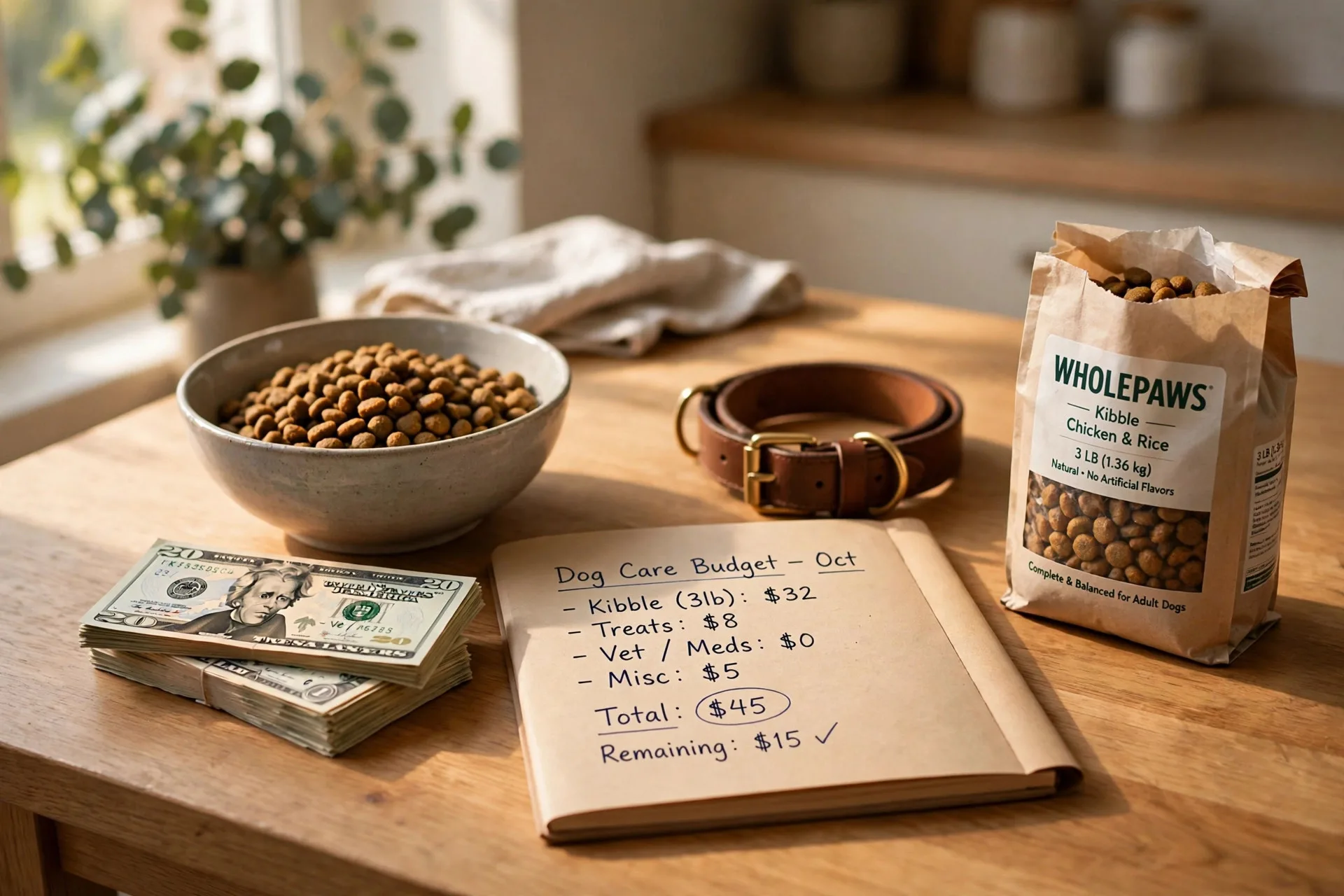
The honest math starts with the ASPCA baseline, because it is the lowest defensible number and it shows what a bare bones month looks like. The ASPCA estimates annual costs of $512 for a small dog, $669 for a medium dog and $1,040 for a large dog, which works out to about $43 a month for a small dog, $56 for a medium dog and $87 for a large dog. Those figures cover food and routine medical care, plus a license and miscellaneous supplies. They leave out pet insurance and grooming, and they assume nothing goes wrong.
Real life adds both. A training class runs around $110, according to the same ASPCA figures, and grooming adds $264 to $408 a year depending on size. Insurance adds another $20 to $60 a month for most plans.
The table below shows what a typical month looks like once you count the lines the baseline skips. The ranges come from the sources below and assume a healthy dog with no emergencies.
| Monthly expense | Small dog | Medium dog | Large dog |
|---|---|---|---|
| Food | $20 to $60 | $40 to $100 | $80 to $200 |
| Routine vet care and prevention | $20 to $45 | $25 to $55 | $30 to $70 |
| Pet insurance | $20 to $60 | $20 to $60 | $20 to $60 |
| Grooming, averaged out | $0 to $30 | $0 to $40 | $0 to $60 |
| Toys, treats and supplies | $15 to $40 | $20 to $50 | $25 to $60 |
| Typical monthly total | $75 to $235 | $105 to $305 | $155 to $450 |
Two things about that table deserve a second look. The low end assumes you groom at home, skip insurance and buy basic food. The high end assumes insurance, professional grooming and a big appetite. Most owners land in the middle.
The American Kennel Club puts average annual dog ownership near $2,500, or about $208 a month, which sits inside the medium dog range.
The table also leaves out the lifestyle lines, and those are the ones that surprise people. A dog walker charges $20 to $30 per walk, and daily walks add up to $400 or more a month. Many rentals add $25 to $75 a month in pet rent on top of a $200 to $500 deposit. Boarding runs about $45 a night, so a week away costs $300 before you pack a bag.
None of that makes a dog unaffordable. It makes the decision a budget decision, and you should run the numbers before the dog comes home, while you can still say no.
The first year costs more than any year after it. Rover puts a new dog’s first year at $1,150 to $4,420, and the ASPCA puts one-time setup costs at $470 for a small dog, $565 for a medium dog and $560 for a large dog, on top of the first year of recurring costs. Spay or neuter surgery, the puppy vaccine series, a crate and a bed all land in month one. After that the spending settles into the monthly rhythm in the table.
A first-time dog owner guide to the first month
Week one is for settling in. Keep it boring. Take the puppy straight to the toilet spot before going inside, then let it explore one room at its own pace. Keep the food the breeder or shelter already used and take the puppy out after every meal, nap and play session.
Book the first vet visit fast. Breeders often require one within about three days.
Expect a lot of sleep. The American Kennel Club says puppies sleep 18 to 20 hours a day, in naps of 30 minutes to two hours. Between naps you get accidents, nipping and a small creature that follows you from room to room. That is normal.
A puppy that sleeps all afternoon has not broken. It is doing exactly what puppies do.
Weeks two to four add routine and a little courage. Feed four meals a day from 6 to 12 weeks, then drop to three. Start short training sessions of five minutes and reward the behavior you want instead of punishing the behavior you do not.
The ASPCA recommends puppy kindergarten classes from 8 weeks, right after the first vaccinations. A well socialized dog handles people, animals and new places with far less fear. Watch for a first fear period around 8 to 11 weeks, when a puppy can suddenly spook at ordinary things. Keep exposures short and calm, and let the puppy retreat when it wants to.
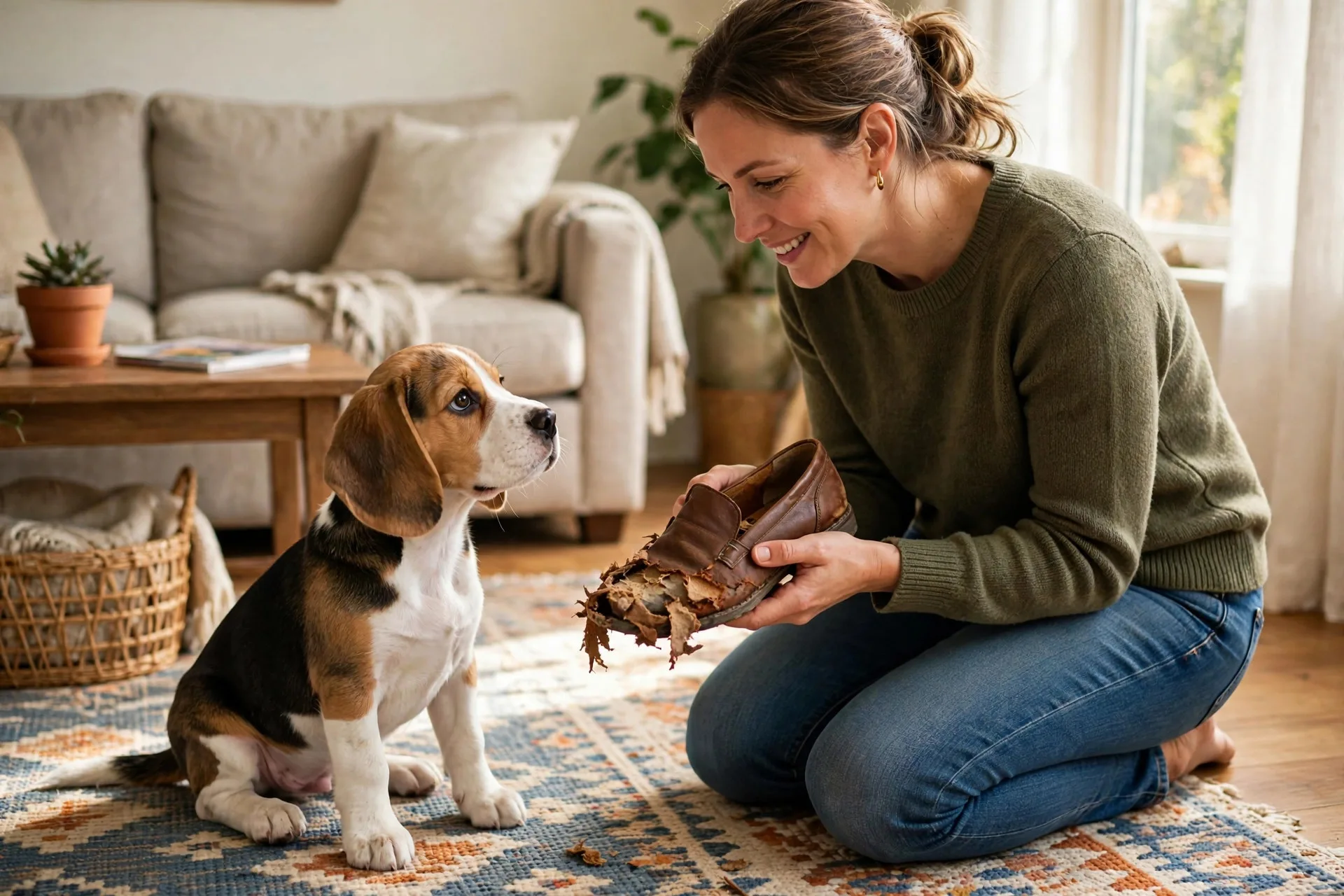
One more thing about month one. Your puppy will chew the one shoe you actually liked, not the old pair you left out as a decoy. Put the good shoes in a closet with a door that latches, and keep chew toys within reach instead. Prevention beats scolding every time.
What actually happens at the first vet visit
The article already says to book the vet within three days. Here is what that visit looks like, so it stops feeling like a mystery.
The vet starts with a full physical exam: weight, teeth, ears, eyes, skin, belly, joints, and a listen to the heart and lungs. Then comes the history. Bring the vaccination and deworming records from the shelter or breeder, a note of what the dog eats and how much, and a list of anything odd you have noticed, even if it seems small. A vet would rather hear about a soft stool on day two than discover it on day thirty.
A puppy usually needs a series of vaccines spread over the first months, not one shot and done, and parasite prevention starts early too. The vet will talk through flea, tick, and worm prevention for your area and your dog’s lifestyle, and will check whether a microchip is already in place. If the dog came from a shelter, ask what is already done so you do not pay twice for the same vaccine.
Use the visit to ask the questions only your vet can answer for your dog. What food and portion fit this dog at this weight. How much exercise is right at this age. When to book the next visit, and what counts as a reason to call sooner. Write the answers down before you leave. The first visit sets the baseline every later visit gets compared against, which is why it matters more than any single vaccine in it. Our new puppy checklist covers what to have ready before you go.
First-time dog owner mistakes that cost real money
Most first-time dog owner mistakes share one root: deciding with your eyes instead of your calendar and your bank account.
Picking the dog for its looks
A Border Collie looks wonderful in photos and needs hours of daily activity. A French Bulldog fits an apartment life far better. Choose the dog that matches the hours you actually have, the space you actually live in and the grooming you will actually do. Our guide to the best dog breeds for first-time owners ranks nine easy picks by temperament and care needs.
Skipping the emergency fund
A LendingTree survey found that 37% of pet owners have gone into debt over vet bills. One swallowed sock, one broken paw or one cruciate ligament surgery can cost $3,000 to $7,000 overnight. Set aside $1,000 to $2,000 before the dog arrives, or take out insurance from day one. Insurers do not cover conditions that already exist, so waiting means paying the full bill yourself.
Waiting too long on insurance
Insurance costs $20 to $60 a month for most dogs, and the cheapest time to buy it is when the dog is young and healthy. Every month you wait is a month a new condition can appear and turn into a pre-existing exclusion. If you decide against insurance, keep the emergency fund topped up instead. Drifting without either is the expensive choice.
Buying everything at once
Pet stores love a new owner. The shelf of gadgets, premium beds and matching outfits adds up fast, and half of it ends up unused. Buy the crate, bed, bowls, collar, leash, tag, food and cleaning supplies first, then add the rest over the first month once you know what your dog actually uses. Our new puppy checklist sorts supplies into essentials, nice to have and skip for now.
Leaving a puppy alone all day
Puppies cannot hold it all day, and a bored puppy destroys things. A full-time away owner needs a midday walker or daycare, and that is real money every month. If your schedule cannot bend, an adult dog from a shelter may fit better than an eight week old puppy.
Buy this before day one, and skip the rest for now
The pre-arrival shop has a short list and a long list, and only the short one matters. Crate and bed first, then bowls, collar, leash and ID tag. Add the same food the puppy already eats, enzymatic cleaner and a few chew toys. The ASPCA puts a leash and collar at around $25 to $35.
Puppy proof the house before pickup day, not after. Move cords, medications, cleaning products and small swallowable objects out of reach, and check which houseplants are toxic. Keep the ASPCA Animal Poison Control number somewhere visible and call at the moment of suspicion. The new puppy checklist covers the full list, so use it as the shopping list and stop at the end of the essentials.
License, microchip, and ID
A dog needs a way home if it ever gets out, and that way home has three layers. The first is the tag on the collar: your phone number, in plain text, on a tag that stays on. The second is the microchip, a grain sized chip the vet places under the skin in a routine visit. A chip only works if the registration carries your current phone number and address, so register it the same week and update it every time you move or change numbers. A chip with an old number is a dead end.
The third layer is the license. Many towns and cities require dogs to be licensed, and the rules and fees vary by place, so check your local council or animal control office rather than guessing. A license tag is also a second ID tag, and in some places it is the fastest way for a finder to reach you. Keep a photo of the license, the chip number, and the tag on your phone, so you can prove the dog is yours and share the details in minutes if it ever goes missing.
Pick the dog for your life, not for the photo
Breed matters less than fit, and fit is mostly about time. A dog that needs two hours of exercise a day will not stay calm in a home that offers twenty minutes. Ask the shelter staff or breeder about energy level and grooming needs, plus how the dog handles being alone, and believe the answer. An honest mismatch costs far more than a delayed decision.
If you have not chosen yet, start with the best dog breeds for first-time owners. If you already have a puppy, start with our puppy training guide for beginners and build the routine one small habit at a time.
Adopting vs buying
The choice between adopting and buying is less about which is better in general and more about what fits your life. Adoption usually costs less up front, and the fee often covers vaccines, spay or neuter, and a microchip that are already done, which is real money saved in the first month. Shelters also know the dog in front of them. Ask what the dog is like at home, not just in the kennel, and ask what support the shelter offers after adoption if the first weeks get hard.
Buying from a breeder can make sense if you need a predictable size, coat, or temperament for a specific reason, such as allergies in the house or a small flat. A responsible breeder will show you where the puppies live, show you the mother, share health records, and ask you as many questions as you ask them. A breeder who will not show you any of that, or who pressures you to decide on the spot, is a reason to walk away.
Either way, ask the same questions. What is the dog’s health history. What food is it eating now. What has it been socialized with. And what happens if the match does not work out. A good shelter and a good breeder both have an answer for that last one. For the training side of the first month, our guide to puppy training for beginners picks up where this guide leaves off.
Questions first-time owners ask
How much does a dog cost per month?
A medium dog typically costs $105 to $305 a month once you count food, vet care, insurance, grooming and supplies. The ASPCA baseline of about $56 a month covers food and routine vet care plus a license, so treat it as a floor, not a budget.
Is a dog or a puppy better for a first-time owner?
A puppy lets you shape habits from the start, but it needs near constant supervision and 4 to 6 weeks of interrupted sleep. An adult dog from a shelter often arrives house trained with a known temperament, and for many first-time owners that is the easier first dog.
When should I take my new dog to the vet?
Book the first visit within the first few days, and within about three days for a puppy from a breeder. The vet checks overall health, starts or continues the vaccine series, talks through parasite prevention and answers the questions that come up in week one.
What is the biggest mistake first-time dog owners make?
Choosing a dog based on appearance instead of lifestyle. A high energy dog in a low energy home leads to destructive behavior, anxiety and sometimes rehoming, and no amount of gear fixes a mismatch.
Book the vet visit before pickup day, set the emergency fund aside before the first toy, and let the first month run on routine instead of excitement.
Sources
- ASPCA Pet Insurance: How Much Does It Cost to Have a Dog?
- PetCostHQ: First-Time Dog Owner Budget Checklist
- Pets of the Web: The Real Cost of Owning a Dog in 2026
- Joy Pet Products: How Much Does It Really Cost to Own a Dog?
- Matching Paws: How To Prepare For Your First Dog
- Pawo: New Puppy First Month
- Modern Living Tips: Getting a Puppy Guide
3 thoughts on “First-Time Dog Owner Guide: Costs and Mistakes”