
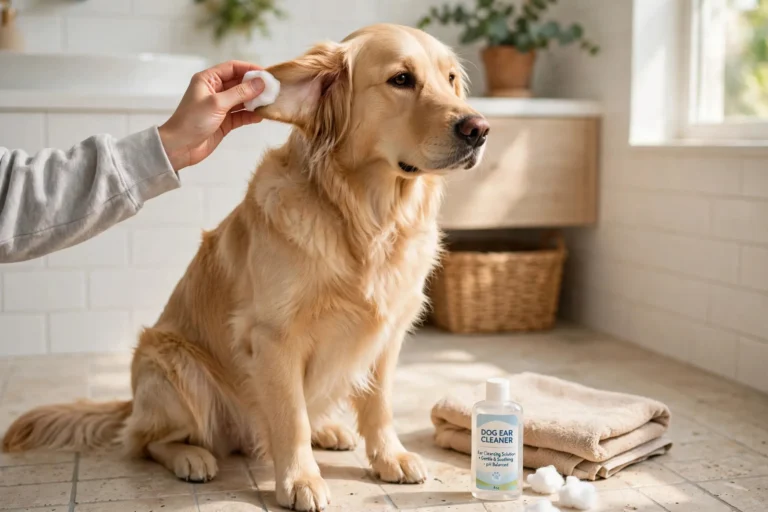
The best dog ear cleaner is a veterinary-formulated liquid made for dogs, and the cleaning itself takes about five minutes once you know the steps. You fill the canal, massage the base of the ear for about 30 seconds, let your dog shake, and wipe away what comes out. That is the whole job.
The hard part is knowing when to clean and when to call the vet instead. This guide covers both, with the exact steps vets use and the mistakes that turn a simple cleaning into a vet visit.
One warning up front, in plain terms. This article gives general information, and it is not veterinary advice. If your dog shows signs of infection or pain, skip the home cleaning and call your vet. The sections below show you how to tell the difference.
Does your dog actually need their ears cleaned?
Some dogs never need an ear cleaning in their lives. Their ears stay pink and dry, with almost no smell and only a thin coat of pale yellow wax. That wax does its own housekeeping, and cleaning a healthy ear can upset the balance.
Lift the flap once a week and look and sniff. A healthy ear looks pale pink inside, with a thin coat of pale yellow wax and no strong smell. If that is what you see, leave it alone and check again next week. Your vet can show you what healthy looks like on your own dog, which beats guessing from photos online.
Clean the ears when you see extra wax, catch a mild smell, or notice the odd head shake. A bath or a swim also earns a quick check, since water left in the canal gives bacteria and yeast a warm place to settle. The American Kennel Club guide to ear infections (Dog Ear Infections) recommends drying ears thoroughly after baths and swimming. Ear checks fit naturally into a grooming routine (How To Groom A Dog At Home), so add them to the same weekly session.
What an infection looks like, and when cleaning makes it worse
An infected ear looks nothing like a dirty ear. The skin inside turns red, the flap feels warm, and the smell hits you before you get close. Your dog shakes their head, scratches at the ear, or pulls away when you touch it.
Discharge gives more clues. A small amount of light brown wax counts as normal. Lumps of dark brown wax, or yellow or green discharge, point to infection.
Dr. Pippa Elliott, a veterinarian writing for Petful (How To Clean A Dogs Ears), says cream-colored, yellow, or green discharge needs a vet visit, and waiting only lets the infection settle in deeper.
Head tilt, circling, or loss of balance mean the problem has gone deeper than the outer ear. That is a same-day vet visit, and so is any swelling of the ear flap, bleeding, or a dog that cries when the ear is touched. These dog ear infection signs mean the ear needs a vet, not a cleaning.
Never clean an ear that looks like this. Cleaner in a painful ear hurts, and it can push debris deeper or hide what the vet needs to see. If you are unsure whether an ear is dirty or infected, call the clinic first.
What you need before you start
Start with a bottle of ear cleaner made for dogs. Add cotton balls or gauze for wiping, a towel for the shake, and a few treats for afterwards. That is the full kit, and it costs less than most dog toys.
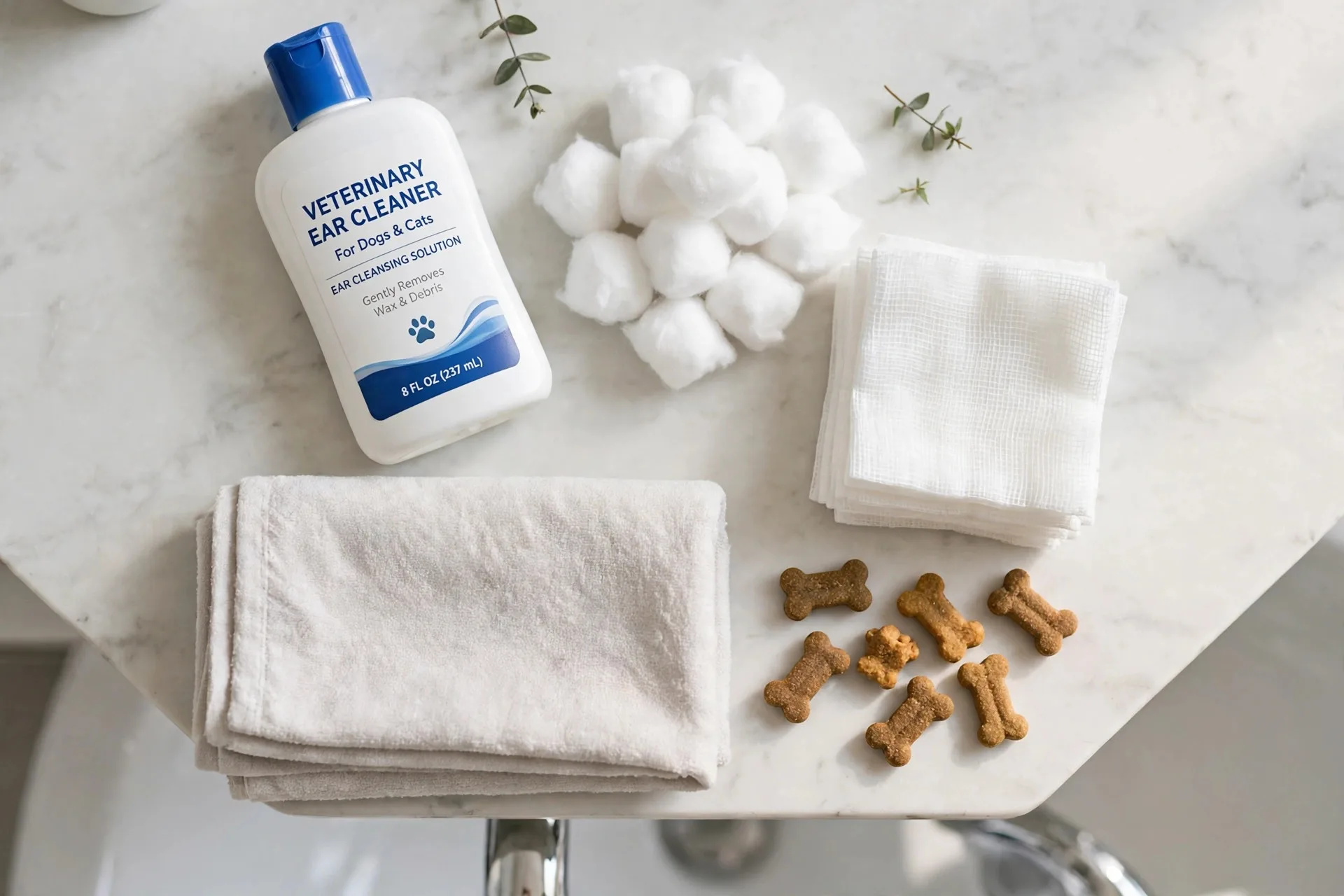
The cleaner matters more than anything else on that list. Pick a veterinary-formulated liquid made for dogs, and ask your vet to name one if you are unsure. Some cleaners suit routine cleaning, and others target yeast or bacteria.
Keep a few things out of the ear entirely. Alcohol and hydrogen peroxide sting and dry out the canal, and the American Kennel Club (How To Clean Dogs Ears) warns that hydrogen peroxide can irritate healthy skin cells and damage the ear with extended use. Vinegar mixes and plain water cause similar trouble, and water left behind feeds the very germs you want to remove. Cotton swabs belong on this list too, and they get their own section below.
How to clean dog ears at home, step by step
Here is how to clean dog ears at home, in the order vets describe it. VCA Animal Hospitals (Ear Cleaning In Dogs) lays out the same steps, and the American Kennel Club (How To Clean Dogs Ears) matches them almost exactly.
- Pick a calm moment and a room you can wipe down. A bathroom works well. Put the towel over your lap or shoulder, because the shake comes fast and the spray goes everywhere.
- Settle your dog. A small dog can sit on your lap, a medium dog sits in front of you, and a big dog sits with their back in a corner. Give a treat before you touch the ear.
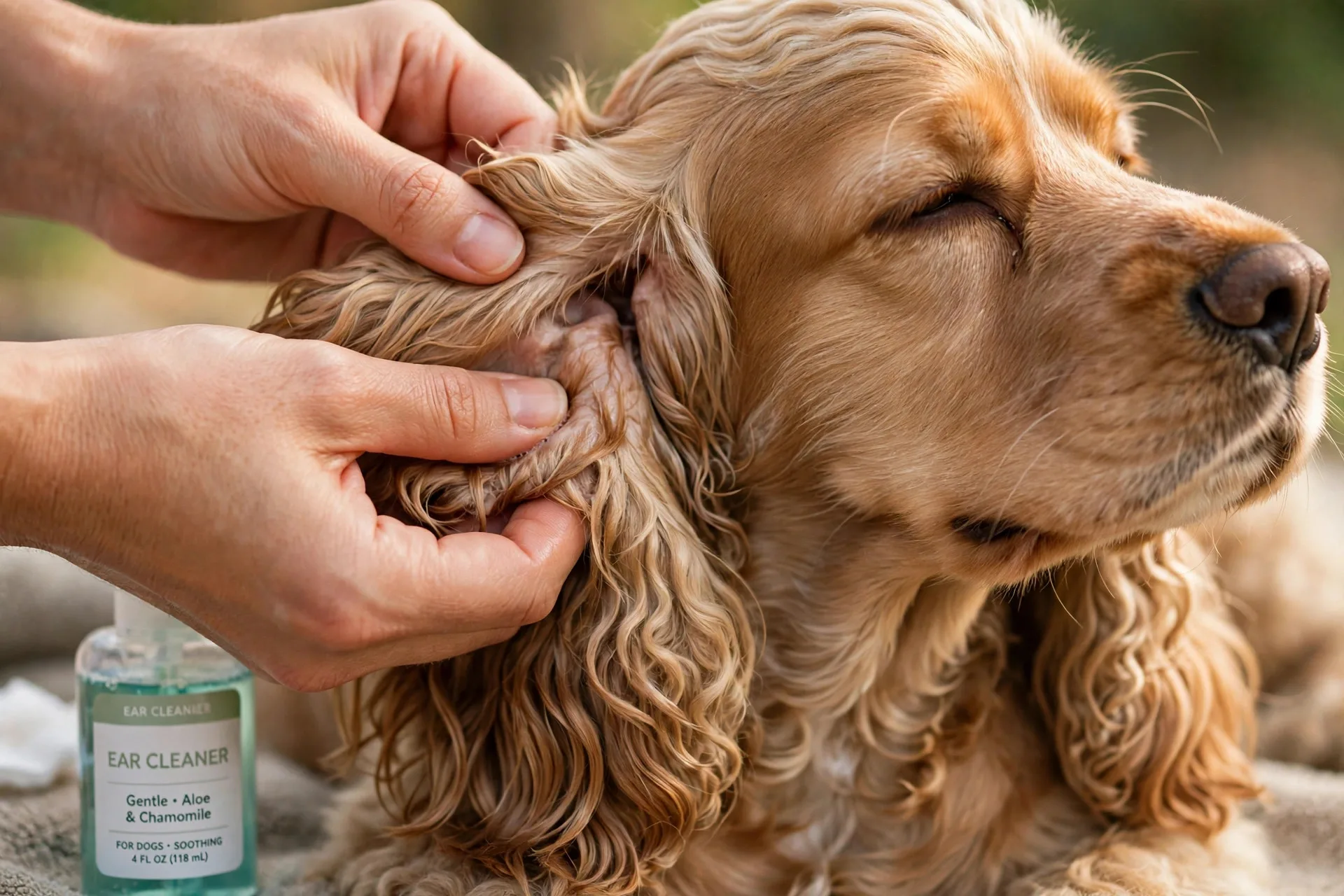
- Lift the ear flap straight up with one hand. This straightens the canal so the cleaner can reach the bend. Look inside first. If the ear looks red or sore, or you see yellow or green discharge, stop here and call the vet.
- Hold the bottle in your other hand and squeeze cleaner into the canal until it fills. Keep the tip out of the ear and off the skin. If the tip touches the ear, wipe it with a cotton ball dampened with alcohol before you put the bottle away.
- Keep holding the flap up and massage the base of the ear for about 30 seconds. You will hear a squishing sound, which means the cleaner is working through the wax. Most dogs lean into this part like you found an itch they could not reach.
- Step back and let your dog shake. The shake brings loosened wax and cleaner up to where you can reach it. The towel earns its keep here.
- Wipe the inside of the flap and the opening of the canal with a fresh cotton ball or gauze. Go only as far as your finger reaches. Use a fresh piece each time until it comes back clean.
- Praise your dog, give a treat, and repeat on the other ear with fresh cotton.
If the cotton still comes back filthy after three days of cleaning, stop and book a vet visit. That pattern points to an infection, not a dirty ear, and Petful (How To Clean A Dogs Ears) gives the same three-day rule. If your dog yelps or pulls away during any step, stop right there.
The one tool that should never go near a dog ear
A cotton swab looks like the right tool. It is small, it reaches into folds, and most of us grew up using them on our own ears. A dog ear canal bends in an L shape, and a swab pushes wax down that bend instead of lifting it out. It can pack wax against the eardrum, scratch the canal, or puncture the eardrum if the dog jerks their head at the wrong moment.
VCA Animal Hospitals (Ear Cleaning In Dogs) warns against cotton-tipped applicators for exactly this reason. Use a cotton ball wrapped around your finger instead. Your finger stops where the canal turns, and that limit protects the eardrum. The swab stays in the bathroom drawer, where it belongs.
Floppy ears, swimmers and puppies need a different routine
Dogs with long, heavy ear flaps live with warmer, damper ears than dogs with upright ears. The flap traps moisture and blocks airflow, and that combination suits yeast and bacteria. The American Kennel Club (Dog Ear Infections) names Basset Hounds, Beagles, and Cocker Spaniels among the breeds most prone to ear infections, and floppy ears sit at the top of its risk list.
Swimmers need the same attention. Dry the ears with a cotton ball after every swim or bath, and ask your vet about a drying cleaner if your dog swims often. Moisture left in the canal is one of the most common triggers for a flare-up.
Puppies learn fastest. Touch the ears during play, lift the flaps, and give a treat, long before the first real cleaning. A puppy that accepts ear handling grows into a dog that sits still for it. Our new puppy checklist (New Puppy Checklist) covers the other first-week supplies, including a bottle of ear cleaner, so the ears join the routine from day one.
How often is often enough?
For most dogs, once every two to four weeks does the job. Dogs that get ear infections often may need cleaning every one to two weeks, but only on your vet’s advice. Overcleaning strips the natural oils that protect the canal, and the American Kennel Club warns that cleaning too often can lead to irritation and infection.
The cotton ball tells you when to stop. If it comes back clean, put the bottle away until next time. If it comes back filthy day after day, the ear needs a vet, not more cleaner.
Healthy ears need less attention than most owners expect. Vetstreet (How To Keep Your Dogs Ears Clean And Healthy) puts it plainly: if the ears look and smell good, leave them alone. Cleaning a healthy ear can damage its self-cleaning abilities, so the schedule follows the ear, not the calendar.
What to look for in the best dog ear cleaner
The best dog ear cleaner for your dog depends on the ear in front of you, which is why no single bottle wins for every dog. Look for a cleaner made for dogs, with a drying agent that helps the canal dry after use. The liquid should not sting or irritate healthy skin, and the label should say it suits routine cleaning.
Ask your vet to name one. Vets see which products work on which ears, and many clinics stock the ones they trust. A cleaner made for an infected ear differs from one made for a healthy ear, so your neighbor’s favorite may not suit your dog.
Names that show up again and again in vet-written guides include Virbac Epi-Otic and Zymox. Treat them as a starting point for a conversation with your vet, not as a ranking. The right bottle is the one your vet picks for your dog’s ears.
Wipes have a place, but it is a small one. A wipe cleans the flap and the outer ear, and that is all it reaches. The canal runs deeper than any wipe, so wipes work as a quick tidy between cleanings, not a replacement for a liquid cleaner.
Skip homemade mixes unless your vet tells you otherwise. The American Kennel Club (Dog Ear Infections) warns against putting home remedies or old medications into a dog’s ear without checking with a vet first, since they can irritate the canal or damage the eardrum. A pharmacy saline eye solution sometimes comes up in guides, but only your vet can say whether it fits your dog’s ears.
Questions owners ask before the first cleaning
Can I clean my dog’s ears with water?
Water is a poor choice. It does not break down wax, and moisture left in the canal feeds bacteria and yeast. Use a cleaner made for dogs.
How do I know if my dog has an ear infection?
Head shaking, scratching, a strong smell, redness, swelling, or yellow or green discharge all point that way. A vet visit settles it.
Can I use a cotton swab on the outer ear flap?
You can use one on the folds you can see, but never push one into the canal. A cotton ball does the same job with less risk.
How often should I clean my puppy’s ears?
Check them weekly and clean only when you see wax or catch a mild smell. Puppies with healthy ears often need no cleaning at all.
Sources
- American Kennel Club, How to Clean a Dog’s Ears: How To Clean Dogs Ears
- American Kennel Club, Dog Ear Infections: Symptoms, Causes, Treatment, and Prevention: Dog Ear Infections
- VCA Animal Hospitals, Ear Cleaning and Administering Ear Medication in Dogs: Ear Cleaning In Dogs
- Petful, How to Clean a Dog’s Ears: Step-by-Step Expert Guide, by Dr. Pippa Elliott, BVMS, MRCVS: How To Clean A Dogs Ears
- Vetstreet, How to Clean Your Dog’s Ears and Keep Them Healthy: How To Keep Your Dogs Ears Clean And Healthy