
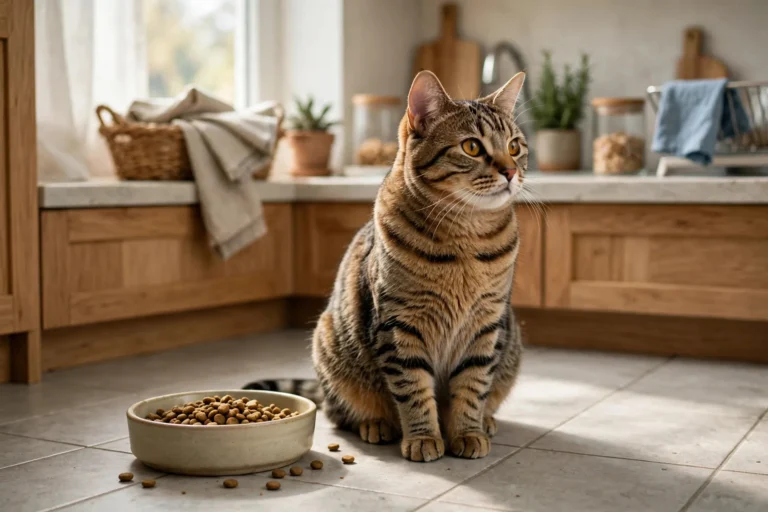
Cat throwing up food once, right after a meal, then bouncing back to normal is usually not an emergency. The food often comes back up because your cat ate too fast or coughed up a hairball with the meal.
Frequency changes everything. One episode in a bright, hungry cat is one thing. The same thing every week, or food coming up with blood or lethargy, is another.
This guide covers the common causes and the red flags that mean you call your vet the same day. It gives general information only. It does not diagnose your cat, and it does not replace a vet exam.
Undigested food usually means it never reached the stomach
That question, why is my cat throwing up undigested food, has a shorter answer than most owners expect. In most cases the food never made it to the stomach. Vets call that regurgitation. The food slides back up from the food pipe, still looking like the food in the bowl, sometimes in a tube shape.
Your cat may gag or cough once, then carry on as if nothing happened.
Vomiting looks different. PetMD describes vomiting as an active process that forcefully brings up contents from the stomach or small intestine. The belly heaves and the food comes up partly digested, often with yellow or green bile.
Cats.com draws the same split: vomiting brings up stomach contents with effort, while regurgitation stays passive and the food stays whole. If you cannot tell which one you saw, film the next episode and show your vet. A video often settles the question faster than a description.
Frequency draws the next line. Cats.com advises a vet visit when regurgitation happens more than once or twice a month, since food that keeps coming back up means nutrients keep getting lost. A single episode after a greedy meal is a different story. Cats have a talent for picking the rug for that one episode, which does nothing for your morning.
Four everyday reasons for cat throwing up food
Most food that comes back up has one of four explanations. Each one has a pattern you can spot at home.
Eating too fast or too much
A cat that inhales dinner swallows air with it. The stomach fills too fast, stretches, and sends the extra food back. Cats.com lists eating too much and eating too quickly as the first causes of undigested food coming back up, and PetMD says the same about cats that eat too much or too quickly.
The food usually returns within minutes, still whole, and the cat often looks ready to eat it again. That tells you the cat feels fine.
Slowing the meal down fixes this for many cats. Spread kibble around the edges of a wide bowl or use a slow feeder bowl, and split the daily amount into three or four smaller meals. Cats.com points to slow feeder and puzzle bowls as a way to cut regurgitation.
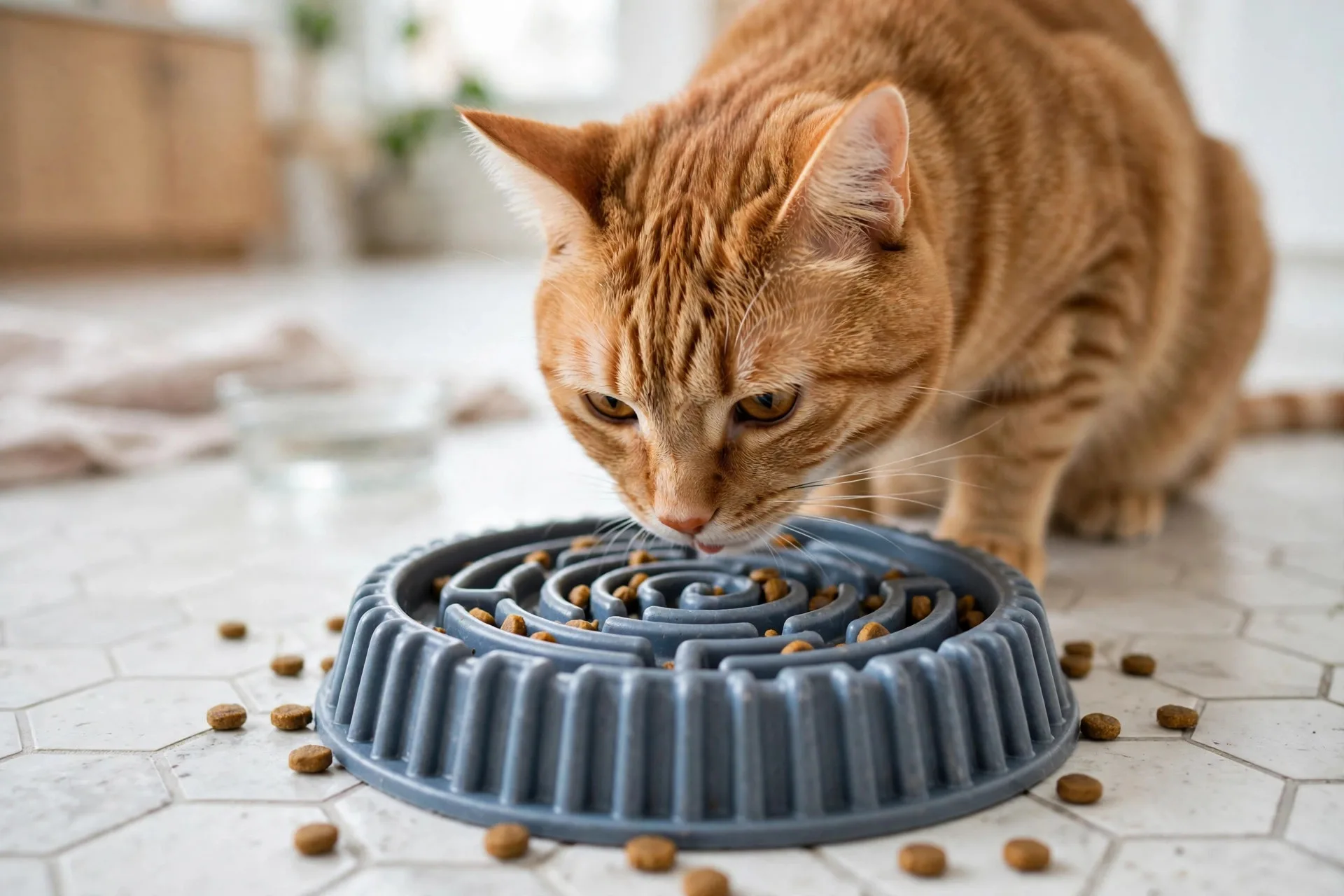
In a home with more than one cat, feed the fast eater somewhere quiet, away from the others. Competition at the bowl turns a meal into a race. If you share your home with a kitten, check the portions in our guide to how much to feed a kitten by age, since a portion that is too big for a small stomach can end the same way.
Hairballs
Cats swallow loose fur every time they groom. Most of it passes through. Some of it clumps in the stomach and comes back up as a damp, cylindrical wad, more sausage than ball.
The Cornell Feline Health Center calls the hairball a common and usually harmless cause of vomiting, and says bringing one up every week or two is not unusual in a healthy cat. Long haired cats and cats that groom a lot bring up more of them.
Regular brushing cuts the fur your cat swallows, which cuts the hairballs. Hairballs that show up every few days, or retching that produces nothing, deserve a vet visit. A hairball can also grow large enough to block the gut, and Cornell warns that a clump that moves into the intestines can cause a life threatening blockage.
A sudden food change
A new food can upset a cat stomach even when the food itself is fine. Cats.com advises moving to a new diet over one to two weeks so the digestive system can adjust, and notes that changing food too often leads to an upset stomach.
Mix a little of the new food into the old food, then raise the share a bit each day. If the vomiting started the same week the food changed, the timing is your best clue. Our guide to safe foods and ones to avoid for cats covers what belongs in the bowl and what does not.
A food sensitivity
Some cats react to a specific ingredient. Adopt-a-Pet explains that most cats with food allergies react to protein sources such as beef, chicken, or eggs, while some react to grains or dairy. The irritation can bring food back up soon after eating, sometimes with loose stool.
A sensitivity is not something you can confirm at home. Sorting it out usually takes a vet guided food trial. Guessing at new diets can make the picture murkier. If the vomiting follows every meal of one particular food, write down the brand and flavor and the date it started, then take that note to your vet.
What bile, foam, and clear liquid usually mean
Food is only one thing a cat brings up. Yellow or green vomit is usually stomach acid or bile, and PetMD notes cats may bring it up when the stomach is empty. White foam can show up when the stomach or small intestine is inflamed. Clear liquid is often stomach fluid or water the cat just drank.
None of that settles a diagnosis on its own. PetMD states the color and contents of vomit can offer clues, but appearance alone cannot diagnose the problem.
A cat that brings up bile once after skipping breakfast is a different case from a cat that brings up bile every morning and has stopped eating. Note what came up and how the cat acted after. That note is what your vet actually works from.
When to worry about cat vomiting: the same day list
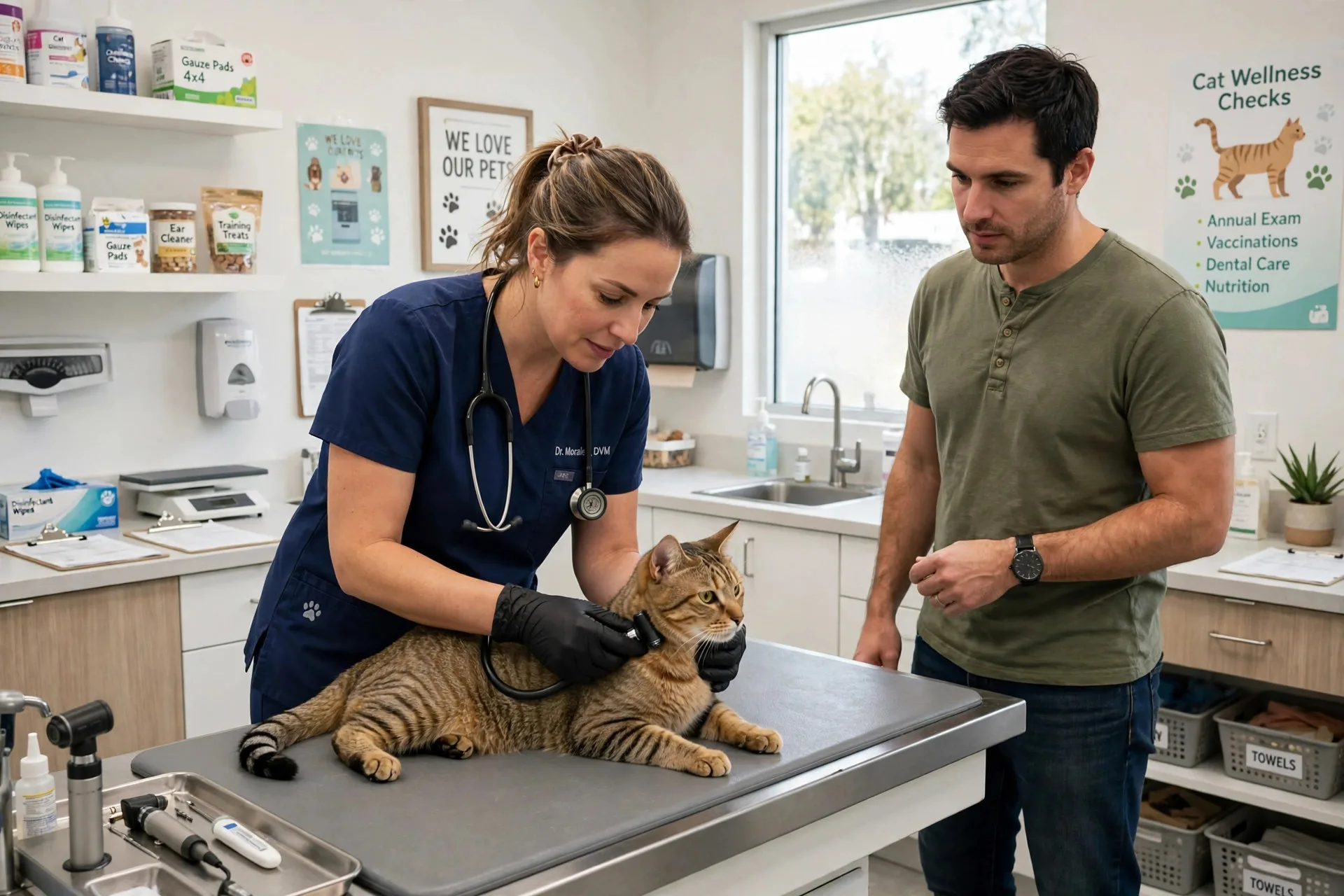
This is the part to keep. Cornell advises a prompt vet visit for any cat that vomits more than once a week, or vomits with lethargy, weakness, a poor appetite, blood in the vomit, more thirst, changes in urination, or diarrhea. PetMD sets a sharper same day line: more than two to three times in a row, vomiting with diarrhea or no appetite, a worm in the vomit, or a cat that cannot keep food or water down.
Call your vet the same day if you see any of these:
- Blood in the vomit, fresh red or dark material that looks like coffee grounds
- Black or very dark vomit
- Vomiting more than twice in 24 hours, or more than two to three times in a row
- A cat that cannot keep water down, or vomits everything including water
- Lethargy, weakness, hiding, or a painful or swollen belly
- A kitten that is vomiting, or a cat with a known illness such as kidney disease, diabetes, or hyperthyroidism, since PetMD notes these cats can dehydrate quickly
- A swallowed string, yarn, hair tie, lily, medicine, or another toxin
- A male cat straining in the litter box with little or no urine
- Repeated retching that brings up nothing
One item on that list is enough. Do not wait to see if a second one shows up. If your cat may have eaten something toxic, call your vet or an emergency clinic right away, and do not try to make your cat vomit unless a vet tells you to. Cornell gives that warning because some substances do more damage coming back up.
Cat throwing up food once or twice a week for several weeks also needs a vet visit, even when the cat seems fine between episodes. PetMD states plainly that chronic vomiting like that needs a workup. Cats hide illness well, and vomiting is often the first sign an owner actually sees. A cat that used to vomit once a month and now vomits every few days has crossed a line, even if it still plays and purrs.
What to do after one episode, and what to tell your vet
Start with the simplest check. Is your cat eating, drinking, using the litter box, and acting like itself? If the answer is yes on all four, watch the cat for the next day and keep the feeding routine steady.
Offer water and keep the next meal small. Do not give over the counter medicine for vomiting unless your vet directs it. PetMD warns against that, and human medicines can be toxic to cats.
If episodes of cat throwing up food keep happening after you slow the meals down, your note becomes the most useful thing you bring to the visit. Your vet will ask how long the vomiting has gone on, how often it happens, what the vomit looks like, whether your cat still eats normally, and whether the food changed recently. PetMD lists those exact questions, so a short note with dates beats a memory of last Tuesday.
At the visit, the vet starts with an exam and a history, then may run blood work, a fecal test, an X-ray, or an ultrasound. Cornell outlines the same path: history, exam, blood work and a fecal exam. You do not need to understand the tests in advance. You need the note and the food bag, or a photo of its label.
Questions first time owners ask most
Is it normal for a cat to throw up food once in a while?
Once, in a cat that then eats and plays as usual, is usually not a concern. PetMD says a cat that vomits once and is back to normal likely does not need a vet visit. The pattern is what counts, not the single episode.
Why does my cat throw up right after eating?
Fast eating is the usual answer. The cat swallows air with the food and the stomach fills too fast, so the extra comes back up whole. Smaller meals and a slow feeder bowl fix it for many cats.
Should I change my cat’s food if it keeps throwing up?
Talk to your vet first. A sudden switch can add a new upset on top of the old one, and a food trial works best with vet guidance. If you do change foods, transition over one to two weeks.
How often is too often for cat throwing up food?
More than once a week needs a prompt vet visit, by Cornell’s guidance. More than twice in 24 hours, or more than two to three times in a row, means call the vet the same day.
Sources
- PetMD, Cat Vomiting: Causes, Types, and What to Do: Cat Vomiting Causes And Types
- Cats.com, Why Is My Cat Throwing Up Undigested Food?: Why Is My Cat Throwing Up Undigested Food
- Cornell Feline Health Center, Vomiting: Vomiting
- Vetster, Everything You Need to Know to Handle Vomiting in Cats: Everything You Need To Know To Handle Vomiting In Cats
- Adopt-a-Pet, Why Is My Cat Throwing Up Undigested Food?: Cat Vomiting Undigested Food