

Quick Answer: What Does Cat Care 101 Cover?
Cat care 101 means the daily basics: measured meals, fresh water, a clean litter box, daily play, regular brushing, and a vet visit at least once a year. Give a new cat a quiet room first and most settle in within a few days. Keep your cat indoors and book the first vet check early.
Your new cat is under the bed. The food bowl sits untouched, the litter box is pristine, and you are wondering if you made a mistake. You did not. Most cats need a few days to trust a new home, and the first week sets the tone for years to come. Think of this as cat 101: the daily routine, the setup and the warning signs, in plain words. This cat care 101 guide covers what to feed, where to put the litter box, how to play without getting scratched, and when a vet visit cannot wait.
Your Cat’s Daily and Weekly Routine
| Task | How often | What good looks like |
|---|---|---|
| Fresh water | Every day | Bowl washed and refilled daily. |
| Food | Every day | Measured meals, amount set by your vet. |
| Treats | Every day | No more than 5 to 10 percent of the diet. |
| Litter scoop | Once or twice a day | Box stays clean enough that your cat uses it. |
| Litter deep clean | Every week, or monthly with clumping litter | Washed with mild detergent, then refilled. |
| Play | Every day | Sessions of 10 to 15 minutes with a wand toy. |
| Brushing | Regularly, a few minutes at a time | Coat smooth, less shedding, fewer hairballs. |
| Nail trim | Every 2 to 3 weeks | Nails blunt, no snagging on fabric. |
| Vet check | Once a year | Twice a year for senior cats. |
| Weigh in | Every 2 months for senior cats | Same scale each time, note any change. |
What Should You Feed Your Cat?
Start with a high quality, brand name food made for your cat’s life stage. Kittens, adults and seniors need different recipes, and the bag should say which stage it suits. Cats need taurine, an amino acid that supports heart and eye health, and a food balanced for their life stage will contain it. The ASPCA’s general cat care guide says your vet should assess your cat and set the diet, since age, activity level and health change what and how much a cat should eat. Measure the food instead of keeping the bowl full all day: it is the simplest way to stop weight creeping up. Treats stay at 5 to 10 percent of the diet. Wash the bowl and refill it every day, and a second bowl in another room helps in a bigger home. Skip people food unless you have checked it first. The ASPCA’s people foods to avoid list covers the risky items, and one trap is baby food: if it contains onion or garlic powder, it can poison your cat.
How Do You Set Up a Litter Box Your Cat Will Actually Use?
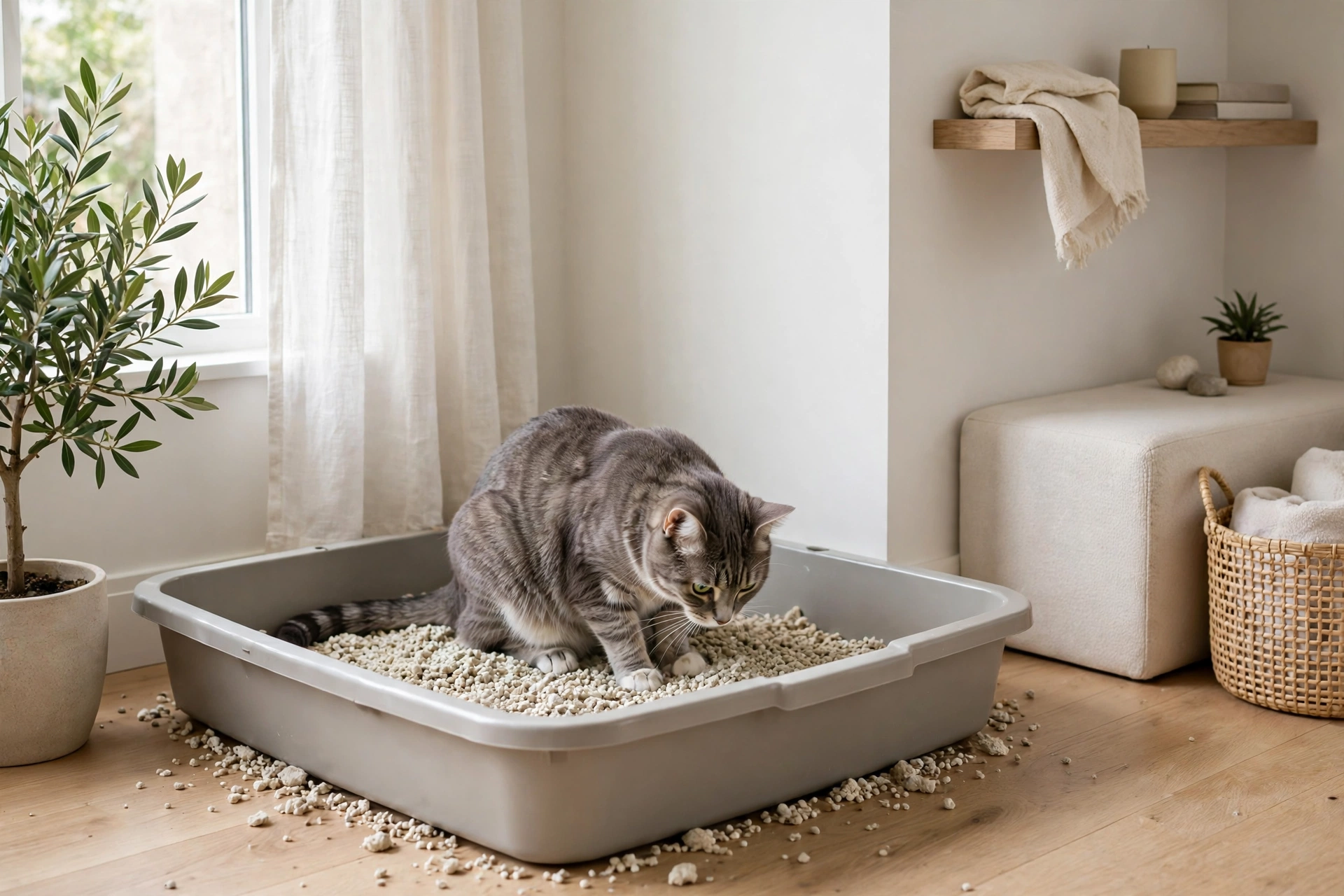
Put the box somewhere quiet that your cat can reach without crossing a noisy room. In a home with more than one floor, the ASPCA advises one box per floor. Pick a large, uncovered box: most cats prefer them, and kittens and seniors need lower sides so they can step in easily. Fill it with 1 to 2 inches of unscented litter. Scoop solids at least once a day, twice if you can. Once a week, dump the litter, wash the box with a mild detergent and refill it. If you use clumping litter and scoop twice a day, a full clean once a month is enough. Never use ammonia, deodorants or scents, lemon most of all, when you clean the box. If you must move the box, shift it a few inches a day, not across the house in one go. And if your cat stops using the box, book a vet visit: the ASPCA notes that refusal is sometimes a medical problem, not a behavior problem.
How Much Play and Attention Does a Cat Need?
Ten to 15 minutes of play a day changes a cat’s mood. Wand toys work best because they let your cat chase, pounce and catch something without your hands becoming the toy. Let your cat catch the toy a few times during play, then end the session with a small treat. The ASPCA’s new cat tips put a good session at 10 to 15 minutes and warn against hands and feet as toys: if your cat grabs a hand, go still, fold your arms and look away for a few minutes. Cats also need to scratch. Put a sturdy post where your cat can stretch fully, at least 3 feet high, and add a flat cardboard scratcher for variety. Reward your cat with a treat and praise when the scratcher gets used. Between sessions, learn how to read your cat’s body language so you can tell the difference between excitement and overstimulation.

How Do You Groom a Cat Without a Fight?
Most cats keep themselves clean and rarely need a bath. Brushing does the real work: a few minutes with a brush or comb keeps the coat clean, cuts shedding and lowers the number of hairballs. Start with short sessions while your cat is relaxed, and stop before they get annoyed. Trim nails every 2 to 3 weeks so they stay blunt and catch less on furniture and fabric. If your cat hates one tool, try another: a comb suits some cats, a soft brush suits others.
What Does the First Week With a New Cat Look Like?
Set your cat up in one small, quiet room and shut the door. The room needs a bed, a hiding spot, food, water, a scratcher and a litter box. Sit a few feet away and let your cat come to you: attention on their terms builds trust faster than chasing it. Most cats settle in within a few days, though some need longer. Once your cat moves around the room with confidence, open the rest of the home a little at a time. Leave the carrier out with the door open and a treat inside once a day, so vet trips later feel normal instead of scary. If your new arrival is a kitten, run through our new kitten checklist before the first night so the supplies are ready.
How Often Should a Cat See the Vet?
Kittens see the vet monthly, adults once a year, and middle aged and senior cats twice a year. The visit covers more than shots. Your vet will ask about diet, exercise, drinking, breathing, behavior and litter box habits, then check weight, teeth, coat, heart, lungs and belly. A fresh stool sample goes in for a parasite check, and the VCA’s wellness examination guide says screening usually means a blood count, a biochemistry profile, a urine test and a thyroid check. This matters because cats hide illness well: a problem can grow for months before you notice it, and early care costs less than late care. Female cats should be spayed and male cats neutered by five months of age, the ASPCA advises. Give your cat an ID tag or a microchip too, so a lost cat has a way home. For the deeper health detail, our complete cat health guide walks through food, water, dental care and daily habits.
How Do You Keep Your Home Safe for a Cat?
Keep your cat indoors. The ASPCA is blunt about this: outdoor cats do not live as long as indoor cats, and the risks run from cars and fights to coyotes, fleas and infectious disease. Never give your cat medicine meant for people or for another pet: only a vet should prescribe it. If you think your cat ate something poisonous, call your vet or the ASPCA Animal Poison Control Center at (888) 426-4435, which runs around the clock. Check people food before you share it, and read baby food labels with care: onion or garlic powder can poison a cat.
Cat Care 101 Facts
Six facts worth knowing before your first month ends.
- First birthday: your cat is already the human age equivalent of a 15 or 16 year old.
- Second birthday: that equivalent reaches 24 or 25, then aging slows to about 4 cat years per calendar year.
- Senior years: cats count as senior from about 10 years old, and geriatric past 15.
- Treats: keep them at 5 to 10 percent of the daily diet.
- Water: wash and refill the bowl every day.
- One myth: one calendar year does not equal seven cat years.
Infographic Data Summary — Cat Care 101: The First Week, Done Right
- Quiet room first, door closed, with food, water, litter and a hiding spot.
- Scoop the litter box once or twice a day.
- Play 10 to 15 minutes with a wand toy, never with hands.
- Treats stay under 10 percent of the diet.
- Vet visit at least once a year, twice a year for seniors.
PawPediaHub.com
When to See a Vet
Cats hide illness, so small changes matter. Call your vet promptly if you see any of these.
- No food or energy for more than 2 days: the ASPCA says to take your cat to the vet if anorexia, diarrhea, vomiting or lethargy continue for more than two days.
- Vomiting again and again: repeated vomiting needs a vet, not a wait and see approach.
- Diarrhea over 3 days: the VCA lists diarrhea lasting over three days as a reason to book an exam.
- Trouble in the litter box: difficulty passing stool or urine needs care the same day.
- Limping for more than 1 to 2 days: the VCA lists limping past one to two days, and any leg that bears no weight at all needs care within hours.
If you suspect poisoning, call your vet or the ASPCA Animal Poison Control Center at (888) 426-4435 right away.
Frequently Asked Questions
How much should I feed my cat each day?
There is no single amount. Your vet sets the portion from your cat’s age, weight, activity level and health, and the food label gives a starting range for that life stage. Measure meals instead of leaving the bowl full all day. Keep treats at 5 to 10 percent of the diet.
How often should I clean the litter box?
Scoop solids at least once a day, twice if you can. Dump, wash with mild detergent and refill at least once a week. With clumping litter and twice daily scooping, a full clean once a month works. Skip ammonia, bleach and lemon cleaners: the smell can put your cat off the box.
Do indoor cats still need a vet visit every year?
Indoor cats need a yearly check, and seniors need one twice a year. Cats hide illness well, so a problem can grow for months before you see it. The visit covers weight, teeth, coat, heart, lungs and belly, plus a fecal check for parasites and blood and urine screening when your vet advises it.
When should I spay or neuter my cat?
The ASPCA advises spaying female cats and neutering male cats by five months of age. Book the appointment early, and ask your vet what to expect on the day and how to care for your cat in the first days after surgery.
Why is my new cat hiding all the time?
Hiding is how cats cope with a new place. Give them a small quiet room with food, water and a litter box, and let them come to you. Most start exploring within a few days. If it lasts past a week, or your cat stops eating, call your vet.
Start with the first week: set up the quiet room, book the vet visit, and scoop the box twice a day. Everything else in this guide builds on those three habits.
Sources
- ASPCA, General Cat Care: https://www.aspca.org/pet-care/cat-care/general-cat-care
- ASPCA, Tips for a New Cat: https://www.aspca.org/pet-care/general-pet-care/tips-new-cat
- VCA Animal Hospitals, Wellness Examination in Cats: https://vcahospitals.com/know-your-pet/wellness-examination-in-cats
- VCA Animal Hospitals, Senior Cat Care: Special Considerations: https://vcahospitals.com/know-your-pet/cat-care
- ASPCA, People Foods to Avoid Feeding Your Pets: https://www.aspca.org/pet-care/animal-poison-control/people-foods-avoid-feeding-your-pets