
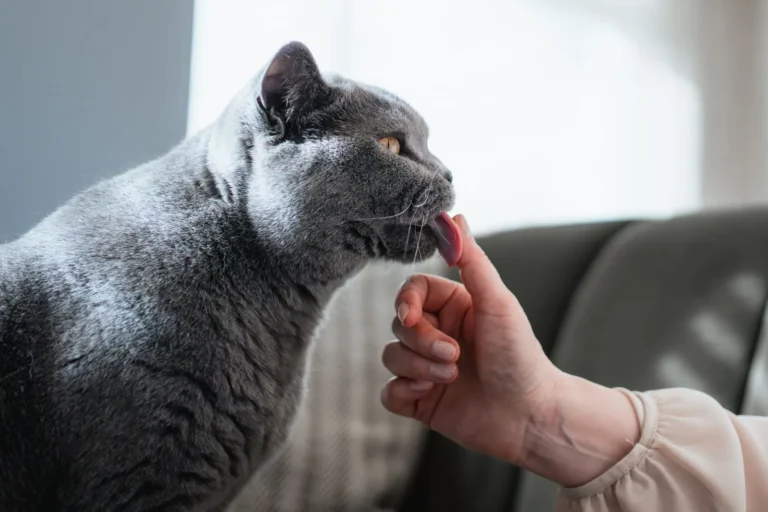
Quick Answer: Why Do Cats Lick You?
Cats lick you to groom you and mark you with their scent, and usually it is affection. A few licks on your hand are normal social grooming from kittenhood. Watch for licking that never stops. A bare patch or eating less points to stress or pain, and it needs a vet check.
You sit down with a book, and your cat climbs onto your lap and starts licking your hand like it is a chore she has to finish. It feels sweet for about ten seconds. Then her rough tongue keeps going, and you start to wonder if she is telling you something. She might be.
This guide gives you the 7 real reasons cats lick people, a simple way to tell normal licking from overgrooming, and the exact signs that mean you should call your vet.
| What you see | What it usually means | What to do |
|---|---|---|
| A few slow licks on your hand, then she settles | Affection and social grooming | Enjoy it. Wash your hands after. |
| Licks her own coat for much of the day | Normal grooming. Cornell notes older cats spend much of their waking hours licking their coats. | Normal if her coat looks full and she eats and plays as usual. Brush her daily. |
| Licks one patch on herself again and again | Self-soothing or a sore spot | Check the skin. If the fur thins or the skin looks raw, call your vet. |
| Licks you while kneading and purring | A relaxed cat reliving kittenhood comfort | Enjoy it. Keep her claws trimmed so it stays comfortable. |
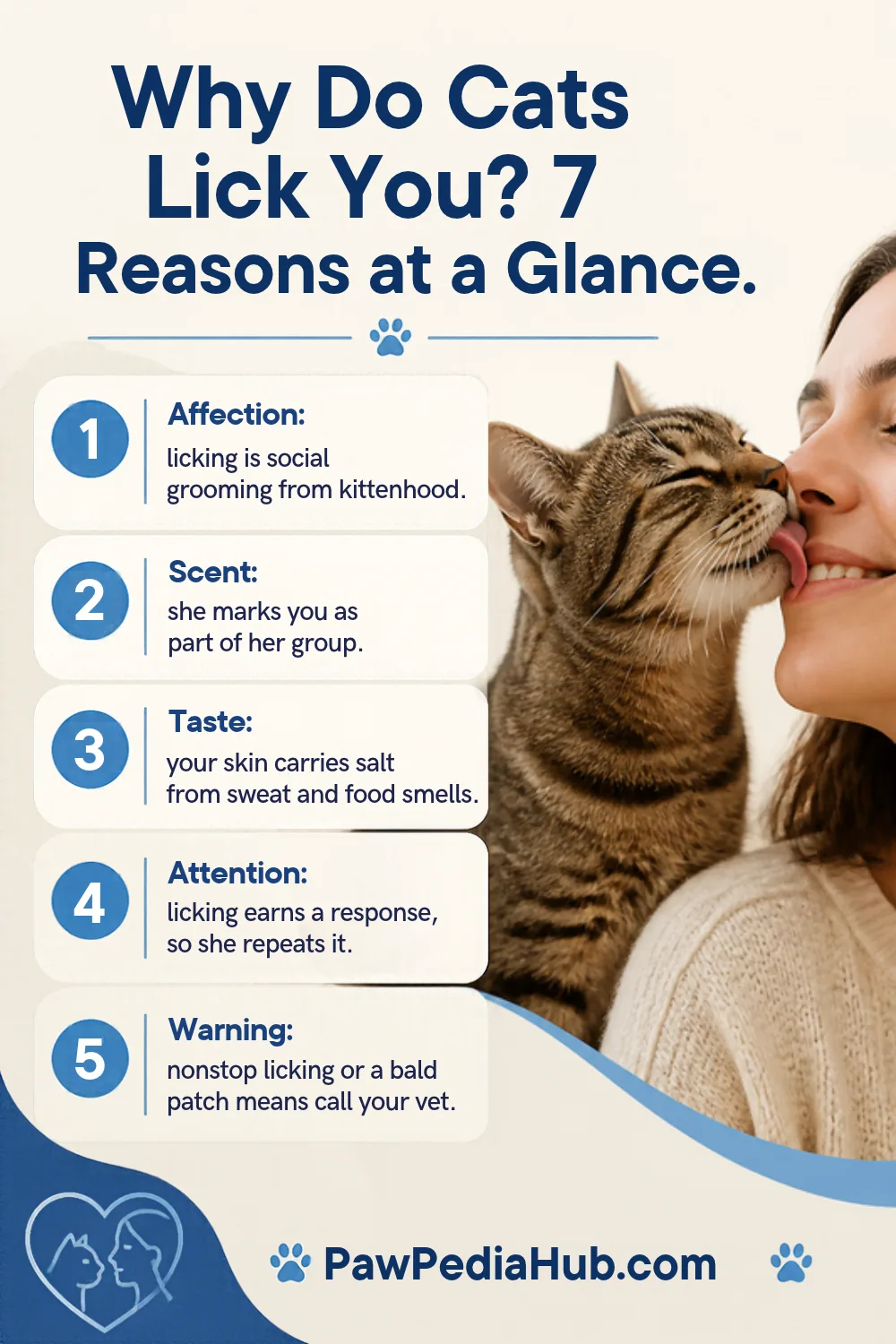
Why Do Cats Lick You? 7 Reasons That Cover Almost Every Lick
Almost every lick falls into one of seven buckets, and only the last two need a closer look.
1. You are part of her social group
Cats groom each other. Mothers lick kittens, and adult cats that trust each other lick each other too. When your cat licks you, she is treating you the way she treats another cat she trusts.
International Cat Care puts it plainly: cats rub and groom the members of their social group, and a cat that does this to you sees you as part of that group.
Her tongue helps. It carries backward facing barbs that work like a comb, parting the fur and removing dead hair and debris. When she licks you, you feel that roughness at once. Kittens pick up the habit while they nurse, and in those first weeks their food needs change fast, so new owners often check how much food a kitten needs each day.
2. She is marking you with her scent
Cats carry scent glands in their face and body, and rubbing and licking spread that scent around their group. VCA Animal Hospitals adds that cats also carry scent glands around their paws and claws, so kneading marks territory too.
She is mixing her smell with yours so you smell like home to her.
3. She likes how you taste
A cat tongue is an organ of taste as well as a comb, and your skin carries salt from sweat, plus traces of lotion and soap. A few licks after you cook or work out are usually just a taste test.
Do not let her lick skin that has lotion, ointment, or another topical product on it. PetMD warns some ingredients in these products can be harmful to cats, so keep them away from the spots she can reach, and call your vet right away if she swallows a large amount.
4. She wants your attention
Cats learn fast. International Cat Care notes that when a cat meows and gets something rewarding, like attention or food, she is very likely to do the same thing again. Licking works the same way.
If you laugh or talk to her, or get up to feed her every time she licks you, she will lick you again tomorrow. She learned that licking earns a response.
If you want fewer licks, stay boring for a minute: no talking, no eye contact, no treat. Then give her attention when she is calm instead.
5. She is relaxed and happy
Licking often comes with kneading and purring, and that combination is the clearest happy signal a cat has. Kittens knead their mother while nursing to keep the milk flowing, and VCA notes the behavior may carry into adulthood as the cat seeks the same feel-good hormones.
A cat that licks you while she kneads your lap and purrs is usually telling you she feels safe. Enjoy it. If her claws are out, keep them trimmed short so it stays comfortable for both of you. Kneading and licking travel together so often that we explain the pair in full in our guide to why cats knead and purr.
6. She is soothing herself because something feels off
Not every lick is happy. Cats also lick to calm themselves down. International Cat Care notes cats purr when they are sick or injured, possibly as self-soothing, and VCA says the same about kneading and purring in cats that are not feeling their best.
A cat that starts licking you or herself more than usual after a move or a new pet may be coping with stress. The licking itself is not the problem. The change behind it is what deserves your attention.
7. Something hurts or itches
When licking turns to one spot, pain or skin trouble is often behind it. Some cats overgroom because they are stressed or in pain, and compulsive licking means they swallow far more fur than usual.
You will not find the cause by watching alone. If one spot gets all the attention, that is a vet question, not a training question.
How Can You Tell Normal Licking From Overgrooming?
The answer is the pattern, not the minutes. A cat that grooms a lot is not automatically sick, but a cat that grooms one spot and cannot stop is a different story.
What normal licking looks like
She licks for a few seconds or a minute, then stops on her own and goes back to napping or playing, her coat full. She eats and plays as usual.
A lick followed by a nap is the usual pattern, which fits how much cats sleep each day. Cornell notes older cats spend much of their waking hours licking their coats. Judge the session by how it ends: she stops on her own, and her coat stays full.
What overgrooming looks like
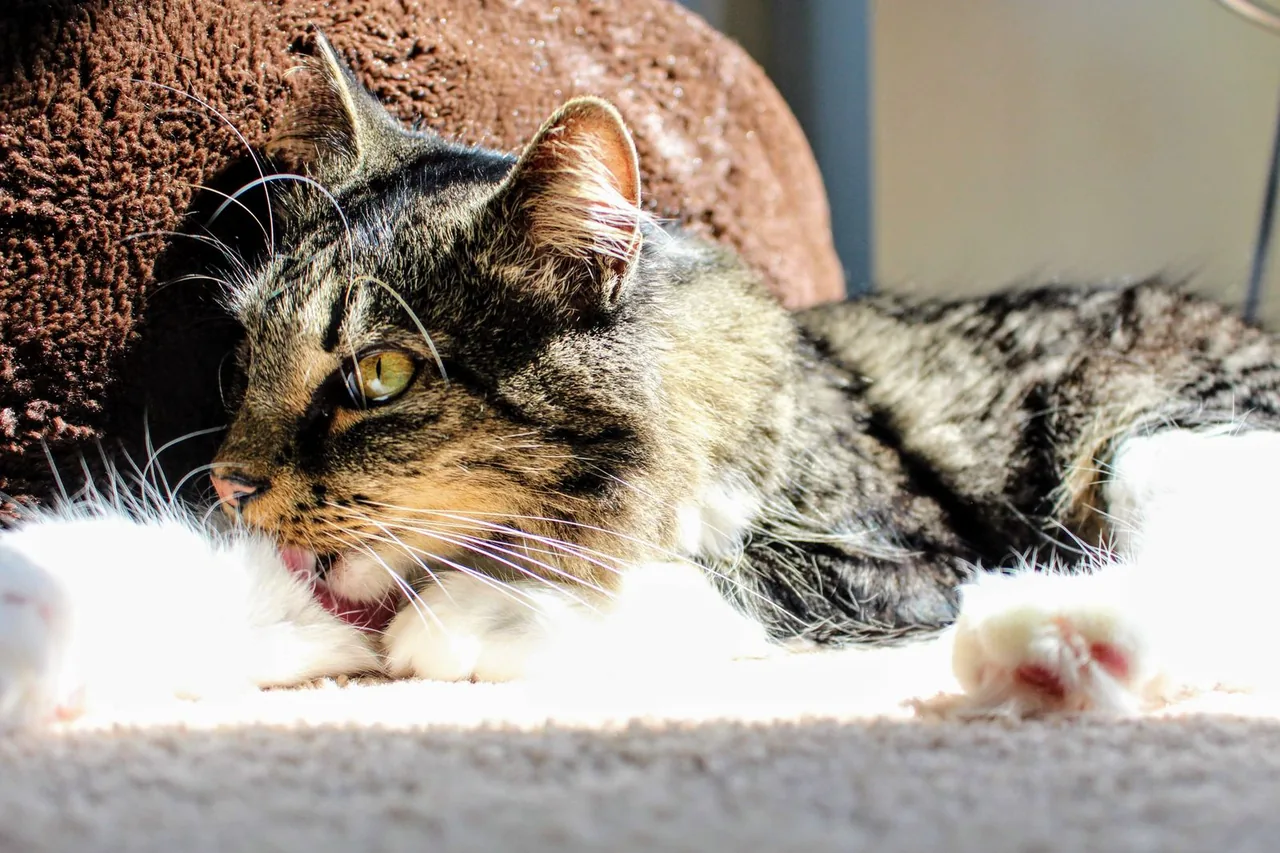
The same spot, again and again, until fur thins or goes missing in one patch and the skin looks sore or raw. She keeps licking even when you try to distract her with a toy.
Hairballs show up more often too, because compulsive licking means she swallows far more fur. She may also hide more or eat less.
What Should You Do When Your Cat Licks You?
- Stay still for a moment. Let her finish a short lick. A cat that is pushed away mid-groom can get startled, and you lose the chance to see what kind of lick it was.
- Look at the spot. Check your skin for lotion or food smells, and check her coat for a thin patch or sore skin.
- Redirect, do not punish. If the licks go on too long, stand up calmly and offer a toy or a short play session. Never punish a normal behavior: International Cat Care warns it can break the bond.
- Keep the day steady. Same feeding times and same play time, plus a quiet hiding spot she can reach. A steady routine is the cheapest fix you have.
- Track it for 7 days. Note when she licks and which spot she picks. Note how long each session lasts, and whether she eats and plays normally. A week of notes turns a vague worry into a clear story your vet can use.
When to See a Vet
Most licking needs no vet at all. If you see one of these five signs, stop the home care and call your vet.
- Bare or raw skin. She has licked one patch until the fur is gone or the skin looks sore or broken. Call your vet promptly.
- No food for more than a day. She licks more than usual and has not eaten for more than 24 hours, or she seems lethargic. Cornell says a cat that refuses food for more than a day or so should see a vet without delay.
- Retching with nothing coming up. Repeated unproductive retching, or hacking that sounds like a cough. Cornell warns frequent hacking may be asthma, which needs emergency care.
- A sudden change. A cat that never licked much starts licking nonstop and hides more, or she eats less. VCA advises contacting your vet when a behavior change comes with hiding or an appetite change.
- Licking that does not stop. She licks the same spot for a week or more, and the patch keeps getting bigger. That pattern needs a vet to find the cause.
Frequently Asked Questions
Why do cats lick their owners?
Cats lick their owners to groom them and share scent, a habit from kittenhood that usually means affection. International Cat Care notes cats groom their own group, and VCA links kneading to bonding and oxytocin. A few licks are normal. Nonstop licking of one spot is not.
Is it safe to let my cat lick me?
A few licks on healthy skin are fine for most people. Wash with soap and water after, and keep her away from open cuts and babies. If your skin turns red or sore, stop the licking and ask your vet.
Why does my cat lick me so much all of a sudden?
Something changed when licking suddenly rises. Stress or pain can push a cat to lick more, and so can a skin problem. VCA notes cats may lick and knead as self-soothing when unwell. If the change lasts more than a day, call your vet.
Why does my cat lick itself so much?
Grooming is a cat’s daily work. Cornell notes older cats spend much of their waking hours licking, and a hairball every week or two is normal in a cat that is otherwise well. One bald patch or raw skin means a problem. Then call your vet.
Should I stop my cat from licking me?
Do not punish the licking. International Cat Care warns that punishing a normal behavior can break the bond. Stand up calmly when the licks go on too long and offer a toy. Give her attention when she is calm, so calm behavior earns the reward.
Our Verdict
Most licks are a compliment. Your cat licks you because you are hers, in the way cats understand belonging: groomed and scented like one of her own.
If the licks stay short and she eats well and plays as usual, enjoy them. If one spot takes over or she stops eating, call your vet. Your next read is our guide to why cats knead and purr, which explains the other half of this same cuddly habit.
Sources
- International Cat Care: Why do cats..? — Why Do Cats (social grooming and scent glands, tongue barbs, purring as self-soothing)
- Cornell Feline Health Center: A Hairy Dilemma — Hairy Dilemma (grooming and tongue papillae, hairball every week or two as normal, not eating for more than a day as a vet warning)
- VCA Animal Hospitals: Why do cats knead? — True Or False Do Cats Knead (kneading from nursing, oxytocin and bonding, scent glands on paws, self-soothing when unwell)
- Catster: The Surprisingly Simple Ways to Help a Cat With Hairballs — The Surprisingly Simple Ways To Help A Cat With Hairballs (some cats overgroom because they are stressed; compulsive licking dramatically increases fur intake)
- PetMD: Why Does My Cat Lick Me? — Why Does My Cat Lick Me (affection, attention, group scent, kitten behavior, taste, anxiety, medical issues such as nausea and pain; do not let a cat lick topical products)