
The ASPCA says most dogs need a bath at least once every three months. VCA Animal Hospitals says non-shedding breeds with no health problems usually need one about every six to eight weeks.
That gap tells you most of what you need to know about dog grooming at home. There is no single schedule. The coat, the lifestyle, and the dog in front of you set it.
Learning how to groom a dog at home means five jobs, done in the right order: brush, nails, ears, bath, and teeth. Brush first, because a wet tangle turns into a mat. Nails second, while the dog is still calm. Bath last, because a clean dog with untrimmed nails is only half groomed.
A brush that fits the coat, a comb, nail clippers or a grinder, dog shampoo, an ear cleaner, and a dog toothbrush cover almost every dog.
If you have not bought the basics yet, our new puppy checklist covers the first week supplies, including grooming tools.
How to groom a dog at home starts with the brush, not the bath
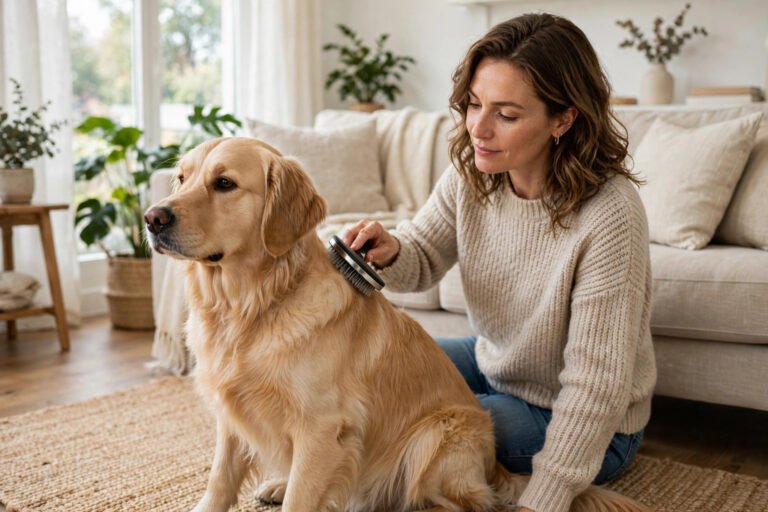
Brushing does more than keep the coat looking tidy. The ASPCA says regular brushing removes dirt, spreads natural oils through the coat, prevents tangles, and keeps the skin clean and free of irritation.
It also gives you a weekly chance to feel for lumps, ticks, scabs, and sore spots. VCA says to check the coat every day for tangles under the armpits, in the groin, and behind the ears. Look for burrs after a walk through grass or woods.
How often you brush depends on the coat. The ASPCA says smooth, short coats and short, dense fur like a retriever coat need brushing once a week, with a slicker brush for tangles and a bristle brush to finish. Long, silky coats need daily attention with a slicker brush, then a bristle brush, plus a comb through the fur.
VCA draws the same lines with different tools. Slicker brushes suit curly, non-shedding coats like poodles. Combs or stiff bristle brushes suit medium-length coats that shed, like retrievers. Grooming gloves suit smooth coats, and long-toothed combs suit long hair and pull out loose undercoat during a seasonal shed.
Brush in the direction the hair grows, in short sections. Hold the base of a tangle so you do not pull on the skin, and work it apart from the tips inward. Then run a comb through the section. If the comb glides from skin to tip, that section is done.
Mats need a different rule. VCA says to brush burrs and tangles out before bathing, because tangles can become impossible to remove after a bath. If a mat is large or tight against the skin, do not cut it out with scissors. VCA says to use clippers only, never scissors, because skin folds into a mat and scissors cut skin easily.
When tangles are severe, VCA says to seek professional care from a groomer or a vet. A mat that has already irritated the skin needs a vet visit, not a home fix. Brush after walks too, not just on a schedule. A dog that runs through brush picks up burrs and twigs that turn into mats in a day.
Bathe only when the dog is dirty or smells
Most dogs need a bath when the coat gets dirty or develops a smell. VCA says most dogs need bathing on an occasional basis, usually when the coat becomes dirty or when they develop a doggy odor.
The ASPCA puts a floor under it at least once every three months. Dogs that spend a lot of time outdoors or have skin problems may need more. VCA says non-shedding breeds with no health problems usually need a bath about every six to eight weeks. Dogs with a heavy undercoat benefit from a bath in spring or fall, when they shed.
The American Kennel Club fills in the extremes. Hairless breeds need weekly baths.
Dogs with medium to large coats may need a bath from weekly to every four to six weeks, as long as the coat is kept up between baths.
Thick double coats need care in the other direction. Overbathing can strip too much oil from the skin and disrupt the seasonal insulation a double coat provides. Short-coated dogs often get by with a rubdown using a damp washcloth between baths.
Use shampoo made for dogs, and nothing else. VCA says dogs should only be bathed with shampoo formulated for dogs, because their skin has a different thickness and pH than human skin. Human shampoo, including baby shampoo, is far too harsh for their skin.
The ASPCA adds that human shampoos are not toxic to pets, but some contain fragrances that can irritate the skin. A hypoallergenic shampoo without added perfume is the best choice for routine bathing, according to VCA.
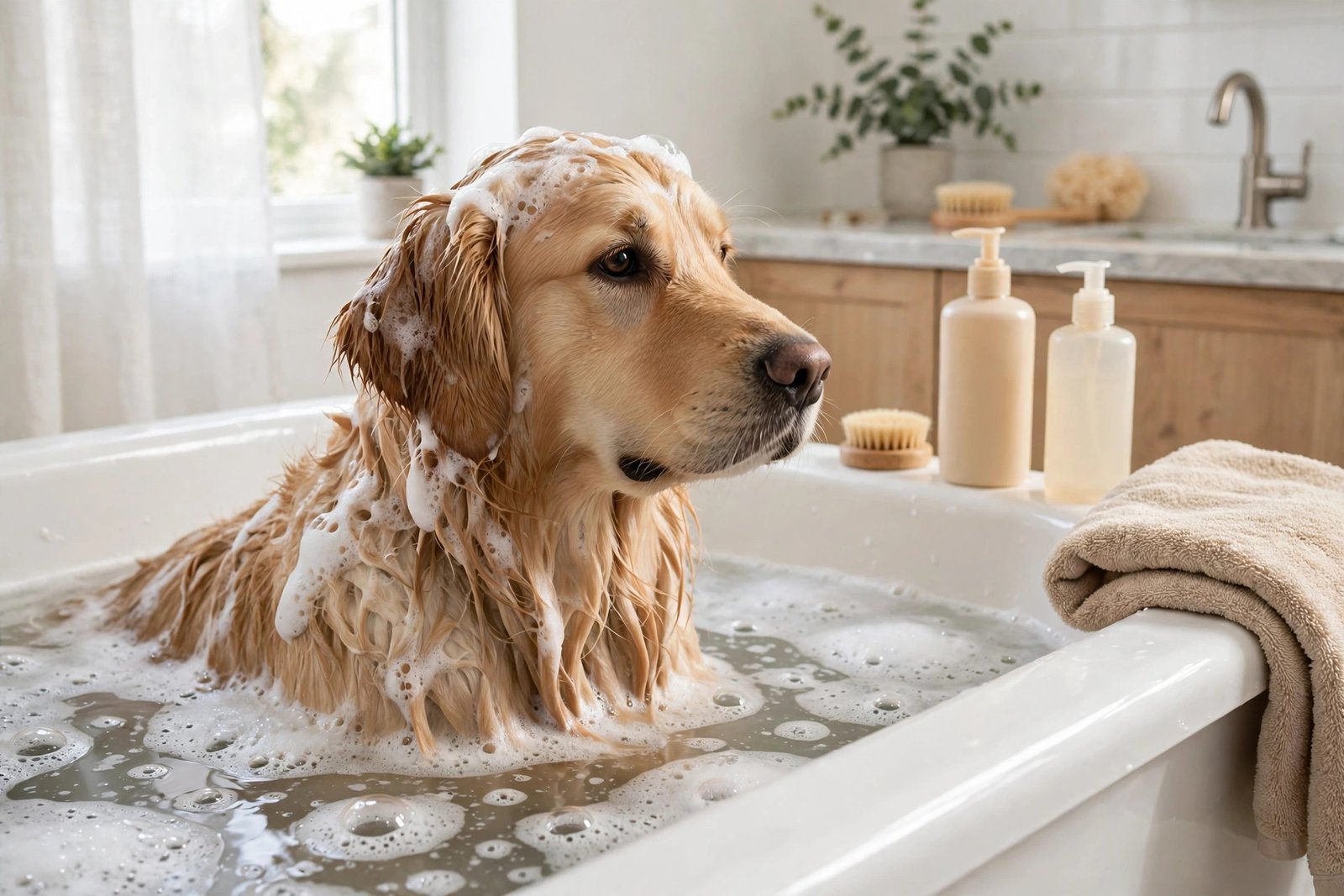
The bath itself is simple. Brush first, then put the dog in a tub or sink filled with about three to four inches of lukewarm water, as the ASPCA describes. Wet the coat with a spray hose, a pitcher, or a cup, and keep water out of the ears, eyes, and nose.
Work the shampoo through the whole coat, then rinse it out completely. VCA says shampoo must be thoroughly rinsed out, and a conditioning product after shampooing restores moisture to the skin. If you use a medicated shampoo, VCA says it must sit on the coat for 5 to 10 minutes before rinsing, so read the label.
Dry the dog thoroughly with a large towel. The ASPCA says to clean skin folds on wrinkled dogs like pugs and Shar Peis with damp cotton, then dry between the folds so dirt and bacteria do not cause irritation.
Nails: take a little, and stop before the quick
Nails are the job most owners skip, and the one that causes the most trouble when skipped. The ASPCA says a dog’s nails should be trimmed when they just about touch the ground when the dog walks. If the nails click on the floor or snag on carpet, it is time.
Dogs that walk a lot on pavement wear their nails down and go longer between trims. Dogs that live mostly indoors or on grass need trims more often.
The AKC says all pets benefit from monthly ear cleaning and nail trimming. Treat monthly as a starting point. The floor test tells you more than the calendar.
There are two basic clipper styles, scissors type and guillotine type. The ASPCA says both work equally well, so pick the one you are comfortable holding. A nail grinder is an alternative. It sands the nail down and gives more control, but it takes longer, and some dogs dislike the sound and vibration.
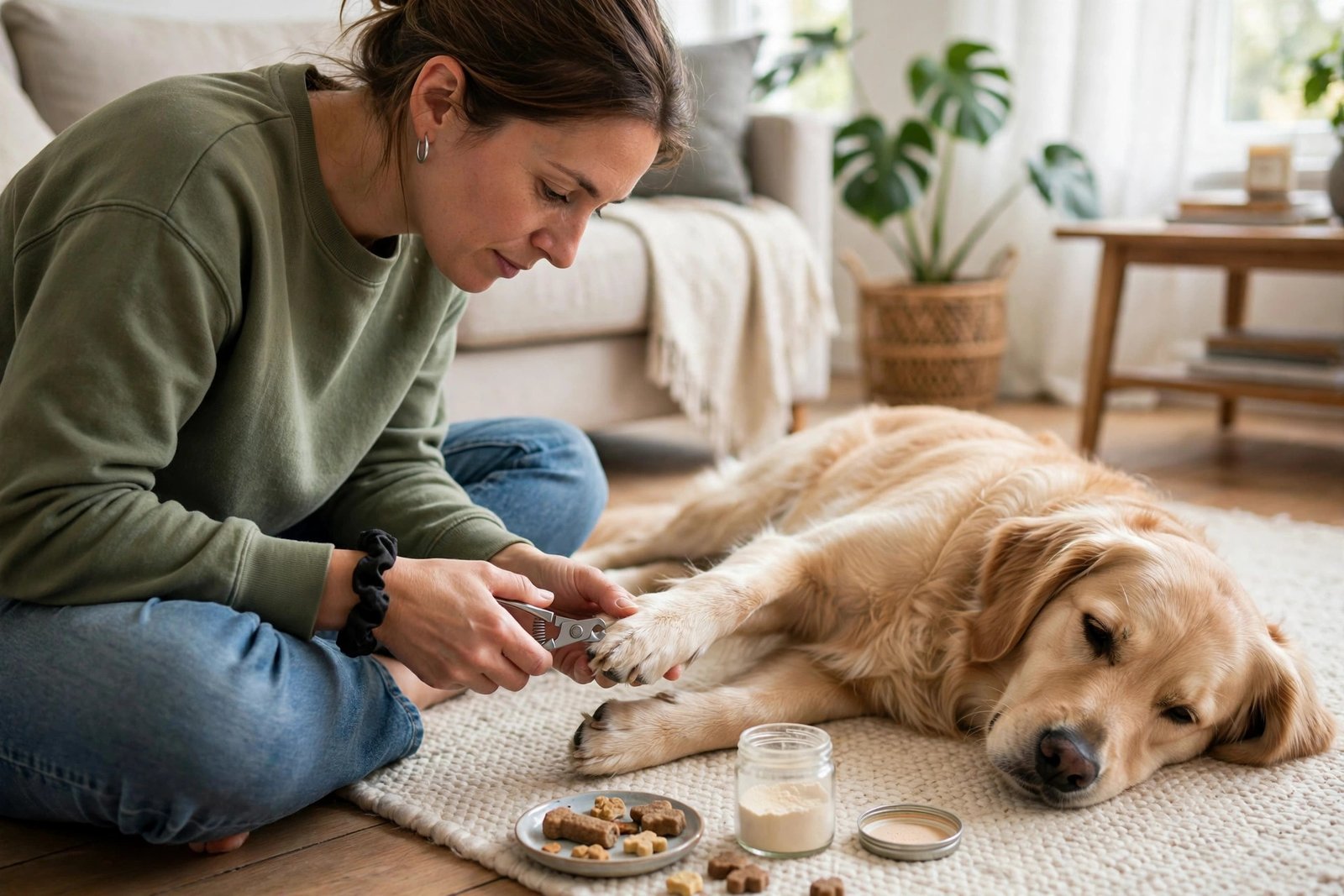
The quick is the part to respect. It is a vein that runs into the nail, and cutting it hurts and bleeds. The ASPCA says to cut a little bit of nail with each pass until you can see the beginning of a circle, still nail colored, appear on the cut surface.
That circle means you are nearing the quick, so stop that nail and move on. On black nails the quick is harder to see, so take even smaller cuts. Hold the trimmer so you cut from top to bottom at a slight angle, not side to side.
If you do cut the quick, stay calm. The ASPCA says to apply styptic powder or corn starch to the bleeding tip and press gently so it sticks. If bleeding continues for more than a few minutes, call your vet. Keep the powder within reach before you start.
Get the dog used to foot handling before the first trim. The ASPCA says to rub your hand up and down the leg, press each toe gently, and give praise and treats. Within a week or two of daily foot massage, most dogs feel more comfortable with a trim.
Tire the dog out with exercise first, and ask someone to help hold the dog still. If the dog panics, drools, trembles, or snaps despite a slow introduction, do not force it. The ASPCA says to let a vet or a professional groomer try, and if that fails, to talk to a certified animal behaviorist or a certified professional dog trainer.
Ears, teeth, and paws take ten minutes a week
Ears need a look, not a thorough clean. The ASPCA says to include regular ear checks in the grooming routine, especially for dogs that produce a lot of earwax or have hair inside the ear.
Do not clean so often or so far in that you cause irritation, and never insert anything into the ear canal. If the inner ear looks dirty, wipe what you can see with a cotton ball or gauze dampened with mineral oil, hydrogen peroxide, or a liquid ear cleaner made for dogs.
Watch for the signs of an ear infection. The ASPCA lists ear scratching, brown, yellow, or bloody discharge, odor, redness, swelling, and head shaking. Dogs with floppy ears, like cocker spaniels and basset hounds, are more prone to trouble. If you see any of those signs, see your vet.
Teeth need brushing two to three times a week, according to the ASPCA. Start by massaging the lips with a finger in a circular motion for 30 to 60 seconds once or twice a day for a few weeks. Then put a little dog toothpaste on the lips so the dog gets used to the taste.
Use a toothbrush made for dogs, which is smaller and softer than a human brush, or a finger brush. Hold it at a 45-degree angle and clean in small circles, one area at a time. Do not use human toothpaste, which can irritate a dog’s stomach.
Once a week, lift the lips and check the gums. They should be pink, not white or red, with no swelling.
Paws need a quick check at the same time. The ASPCA says to look for wounds, infections, and objects lodged between the toes, and to comb and trim the hair between the toes so it sits even with the pads. That stops painful matting.
If the pads are cracked and dry, ask your vet for a pad moisturizer. Do not use human hand moisturizer, which can soften the pads and lead to injury. In winter, wash the paws in warm water after walks to rinse away salt and ice melt chemicals. In summer, keep the dog off hot pavement, which burns pads.
When to hand the dog to a professional
Home grooming covers most dogs most of the time, and it still has limits. A groomer or vet should handle mats that sit tight against the skin, a dog that panics at nail trims despite weeks of slow work, and any skin problem that keeps coming back after grooming.
The ASPCA says to schedule a vet exam as soon as you notice any abnormality in the skin or hair, or if the dog keeps scratching, licking, or biting at its fur. A dull coat, bald patches, or a smell that stays after a bath can point to something under the skin, and shampoo will not fix it.
Coats that keep growing need a professional cut on a schedule. Dogs like Yorkies, Shih Tzus, and Bichons need a trim every four to six weeks if you keep them in a haircut, according to the AKC, with daily or near daily brushing at home between visits.
Double-coated dogs like retrievers and huskies need no haircut schedule, but never shave a double coat to cut shedding. VCA says to leave at least 1 inch of hair if you cut a long coat short, to avoid sunburn, and warns that a rare condition called post-clipping alopecia can delay regrowth for up to two years in plush-coated breeds like huskies and Pomeranians.
Home grooming keeps the dog clean, comfortable, and checked. The professional handles the cuts, the mats, and the problems. Our guide on puppy training for beginners covers the other half of a calm grooming session, because a puppy that holds still for five minutes makes every job above easier.
Questions owners ask about grooming a dog at home
How often should I bathe my dog?
When the coat is dirty or smells. The ASPCA says at least once every three months, VCA says about every six to eight weeks for non-shedding breeds, and the AKC says weekly to every four to six weeks for medium to long coats.
Can I use human shampoo on my dog?
Use a shampoo made for dogs instead. VCA says human shampoo, including baby shampoo, is far too harsh for a dog’s skin, which has a different thickness and pH. Ask your vet if your dog has skin problems.
How do I know when my dog’s nails need trimming?
When they just about touch the ground as the dog walks, or you hear them clicking on hard floors. The AKC says monthly trims suit most pets, and the ASPCA says dogs that walk on pavement need them less often.
My dog hates grooming. What do I do?
Shorten the session and pay the dog for calm behavior. Our guide on puppy training for beginners covers reward-based training, and the ASPCA says to introduce foot handling with treats over a week or two before the first trim. If the dog still panics, let a groomer or vet take over.
Brush the dog tonight, before the next bath, and run a comb through the coat after. If the comb glides from skin to tip, you have the routine. If it catches, that is the tangle to work on first.
6 thoughts on “How to Groom a Dog at Home: A Beginner Routine”