
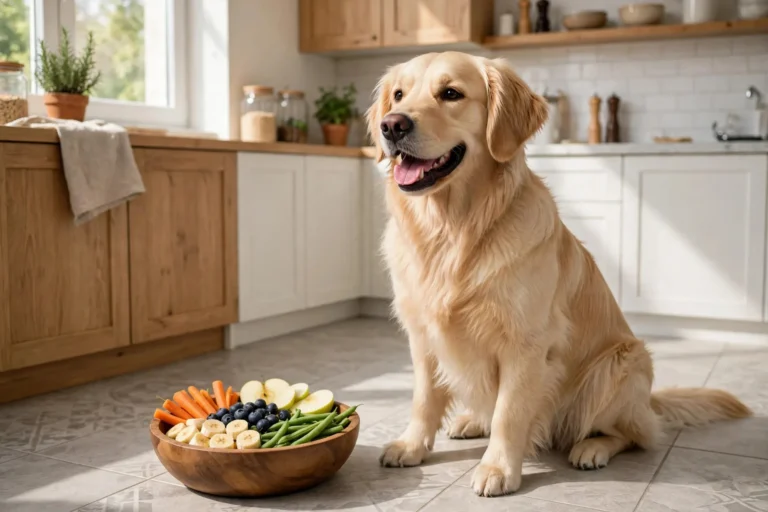
Your dog will eat a sock if you let him. That does not make the sock food, and it does not mean every food in your kitchen is safe for him either. The question of what can dogs eat has a simple core answer. Most dogs do fine on a complete commercial dog food, plus small amounts of plain, dog safe people food as treats. The trouble starts with the extras, because a few common foods can make a dog very sick.
This guide sticks to the foods first time owners ask about most: the safe everyday options, the four fruits that come up in search after search, and the foods that belong nowhere near a dog bowl. If your dog has a health condition, ask your vet before you change anything. Our guide to dog food for sensitive stomachs (Dog Food For Sensitive Stomach) explains what actually helps when plain kibble keeps causing trouble.
What can dogs eat on a normal day?
Start with the rule that keeps everything else in proportion. Treats, including people food, should stay under about 10 percent of your dog’s daily calories. A Labrador that eats two cups of kibble a day does not need a second dinner made of banana slices. Keep portions small, introduce one new food at a time, and watch the stool for a day or two.
Plain cooked meat sits at the top of the safe list for a reason. Dogs digest it well, and most of them love it. Give plain cooked chicken or turkey with the skin and bones removed, and skip the seasoning and the sauce. Cooked eggs work the same way. Scramble or boil them plain, because raw eggs carry a salmonella risk. A spoonful of plain yogurt adds protein and calcium, but check the label for xylitol first, because some sugar free yogurts use it, and xylitol can poison a dog. Cats have their own safe list, which is shorter than you might expect, and our guide to what cats can eat (What Can Cats Eat) covers it.
Vegetables give you the cheapest treats in the house. Carrots are crunchy, low in calories, and good for a dog that likes to chew. Green beans work raw, steamed, or from a can with no added salt. Plain pumpkin, the canned kind with no spices, helps some dogs with mild stomach upset. Cooked sweet potato, cut into small pieces, is another easy one.
| Food | How to serve it | Watch out for |
|---|---|---|
| Plain cooked chicken or turkey | Cooked plain, skin and bones removed | Seasoning and cooked bones |
| Cooked eggs | Boiled or scrambled, plain | Raw eggs |
| Carrots | Raw or cooked, cut small | Large chunks for small dogs |
| Green beans | Raw, steamed, or canned, no salt | Salted canned beans |
| Plain pumpkin | Canned, no spices, a spoonful | Pumpkin pie filling |
| Cooked sweet potato | Boiled or baked, peeled | Raw pieces and butter |
Plain cooked rice and plain oatmeal are fine for most dogs in small amounts, and vets often suggest them during a bland diet after stomach upset. Milk is a different story. Many adult dogs do not digest lactose well, so a bowl of milk can end in gas and diarrhea. Cheese is safer in tiny cubes, but it is high in fat, so keep it rare.
Can dogs eat watermelon, strawberries, blueberries and bananas?
These four fruits drive most of the questions new owners ask. All four are safe for most dogs when you serve them right, and none of them should replace a meal.
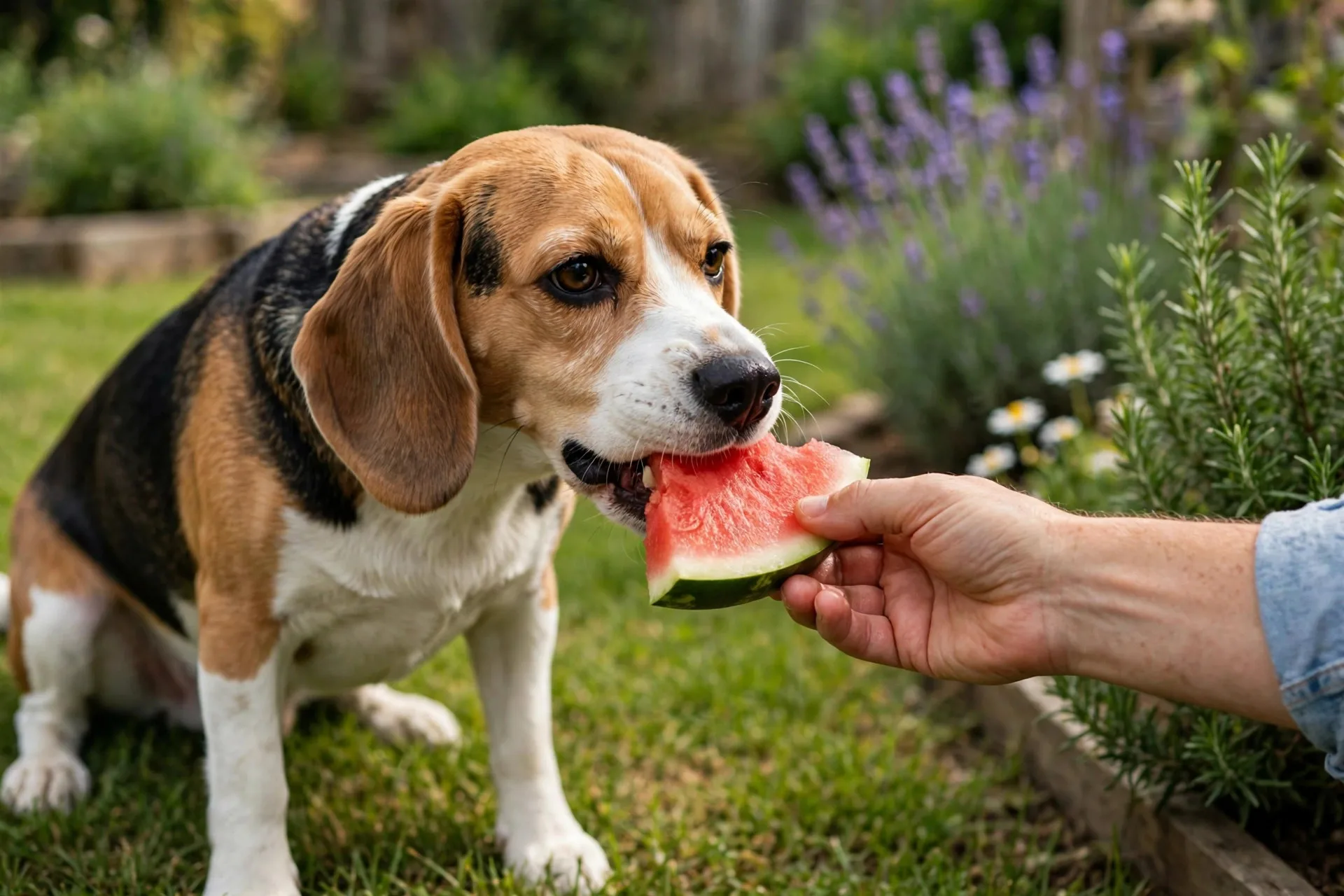
Can dogs eat watermelon?
Yes, and dogs tend to love it. Watermelon is mostly water, so a few cubes make a good summer treat, and the American Kennel Club (Can Dogs Eat Watermelon) lists it as safe when you remove the seeds and the rind. Seeds can cause a blockage in a small dog, and the rind is hard to digest. A couple of cubes is plenty for a small dog, and a big dog can handle a small handful.
Can dogs eat strawberries?
Yes, in small amounts. Strawberries give a dog vitamin C and fiber, and the American Kennel Club (Can Dogs Eat Strawberries) lists them as safe. Cut them up, remove the green tops, and keep the portion to two or three berries for a medium dog. Strawberries carry natural sugar, so a dog that is watching its weight should get them rarely. Dried strawberries pack the sugar of many berries into a small handful, so skip them.
Can dogs eat blueberries?
Yes, and blueberries are one of the easiest treats to get right. They are small, low in calories, and full of antioxidants, and the American Kennel Club (Can Dogs Eat Blueberries) lists them as safe. Hand a dog a few as a training reward, or freeze them for a summer snack. Cut them in half for puppies and toy breeds, since a small dog can choke on a whole one.
Can dogs eat bananas?
Yes, but bananas are the sugary one of the four, so the portion matters more here. A banana gives a dog potassium and fiber, and the American Kennel Club (Can Dogs Eat Bananas) lists it as safe in moderation. A few thin slices work as a treat, and half a banana is a lot for a small dog. Never feed the peel, since it is hard to digest and can cause a blockage.
Apples belong here too. Apple slices are safe once you remove the core and the seeds, since apple seeds contain small amounts of cyanide compounds, and the core itself is a choking risk.
The foods that can hurt your dog
This is the part to read twice. Searches for foods toxic to dogs usually land on the same short list. Some foods on this list cause a bad stomach. Others can kill a dog. Learn the second group by heart, and keep it out of reach, not just out of the bowl. Dogs counter surf and steal from plates when you turn away, so storage matters as much as serving.
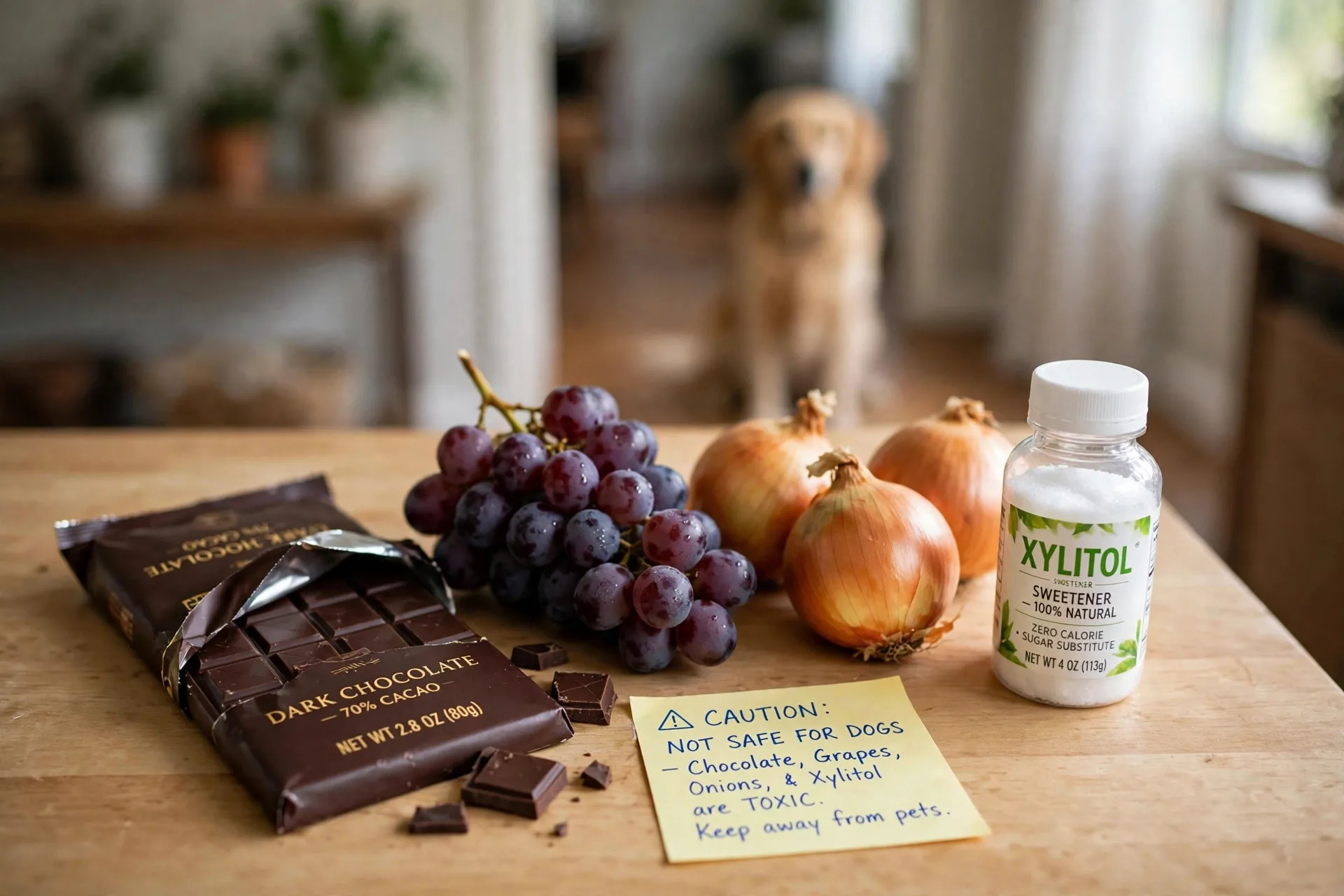
Chocolate is the one most owners know, and the danger is real. Chocolate contains theobromine, which dogs break down far more slowly than people do. Dark chocolate and baking chocolate carry the most theobromine, milk chocolate carries less, and white chocolate carries very little, but none of it belongs in a dog bowl. A small dog that eats a dark chocolate bar needs a vet call right away, and the ASPCA (People Foods Avoid Feeding Your Pets) lists chocolate among the people foods to keep away from pets.
Xylitol is less famous and more dangerous than chocolate in some cases. It is a sugar substitute in sugar free gum, some peanut butters, and some baked goods. In dogs it triggers a fast insulin release that can drop blood sugar within an hour, and larger amounts can damage the liver. Check the label on any peanut butter before you spread it on a spoon, and put it back if the label lists xylitol or birch sugar. The Food and Drug Administration (Potentially Dangerous Items Your Pet) warns that xylitol is one of the most dangerous people foods for dogs.
Grapes and raisins sit in the same danger group. They can cause sudden kidney failure in dogs, and vets still do not know exactly which compound causes it or what dose is safe. That unknown is the point. A few grapes have made some dogs very sick, while other dogs ate more and seemed fine, and there is no way to know which dog yours is before it happens. Keep them out of reach. The Pet Poison Helpline (Poisons) lists grapes and raisins as a top toxin for dogs.
Onions, garlic, leeks, and chives damage a dog’s red blood cells and can cause anemia. Cooked forms count too, so onion powder in a sauce is unsafe even though it is cooked. A small amount in one meal may cause only stomach upset, but repeated small amounts over days can build up and cause real harm.
Macadamia nuts cause weakness, vomiting, and tremors in dogs, and the cause is still not fully understood. Other nuts are less toxic but still a bad idea, because they are high in fat and salt and can cause stomach upset or pancreatitis. Keep nut bowls off low tables during parties, because a dog will not wait for an invitation.
Alcohol and caffeine still show up in accidents: beer left on a low table, coffee grounds in an open bin, a chocolate covered espresso bean on the floor. All of them can cause vomiting, shaking, a racing heart, and worse. Cooked bones are another quiet risk. Cooking makes bones brittle, and the splinters can cut the mouth or gut or cause a blockage. Give a chew toy made for dogs instead. Raw dough with yeast can rise in a warm stomach and release alcohol as it ferments, so keep rising dough behind a closed door.
A few more foods to keep away: fruit pits, because they can block the gut and some contain cyanide compounds; corn on the cob, because dogs swallow the cob in chunks; fatty scraps and fried food, because a sudden load of fat can trigger pancreatitis; and sugar free candy and gum, because you cannot always tell from the packet whether it uses xylitol.
How much people food is too much
Portion size is where most owners go wrong, not food choice. A dog that eats safe foods all day is still overeating. Use the 10 percent rule as your ceiling, not your target. In training, cut treats into pea sized pieces, or use part of the dog’s kibble as the reward.
Watch the weight, not just the bowl. Ribs should feel easy to find under a thin layer of fat, and the waist should tuck in when you look from above. If you cannot feel the ribs without pressing hard, talk to your vet about the total food, treats included. Puppies need more care than adults, because their stomachs are smaller. Feed people food from the bowl or from your hand during training, not from the table, because a dog that learns to beg at the table will beg at every table.
What to do if your dog eats something toxic
Stay calm and act fast. Do not wait for symptoms to appear, because some toxins take hours to show. Do not make your dog vomit unless a vet tells you to. Note what your dog ate, how much, and when.
Call your vet first. If your vet is closed, call the ASPCA Animal Poison Control Center at (888) 426-4435 or the Pet Poison Helpline at (855) 764-7661. Both lines are staffed around the clock, and both may charge a fee. Keep the number saved in your phone now, before you need it at midnight. The PetMD guide (What Can Dogs Not Eat) lists the foods to avoid and the signs to watch for.
Questions first time owners ask
Can dogs eat cheese?
Yes, in small cubes, as an occasional treat. Cheese is high in fat, so keep it rare.
Can dogs eat bread?
Plain bread is safe in small amounts. Skip bread with raisins, garlic, onion, or xylitol, and keep rising dough away from dogs.
Can dogs eat peanut butter?
Yes, if the label shows no xylitol. Choose plain peanut butter with no added sugar or salt, and spread a thin layer instead of a thick one.
Can dogs eat popcorn?
Plain air popped popcorn is safe in small amounts. Skip butter, salt, and flavored coatings.
Sources
- American Kennel Club, Human Foods Dogs Can and Can’t Eat, Human Foods Dogs Can And Cant Eat
- American Kennel Club, Can Dogs Eat Watermelon?, Can Dogs Eat Watermelon
- American Kennel Club, Can Dogs Eat Strawberries?, Can Dogs Eat Strawberries
- American Kennel Club, Can Dogs Eat Blueberries?, Can Dogs Eat Blueberries
- American Kennel Club, Can Dogs Eat Bananas?, Can Dogs Eat Bananas
- ASPCA Animal Poison Control Center, People Foods to Avoid Feeding Your Pets, People Foods Avoid Feeding Your Pets
- Food and Drug Administration, Potentially Dangerous Items for Your Pet, Potentially Dangerous Items Your Pet
- Pet Poison Helpline, Poisons, Poisons
- PetMD, What Can Dogs NOT Eat?, What Can Dogs Not Eat
2 thoughts on “What Can Dogs Eat? Safe Foods and Ones to Avoid”