
Stop puppy biting by teaching bite inhibition first, then redirecting teeth to a toy every time. When teeth touch skin, go still, end the game for 10 to 20 seconds, then restart with a toy. Keep sessions short, make sure your puppy naps enough, and never hit or shout. Most puppies improve between five and six months with steady practice.
This guide gives you the method in order: bite inhibition first, then the redirect routine, then the household rule that makes it stick. You also get a daily routine, a timeline by age, and the red flags that mean a vet visit, not more training. It fits with the wider puppy training for beginners approach, and it uses no punishment at any step.
Why puppies bite
Biting is how a puppy explores the world. Puppies have no hands, so they use their mouths to test textures, start play, and learn how hard is too hard. A puppy that bites your sleeve is usually playing, teething, or tired, and aggression looks different, so this guide covers the difference near the end.
Teething
Teething peaks around 12 to 16 weeks, according to PetMD. New teeth push through sore gums, and chewing eases the pressure. Chew toys give sore gums a target that is not your hand.
Play and exploration
Puppies learn bite control from littermates. When play gets too rough, a littermate yelps or walks away, and the biter learns the limit. Your puppy brings that same lesson to you. Rough play and fast hands invite teeth.
Overtired and overexcited
An overtired puppy bites more. Puppies under four months typically need 18 to 20 hours of sleep a day in short bursts, according to BarkBriefing. Evening is the worst time in most houses. A puppy that turns wild at 7 pm often needs sleep, not another training session.
First, teach bite inhibition
Puppy bite inhibition comes before everything else. It is the skill that turns a hard bite into a soft mouth, and it is the foundation every later step stands on. Start in the first week home, while your new puppy checklist is still fresh, and keep the lessons short.
What bite inhibition means
Bite inhibition means learning to moderate the force of a bite. A puppy with good bite inhibition still mouths, but it does so gently. AKC puts it plainly: if a puppy bites too hard on a littermate, the other dog yelps, and the biter learns to soften the next bite. Your job is to play the littermate’s part, calmly and the same way every time.
The ouch and walk away response
When teeth touch skin, say “ouch” in a calm, high voice, remove your hand, and stop play for a few seconds. That is the AKC method for hands in one sentence. The puppy learns that teeth on skin ends the fun.
Keep your voice calm and your movement slow. Fast hands look like a game, and a game is what started the biting.
When the yelp backfires
A high pitched yelp works for some puppies and excites others. AKC notes that for some puppies the sound excites them more, so turning away or a short crate calm down works better. Yelping loudly can escalate biting in some puppies, so if yours bites harder after the yelp, drop the sound.
Go still, turn away, and end the game instead. The method that works is the one your puppy responds to, not the one in the book.
The redirect routine, step by step
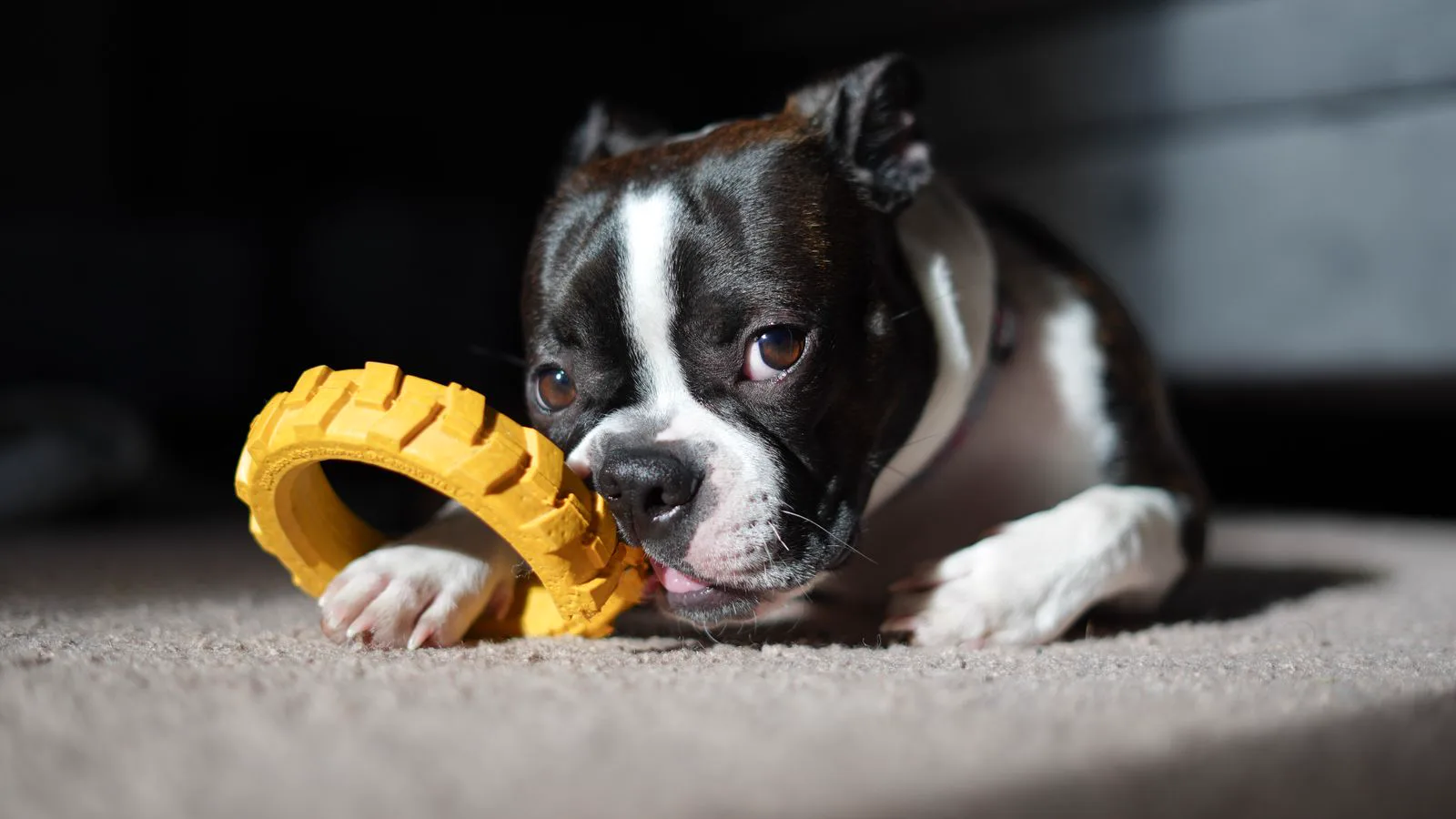
Redirection is the daily work. Every time teeth head for skin, they land on a toy instead. Do it the same way every time, and the puppy starts choosing the toy on its own.
Keep a toy within reach
Keep a chew toy in every room where you play with the puppy. A toy on the shelf does not help when teeth are already on your hand. Keep one by the sofa, one by the back door, and one in your pocket on walks. The toy has to be closer than your hand, or the hand wins.
Swap before teeth land
Watch for the signs that come just before a bite. The puppy stiffens, stares, wiggles, or lunges. That is your moment.
Put the toy between you and the puppy before teeth land, and praise the puppy the second it takes the toy. AKC makes the same point: keep a toy between you and the puppy during play, so the puppy learns that play means toys.
Praise the toy, not the bite
Praise the choice, not the puppy. A short “good” the moment teeth close on the toy teaches faster than a long speech after the game ends. Keep treats in your pocket for the first weeks, and reward the redirect every time it happens. Every time.
When teeth touch skin, end the game
Redirection handles most bites. The rest need a clear consequence, and the consequence is always the same: the game ends.
Go still, then leave for 10 to 20 seconds
When teeth touch skin, go still. Do not pull your hand away, because a moving hand looks like a toy. Then leave the room, or step behind a baby gate, for 10 to 20 seconds.
BarkBriefing puts the pause at 10 to 15 seconds, and the AKC guide uses a short time-out the same way. A calm pause in the crate works too, once the crate feels safe, as how to crate train a puppy shows.
Restart calmly with a toy
Come back calmly and restart play with a toy in your hand. If the puppy bites again, repeat the pause. Three pauses in one session means the session is over. Put the puppy down for a nap, because a puppy that keeps biting is usually a tired puppy.
Everyone in the house uses the same response
One person ending the game while another person laughs and keeps playing teaches the puppy nothing. Write the rule down if you have to: teeth on skin, game over, everyone, every time. That is the rule.
Children need the same rule in words they can use. Visitors need it too, before they sit on the floor with the puppy.
Biting hands, ankles, and clothes
Different targets need slightly different fixes, and all of them use the same two tools: redirect and end the game.
Hands during play
Hands are the hardest target, because play happens at hand level. Keep a toy in your hand during play, so teeth meet rubber before skin. When teeth do land, use the ouch and walk away response from above. Never pull your hand away fast, and never push the puppy off with your hands, because both moves look like play to a puppy.
Pouncing on legs while you walk
Ankle biting is a herding and chasing game. Stop walking the moment teeth touch your ankle. Stand still, wait for the puppy to lose interest, then move again with a toy in your hand.
AKC lists preventing pouncing while walking as a separate step, and the fix is the same: movement stops, the game stops. Wear plain shoes indoors for a few weeks, since laces and loose trousers make the game more fun for the puppy.
Kids and visitors
Children move fast, make high sounds, and run, which is everything a puppy wants to chase. Teach children to stand still like a tree when the puppy bites, arms folded, no screaming, no running. A visitor who crouches down and waves their hands is inviting a bite, so hand every visitor a toy before they greet the puppy.
What not to do
The wrong methods feel effective in the moment, and they cost you trust later. Skip all of them.
No hitting, nose taps, or holding the mouth shut
Never hit a puppy, tap its nose, or hold its mouth shut. AKC says it directly: never yell at, hit, or smack the nose for biting a hand. PetMD adds that harsh punishment can increase fear or aggression. A puppy that fears hands will bite harder later, not less.
No alpha rolls or scruffing
Do not roll a puppy on its back, grab it by the scruff, or pin it down to show dominance. These methods frighten puppies and teach them that hands are a threat. BarkBriefing lists muzzle holding, scruffing, and alpha rolls among the methods kind trainers avoid. The calm pause in the section above does the same job without the fear.
Why yelling can make it worse
Yelling sounds like barking to a puppy, and barking is part of play. AKC warns that yelling can act as a reward, and it can make a puppy fearful of handling. A loud voice also raises your own frustration, and a frustrated owner trains badly. Keep your voice low, your movements slow, and your response the same every time.
A realistic timeline: what improves by age
Most puppies need 6 to 10 weeks of consistent practice before biting drops off clearly, according to BarkBriefing, and that is the timeframe to plan around, so a method that promises results in three days is selling something.
8 to 16 weeks
This is peak biting age, and teething sits right in the middle of it. Expect daily nipping, and expect it to get worse when the puppy is tired. Your job is consistency. Every redirect counts.
4 to 6 months
Adult teeth arrive, teething eases, and most puppies show real improvement between five and six months with steady practice. Biting fades slowly as the puppy learns the rules and grows out of the mouthy stage. Keep the routine going through this stage, because stopping early lets the habit creep back.
After 6 months, when to worry
A puppy past six months that still bites hard, breaks skin often, or bites with no warning needs a closer look. Pain, fear, and frustration all show up as biting at this age, and training alone will not fix a medical cause. The next section covers the signs.
When biting is not normal: red flags
Play biting is loose, bouncy, and easy to interrupt. The signs below are different, and they need a vet first.
Pain or fear signs
A puppy that bites when touched in one spot, flinches at handling, or bites with a stiff body and a hard stare may be in pain or frightened, so check for sore ears, a sore mouth, a limp, or a recent injury before you train anything else. PetMD notes that persistent painful biting in older puppies warrants professional help, and pain comes first in that check.
Resource guarding
A puppy that stiffens, growls, or snaps when you approach its food bowl, a toy, or a resting place is guarding a resource. This is a separate problem from play biting, and it needs a different plan. Reaching in and taking the item away confirms the puppy’s fear that the item will be taken, so leave it alone and get help instead.
When to call your vet or a certified behaviourist
Call your vet first to rule out pain, then ask for a referral to a certified trainer or a veterinary behaviourist, and bring notes on when the biting happens, what came before it, and whether the puppy breaks skin. A professional who sees the pattern in person can tell in one session whether the cause is pain, fear, or a training gap.
Your daily routine: how to stop puppy biting
Fit the method into the day instead of adding a separate training hour. Three short play sessions of five minutes each beat one long session, because a puppy learns best before it gets tired. Put a toy in your hand before each session starts. End each session with a calm pause, a toilet break, and a nap.
Build the day around sleep. A puppy under four months needs 18 to 20 hours of sleep a day, so most of the day is naps with short bursts of play between them. The puppy schedule at 8 weeks gives you a full day plan to fit this routine into. The wider first-time dog owner guide covers the rest of the first month, including feeding, vet visits, and house training.
FAQ
When do puppies stop biting?
Most puppies improve clearly between five and six months, after 6 to 10 weeks of steady practice. Teething ends, adult teeth arrive, and the redirect habit takes hold.
Is puppy biting a sign of aggression?
Usually, no. Play biting is loose and bouncy, and the puppy stops when play stops. Biting with a stiff body, a hard stare, growling over food or toys, or biting that breaks skin often points to pain, fear, or guarding instead.
Should I yelp when my puppy bites me?
Try it once. If the puppy softens and stops, keep using it. If the puppy bites harder or gets more excited, drop the sound and use the still pause instead. The right response is the one your puppy answers to.
How do I stop puppy biting hands and clothes?
Keep a toy in your hand during play, swap it in before teeth land, and end the game for 10 to 20 seconds when teeth touch skin. Wear plain shoes and tuck in loose clothing for a few weeks, so the puppy has less to grab.
Why does my puppy bite more in the evening?
Evenings are when overtired puppies fall apart. A puppy under four months needs 18 to 20 hours of sleep a day, and a missed nap shows up as wild biting. Put the puppy down for a nap instead of running another training session.
When should I get professional help for puppy biting?
Get help when biting past six months still breaks skin often, when the puppy guards food or toys, or when biting follows pain or fear. Call your vet first to rule out pain, then ask for a certified trainer or a veterinary behaviourist.
Sources
- PetMD, How To Stop a Puppy From Biting, Puppy Biting
- American Kennel Club, How to Stop Puppy Biting and Train Bite Inhibition, Stop Puppy Biting
- American Kennel Club, How Can I Stop My Puppy From Chewing on My Hand?, Stop Dog From Chewing
- Reader’s Digest, How to Stop a Puppy from Biting, According to Dog Experts, How To Stop A Puppy From Biting
- BarkBriefing, How to Stop Puppy Biting: A Kind, Step-by-Step Guide, Puppy Biting 101 Why It Happens And How To Stop It Kindly