
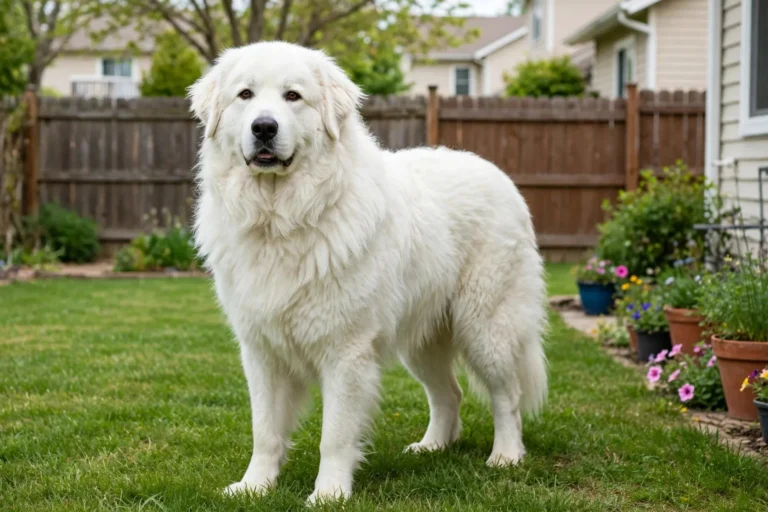
A Great Pyrenees is a calm, loyal guardian that stands 25 to 32 inches tall and weighs 85 to 100 pounds, with some males going past that. Shepherds in the Pyrenees Mountains bred the dog to live with sheep and guard them from wolves and bears, mostly on its own. That job shaped everything about the breed, from its patience with children to its habit of barking at 2 a.m. at something you cannot see. If you want a gentle giant and you have space, a fence and realistic expectations, this breed can be a superb family dog.
What a Great Pyrenees is actually like to live with
The Great Pyrenees temperament is calm, independent and watchful. The American Kennel Club describes Pyrs today as mellow companions and vigilant guardians of home and family, and that pairing of mellow and vigilant is the whole breed in one line. Indoors, a Pyr tends to lie down, watch the room and conserve energy. Outdoors, the same dog patrols and decides for itself what counts as a threat.
That independence is the part new owners underestimate. Herding breeds look to a handler for direction. A livestock guardian worked alone on a mountainside for days, so it learned to think before it obeyed. Your Pyr will learn commands quickly, then weigh whether following them matters more than the interesting thing happening at the fence.
Patience is the breed’s best trait. Pyrs are famously tolerant and steady, which is why they do well around children and other animals they know. They are affectionate without being needy, and they rarely demand constant attention.
Socialization still matters, and it matters early. A guardian that never meets strangers, visitors and other dogs can turn watchfulness into suspicion. Puppy classes and calm introductions to new people and places help a young Pyr learn the difference between a guest and a threat. A 100 pound dog with strong opinions needs manners before it reaches full size, not after.
Are Great Pyrenees good family dogs?
Yes, with conditions that matter more than the yes. A well socialized Pyr is gentle, patient and protective with its family, including children. The Great Pyrenees Club of America describes the typical temperament as calm, independent and alert, and that calm side shows most clearly at home with people the dog knows.
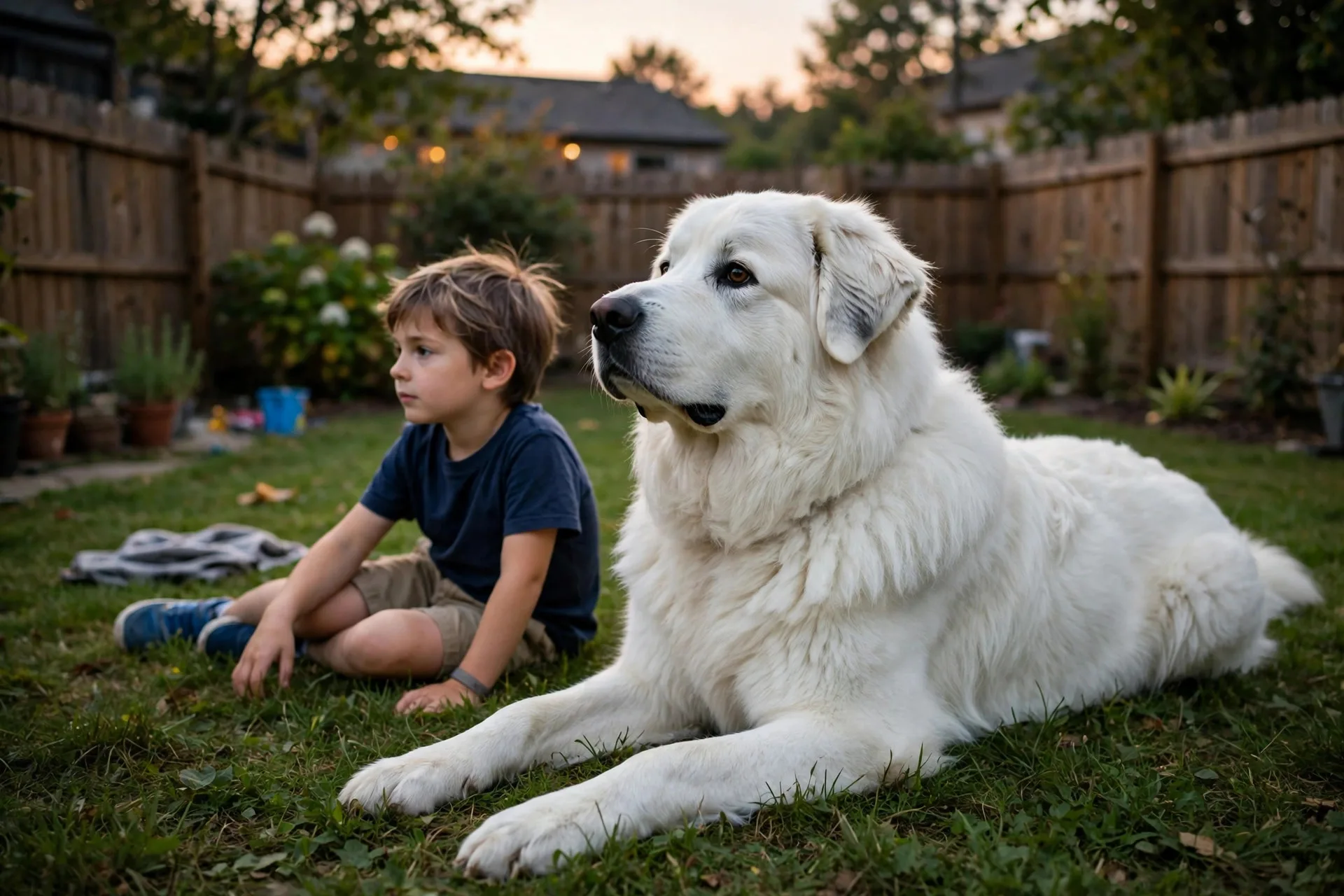
Size changes the picture with small children. An adult Pyr can knock a toddler over by turning around. It simply occupies a lot of space and does not always know it. Supervise play with young children, and give the dog a quiet spot to retreat to when the house gets loud.
Other pets usually do fine if the introductions happen while the Pyr is young. The breed can live happily with cats and other dogs it grew up with. Same sex tension between adult Pyrs and other large dogs can appear, so introduce new dogs on neutral ground.
One honest note: a Pyr guards the family it has, not the family you wish it had. It bonds closely to its people and its home, and it can be reserved with strangers.
Great Pyrenees size: the numbers that change your house
Great Pyrenees size is the first practical test. Males stand 27 to 32 inches at the shoulder and females stand 25 to 29 inches, according to the AKC breed standard. Males weigh 100 pounds and up, females 85 pounds and up. Some males reach 120 pounds or more, and a big Pyr can rest its chin on a kitchen counter without stretching.
Everything in your house gets bigger with a dog this size. The crate is the largest size sold. The car needs a back seat or a cargo area the dog can actually lie in. Food bills run higher than for a medium dog, and a large breed formula suits a growing Pyr better than a generic one.
Space matters more than square footage. A Pyr does best in a home with a securely fenced yard where it can patrol and stretch out. Apartments are a poor fit, not because the dog needs constant running, but because a giant dog in a small flat plus nightly barking wears thin fast.
The barking, the roaming, and the 2 a.m. patrol
Here is the trade off, stated plainly. Great Pyrenees bark a lot, and they bark most at night. Predators hunt at night, so a guardian that slept through the dark would have been useless. Your Pyr inherited that shift pattern. A leaf, a raccoon, a delivery truck at dawn: all of it can earn a deep, booming bark.
You can manage the barking, but you cannot train it out of the breed. Bringing the dog inside at night helps, since a Pyr that sleeps in the house has less to patrol and less to announce. Teaching a quiet cue helps too, and our guide to why dogs bark (Why Do Dogs Bark) covers the basics. Still, if you have close neighbors, think it through before you commit. This is the most common reason Pyrs lose their homes.
Roaming is the second instinct to plan for. A Pyr does not believe in property lines. Without a secure physical fence, it will expand its territory to include the neighborhood, and it can clear or dig under a fence that would hold a smaller dog. A fence of five to six feet, checked regularly for gaps and digging, is the standard advice. An invisible fence will not hold a determined Pyr. It will take the shock and keep walking toward whatever it decided to investigate.
Off leash freedom in open areas is a bad idea for the same reason. Recall works when the dog feels like cooperating, and a Pyr that has spotted something worth guarding does not feel like cooperating. Keep the dog leashed on walks and fenced at home.
Grooming a coat built for snow
The Pyr’s thick white double coat looks high maintenance and mostly behaves like it is not. The outer coat is long and coarse, the undercoat is dense and woolly, and together they shrug off dirt, wind, rain and snow. A weekly brushing with a slicker brush or an undercoat rake keeps the coat in good shape.
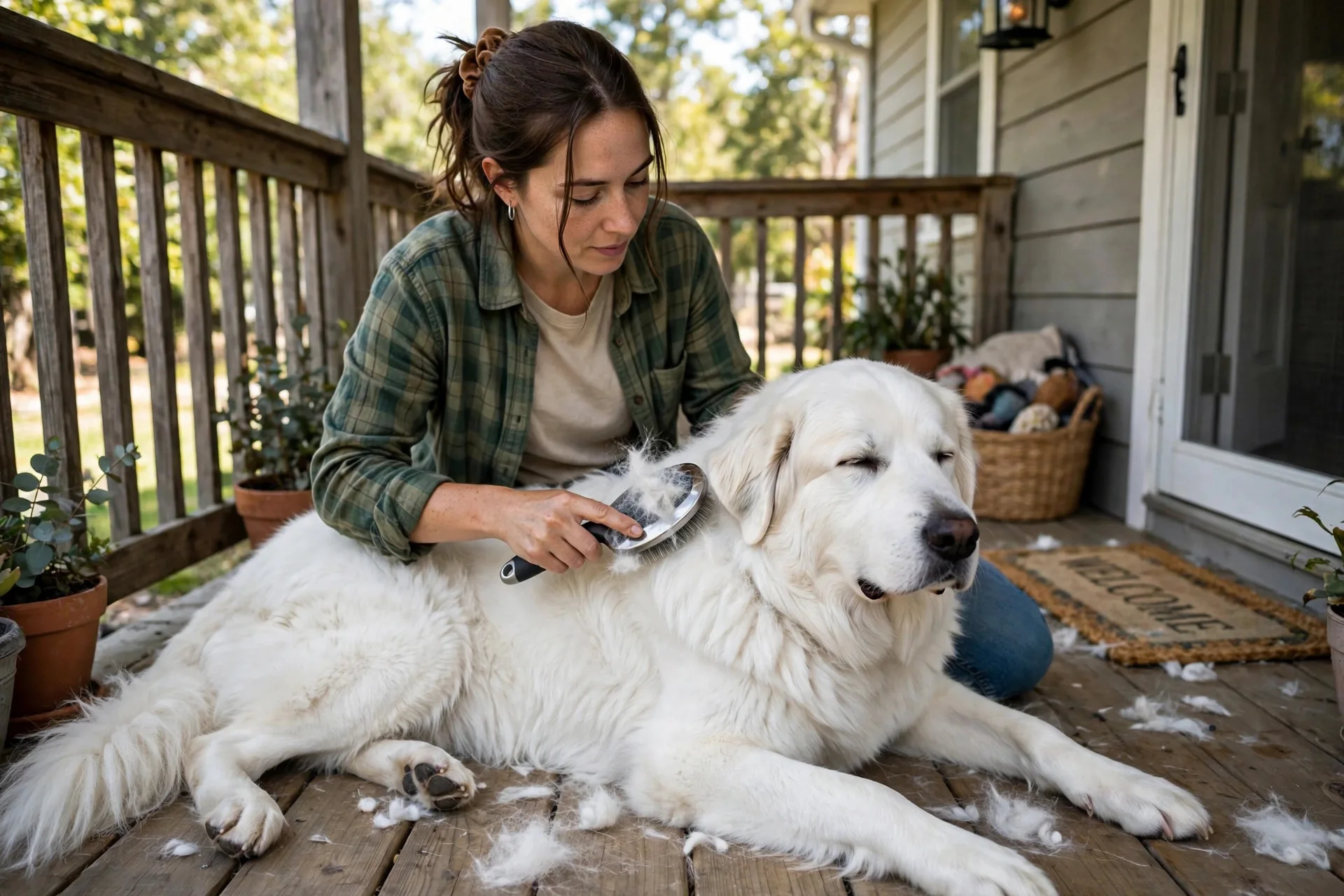
Shedding is heavy, and it comes in waves. The undercoat blows out once or twice a year, usually in spring, and during those weeks you will brush out enough fur to knit a second dog. The rest of the year, shedding is steady, but white fur shows on everything dark you own.
Bathing is rarely needed. The coat repels dirt, so a bath only when the dog gets really dirty is enough, and too much washing strips the coat’s natural protection. Do not shave a Pyr in summer. The double coat insulates against heat as well as cold, and shaving it can leave the dog sunburned and hotter, not cooler.
Trim the nails regularly, check the ears for buildup, and keep an eye on the double dewclaws on the hind legs. Those extra toes do not touch the ground, so they can grow long and snag if you ignore them.
Our guide to grooming a dog at home (How To Groom A Dog At Home) walks through brushing, bathing and nail care step by step if you are new to it.
Exercise and training for a dog that thinks first
A Pyr needs moderate exercise, not marathon running. A daily walk of 45 to 60 minutes, split into two shorter outings, suits most adult Pyrs, plus yard time to patrol. Puppies need less: short walks and free play, with no forced running or jumping while their joints are still growing.
Mental work matters as much as walking. A Pyr that has nothing to think about will find its own job, and its own job is usually barking at the fence. Short training sessions, scent games and food puzzles give the dog a task without demanding the kind of obedience the breed was never built for. Keep sessions short and varied. A Pyr gets bored with repetition faster than most dogs, and a bored Pyr simply stops participating.
Training works best with patience and food rewards. Harsh corrections backfire with this breed. A Pyr that feels pushed will dig in and decide you are not worth listening to, and you cannot win a battle of wills with a 100 pound dog that has already made up its mind. Start in puppyhood, keep it positive, and consider a class with a trainer who has worked with guardian breeds. If you are bringing home your first puppy of any breed, our new puppy checklist (New Puppy Checklist) covers what to buy first.
Health notes worth knowing before you commit
Great Pyrenees live 10 to 12 years, which is a good run for a giant breed. They are generally healthy dogs, but size brings specific risks, and knowing them early helps you catch problems while they are still treatable.
Bloat is the emergency every Pyr owner should know by name. The stomach fills with gas and can twist, cutting off blood flow, and it can turn fatal within hours. Deep chested breeds like the Pyr face higher risk. Feed two or three smaller meals a day instead of one large one, keep the dog calm for an hour after eating, and learn the warning signs: a swollen belly, restless pacing, or retching that produces nothing. Those signs mean an emergency vet visit.
Hip and elbow dysplasia also appear in the breed. The joints do not fit together cleanly, which causes wear and arthritis over time. Keeping a Pyr lean, feeding a large breed puppy food that controls growth speed, and avoiding hard exercise in puppyhood all lower the risk. Ask a breeder for hip and elbow screening results before you buy a puppy.
Other conditions reported in the breed include patellar luxation, where the kneecap slips out of place, eye disorders such as cataracts, and a growth disorder called chondrodysplasia that shortens the limbs. A breeder who screens for these is a breeder worth your money. PetMD’s breed guide lists these conditions and notes the 10 to 12 year lifespan.
One practical point: giant breeds cost more at the vet. Doses, surgery and anesthesia all scale with weight. Ask your vet about a preventive gastropexy, a surgery that tacks the stomach in place to reduce bloat risk, when you discuss spaying or neutering.
So should a first-time owner get one?
A Great Pyrenees can work for a first-time owner, but only a particular kind of first-time owner. You need a house with a fenced yard, tolerance for barking and shedding, patience for a dog that thinks for itself, and the time to train and socialize a puppy that will weigh more than you do within a year. If that sounds like your life, a Pyr will reward you with a calm, loyal companion that watches over your family with a devotion few breeds match.
Frequently asked questions
Do Great Pyrenees shed a lot?
They shed steadily all year and blow their dense undercoat once or twice a year, usually in spring. Weekly brushing controls it, but white fur on your clothes and furniture is part of the deal.
Are Great Pyrenees good with cats?
Usually yes, especially when raised with them. A Pyr that grows up with a cat tends to treat it as part of the household to guard. Supervise early meetings and give the cat an escape route.
How much exercise does a Great Pyrenees need?
About 45 to 60 minutes a day for an adult, split into two walks plus yard time. Puppies need shorter, gentler outings while their joints develop.
Can a Great Pyrenees live in an apartment?
It is a poor fit. The dog is too large, the barking is too loud for close neighbors, and the breed needs a fenced yard to patrol. A house with a yard suits it far better.
Sources
- American Kennel Club Great Pyrenees breed page: Great Pyrenees
- American Kennel Club: Is the Great Pyrenees a Good Fit for Your Lifestyle?: Great Pyrenees Right For You
- WebMD: Great Pyrenees, What to Know: What To Know About Great Pyrenees
- Dogster: Great Pyrenees Dog Breed, Info, Pictures, Care and Facts: Great Pyrenees
- PetMD: Great Pyrenees Dog Breed Health and Care: Great Pyrenees&
- Hepper: Do Great Pyrenees Bark a Lot? Facts and FAQ: Do Great Pyrenees Bark A Lot
- PetBreedGuides: Great Pyrenees Care, Barking, Roaming and Coat: Great Pyrenees Care Guide Barking Roaming And Coat Maintenance