
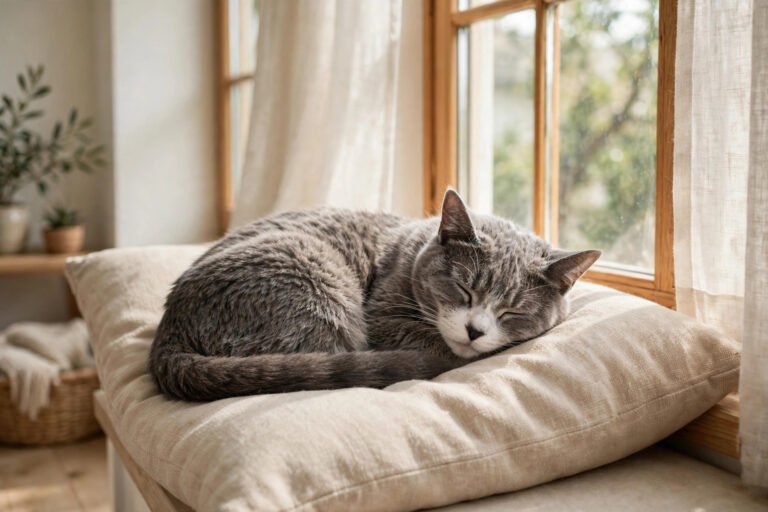
The oldest cat on record lived 38 years. Her name was Creme Puff, a tabby mix from Texas, and Guinness still lists her as the longest lived cat ever. The average cat lives about 12 years, according to a 2023 study cited by Chewy. That gap between 12 and 38 is the real answer to how long do cats live. The number depends on where the cat lives, what it eats, and how often a vet sees it.
An indoor cat averages 13 to 17 years. An outdoor cat averages 2 to 5. Most cats land near the indoor number if they live inside and get regular care, and near the outdoor number if they do not. The rest of this guide covers what moves a cat from one end of that range to the other, and what changes when the cat turns senior.
How long do cats live indoors vs outdoors
This one decision matters more than breed or food. Indoor cats live 13 to 17 years on average, according to Chewy, while outdoor cats live 2 to 5. Purina gives the same outdoor range and the same 13 to 17 average for domesticated cats overall.
The outdoor number comes from real hazards that repeat every day. Cars, fights with other animals, infectious disease, and harsh weather all cut lives short, and an outdoor cat faces them every day. Chewy quotes a Detroit veterinarian who puts it plainly: indoor cats are protected from cars, disease, fights, and harsh weather, and they also get steady food and regular vet care.
One study complicates the picture in a useful way. Researchers at UC Davis found that outdoor only cats had a median age at death of just over seven years, which is higher than the 2 to 5 year average, because a median and an average measure different things. A few cats that die very young pull an average down, while the median shows the middle cat. Both numbers point the same way, and the middle cat still dies years earlier than an indoor cat.
The sources also disagree about the middle ground, and the disagreement is worth knowing. Chewy says cats that live indoors but roam outside unsupervised fall between the two groups, with a shorter life than indoor only cats and a longer one than outdoor cats. Adopt a Pet reports the opposite, that indoor outdoor cats typically live just as long as indoor only cats. A 2022 UC Davis study of more than 3,100 cats, cited by Embrace, found that cats with supervised outdoor access, a catio, a leash walk, or an enclosed garden, did not have significantly shorter lives than indoor only cats. The safest reading is that supervised time outside costs little, while unsupervised roaming costs years.
Breed, sex, and the number the average hides
Averages hide the spread, and breed is part of it. Chewy lists Siamese, Burmese, and Persian cats among the longest lived breeds, with typical lifespans of 15 to 20 years. Large breeds run shorter. A Maine Coon averages 10 to 13 years, and a Devon Rex averages 9 to 15. Mixed breed cats live longer on average than purebred cats, according to a 2015 study Chewy cites, probably because a wider gene pool lowers the risk of inherited disease.
Our ragdoll cat breed guide shows the same spread inside one breed. Vetstreet puts Ragdolls at 12 to 15 years or more, while PetMD gives up to 17. Treat any single breed number as a range.
Sex shows up too, though the gap is small. A 2024 study published in the Journal of Feline Medicine and Surgery, which looked at nearly 8,000 cats in the UK, found an overall average life expectancy of 11.7 years, with females averaging 12.5 years and males 11.2. That 11.7 sits below the 13 to 17 figure most pet sites quote, and the reason matters: the study counted outdoor cats and cats that died young from accidents or disease, while the higher figures describe indoor cats with regular care. Pick the number that matches your cat’s life.
How old is your cat in human years
The old rule that one cat year equals seven human years is wrong, and every source in this guide says so. The formula vets use now is lopsided on purpose, because cats age fast in their first two years and then slow down. Chewy gives it this way: the first year of a cat’s life equals roughly 15 human years, the second year adds about nine, and each year after that adds about four. Cornell puts the first year at 16 and the second at 21, so a ten year old cat lands somewhere around 53 to 56 in human terms either way.
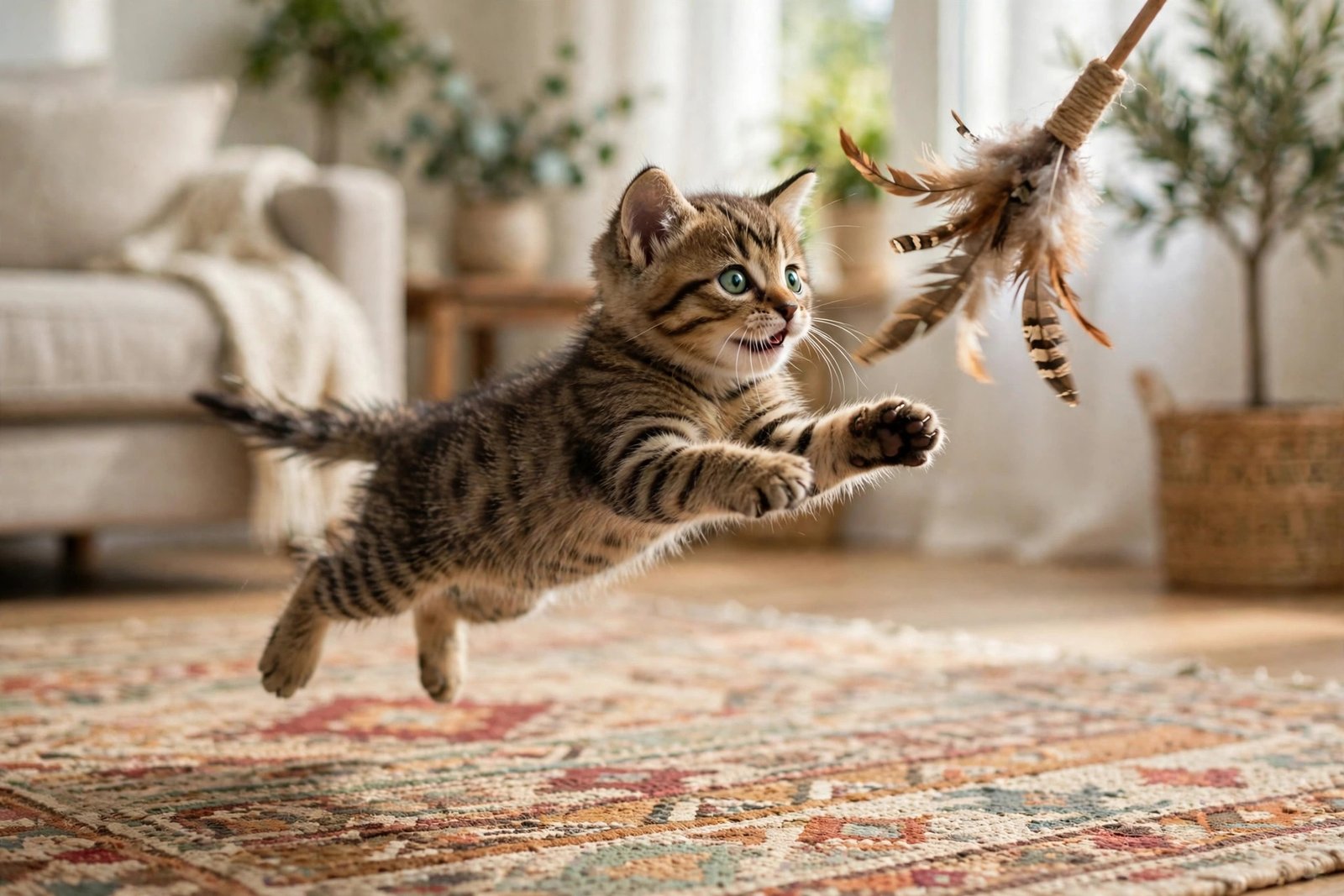
The 2021 AAHA and AAFP Feline Life Stage Guidelines split a cat’s life into five stages, and the labels help more than the human year math. A kitten runs from birth to 1 year old, a young adult from 1 to 6, a mature adult from 7 to 10, and a senior from 10 years onward. The fifth stage is end of life, which can come at any age. A cat that sleeps most of the day at 12 is doing what seniors do, and our guide on why do cats sleep so much explains the long naps in detail.
The four things that actually add years
Four habits move the number, and none of them costs much. The first is keeping the cat indoors, or giving it supervised time outside instead of free roaming. The second is weight. Cornell notes that many cats get heavier as they age, and VCA says keeping a cat at a healthy weight can reduce the signs of arthritis and improve longevity.
Weigh the cat on the same scale at least every two months, because VCA calls weight change an early indicator of disease.
The third is vet care on a schedule, booked ahead even when the cat looks fine. Purina advises a vet check at least once a year, plus vaccinations, a complete and balanced diet, and regular exercise with mental stimulation. VCA goes further for older cats and recommends an exam at least twice a year, with blood and urine testing, because early detection of kidney disease, thyroid disease, diabetes, and cancer is often the key to successful treatment. Our guide to flea and tick prevention for cats covers the year round prevention Chewy lists alongside vaccinations.
The fourth is spaying or neutering. Chewy says it can increase a cat’s lifespan, partly by reducing the risk of certain reproductive cancers, and partly because neutered cats roam less and fight less, which keeps them away from the infections and injuries that shorten outdoor lives.
Play counts too, and it is the cheapest item on the list. Chewy recommends 30 minutes of interactive play a day, with toys and scratching posts and a calm, stable home. A cat that plays every day stays leaner, sleeps better, and shows problems sooner, because you see it move.
The illnesses that cut lives short
Most cats do not lose years to one dramatic event. They lose them slowly, to conditions that start quietly and only show up once they are well established. Knowing the names, and the early signs, is what turns a routine vet visit into years gained.
Kidney disease is the most common of these in older cats. It often starts with drinking more water and visiting the litter box more often, which owners explain away as a hot summer or a new food. Bloodwork at a routine senior check can catch it long before the cat looks sick, and catching it early is what gives the vet options.
An overactive thyroid is another slow one. The cat eats well, sometimes more than usual, and still loses weight. Restlessness and a scruffy coat can follow. It is treatable once found, and the finding usually comes from the same bloodwork that checks the kidneys.
Diabetes shows up as thirst, large volumes of urine, and weight loss despite a good appetite. Dental disease is quieter still: a cat that drops food, chews on one side, or suddenly prefers soft food may be telling you its mouth hurts, not that it has gone fussy. None of these signs proves a diagnosis on its own. Each one is a reason to book the vet visit sooner rather than later, because early detection is the thread that runs through all of them. The Cornell guide to the special needs of the senior cat covers these conditions in more detail.
Feeding for a long life
Food does not add years by itself, but the wrong feeding pattern can take them away. The rule is unglamorous: a complete and balanced diet, fed in measured portions, with the cat kept in a healthy weight range. A cat that is carrying extra weight puts more load on its joints, its heart, and its metabolism, and every one of those loads shortens the runway.
Feeding changes with life stage, and the change is worth making deliberately rather than by accident. Kittens need food built for growth. Adults need maintenance food in portions matched to their activity. Seniors often need fewer calories but the same quality of protein, and a vet can read the bloodwork and the body condition together to say what fits your cat.
Watch the bowl, not just the bag. Free feeding hides how much a cat actually eats, so a slow drop in appetite, one of the earliest signs that something is wrong, goes unnoticed for weeks. Two measured meals a day make appetite changes visible the day they start. Our guide to what cats can eat covers the safe and unsafe foods to keep in mind when you share from the kitchen.
When your cat turns senior, watch for this
Cornell says many cats begin to show age related physical changes between 7 and 10 years of age, and most do by the time they are 12. The AAHA and AAFP guidelines call a cat senior at 10, and VCA calls cats over 15 geriatric. The labels matter less than what you see in your own cat, and Cornell warns against the most common mistake owners make: never assume that changes you see in an older cat are simply due to old age and therefore untreatable. Any change in behavior or physical condition should prompt a call to the vet.
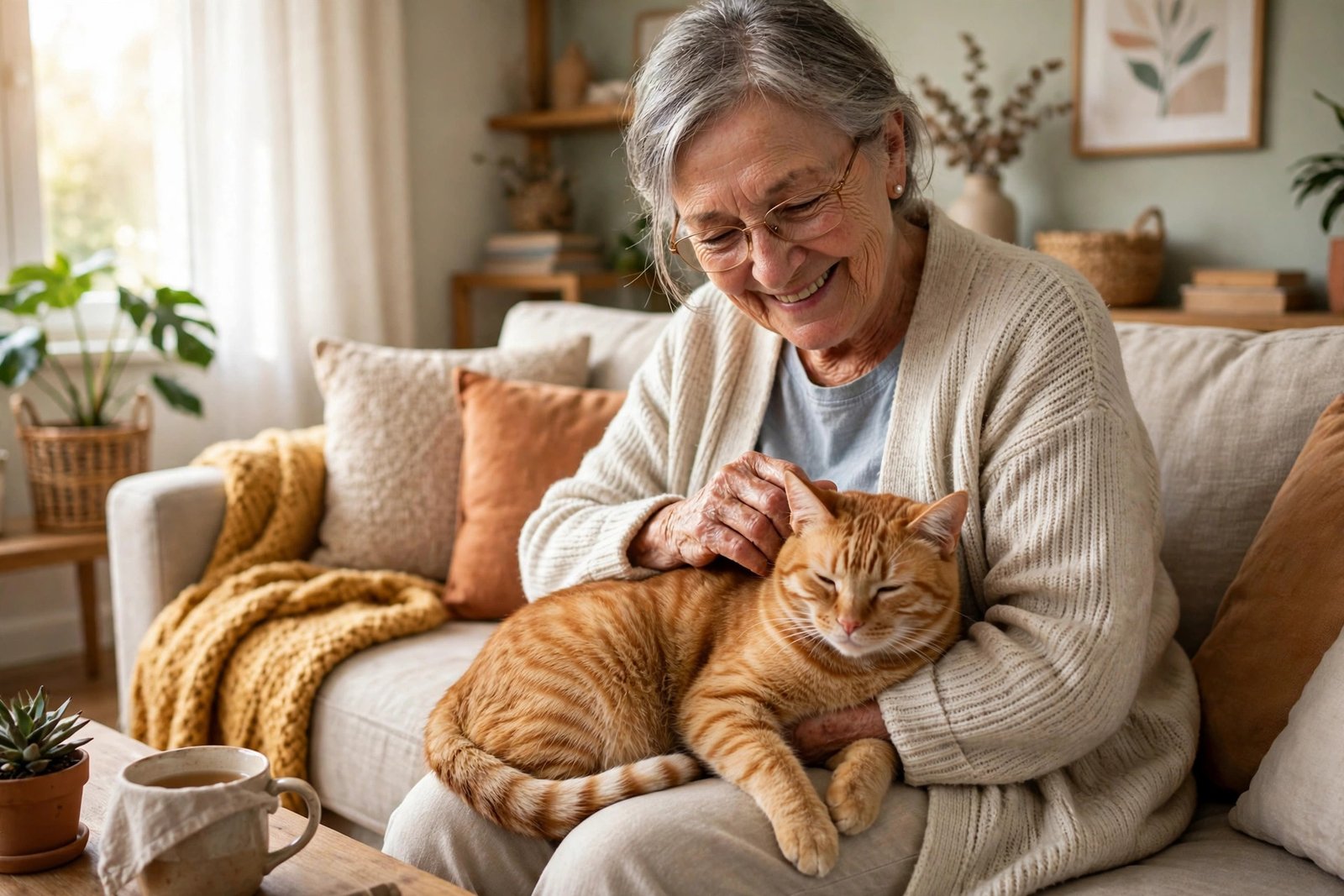
The changes to watch are specific. VCA lists sustained increases in water drinking and urination, weight loss, and muscle loss you can feel along the spine or hips. Cornell adds dental disease, which is extremely common in older cats, hinders eating, and causes significant pain, plus kidney failure, arthritis that makes litter boxes and food dishes hard to reach, and hearing loss.
An older cat that stops grooming, misses the litter box, or yowls at night is showing a symptom.
Small home changes help a stiff cat a lot. VCA advises multiple litter boxes, with low sides so an arthritic cat can climb in, plus food and water on every floor of the house. Cornell adds daily brushing, since older cats groom less well and their coats mat, plus weekly nail checks, because aging claws grow thick and brittle. Daily tooth brushing with a pet specific toothpaste is the single most effective way to prevent dental disease, according to Cornell, and it matters more in old age than at any other time.
Quality of life, and planning for the end
This is the hardest section to write and the kindest one to read early, while there is still time to plan. A long life is only a good life if the cat is comfortable in it, and comfort is something you can measure in small daily signs: eating with interest, grooming, seeking out favorite spots, greeting you, and sleeping deeply rather than restlessly.
When those signs fade, keep a simple note for a week: good days and bad days, appetite, movement, and whether the cat still does the things it loves. That note turns a painful conversation with the vet into a clear one. The vet can talk about pain relief, appetite support, and what comfort care looks like at home, and can help you judge when the bad days are starting to outnumber the good ones.
Planning ahead also means practical things. Know which vet to call out of hours. Know how your cat travels, and whether a carrier that once worked still does. Talk it through with the family before a crisis forces the conversation at midnight. None of this shortens a life. It protects the life that is left, and it spares you decisions made in panic. VCA senior cat care is a good place to start the conversation with your vet.
Questions owners ask about cat lifespan
Do indoor cats live longer than outdoor cats?
Yes, by a wide margin. Indoor cats average 13 to 17 years, while outdoor cats average 2 to 5. Supervised outdoor time in a catio or on a leash does not carry the same cost as free roaming.
Can cats live to 20 years old?
Some do, and indoor cats often reach their late teens. The average across all cats is about 12 years, and a cat that lives indoors with regular vet care has the best shot at the top of the range.
How long do Ragdoll cats live?
Sources give 12 to 15 years or more, with PetMD going up to 17. Ragdolls grow slowly and reach full size at three to four years, which fits the longer end of the range for a large breed.
When is a cat considered a senior?
Around 10 years old by the AAHA and AAFP guidelines, though age related changes often start between 7 and 10. A senior cat should see the vet at least twice a year, even if it looks healthy.
Weigh your cat this week on the same scale you will use next month, and book the next vet visit if it has been more than a year. Those two numbers, the weight and the date, do more for a cat’s lifespan than any supplement on a shelf.
4 thoughts on “How Long Do Cats Live? Average Lifespan by Age”