
One female flea lays at least 20 eggs a day. Under good conditions those eggs can turn into about 20,000 new adult fleas in 60 days, according to Cornell University College of Veterinary Medicine. That number is the whole argument for flea and tick prevention for cats.
The direct answer is simple: use a vet recommended product made for cats, use it all year, and treat the house at the same time. A single bath or a single dose will not finish the job, because the flea life cycle runs through your carpets and bedding too.
This guide is general information, not a prescription. Ask your vet before starting any flea or tick product, especially for a kitten, a pregnant cat, or a sick cat.
One flea is never one flea
A cat flea is tiny, about the size of a pinhead to one eighth of an inch long. Cornell says its life cycle lasts about a month, sometimes longer, and runs from egg to larva to pupa to adult. The adults on the coat are the smallest part of the problem. The eggs, larvae, and pupae live in rugs and bedding, waiting to hatch.
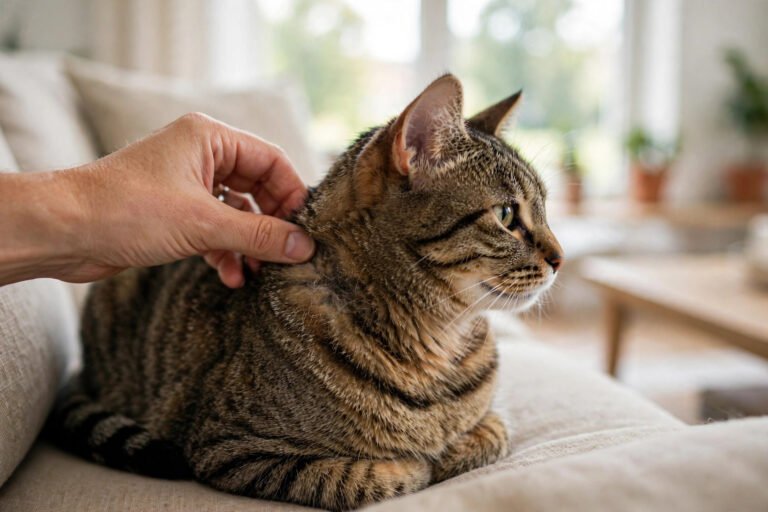
Fleas bite mostly on the back of the neck and the top of the tail head, Cornell notes. The bite causes itching, and hard scratching can open wounds that get infected. A cat with flea allergy dermatitis breaks out in reddish, crusty bumps, sometimes in places it never scratched.
The damage goes past the itch. Fleas carry tapeworm eggs and bacteria, including the organisms behind feline infectious anemia and cat scratch disease in people. A cat that swallows an infected flea while grooming can pick up tapeworm. Kittens face the sharpest risk: Cornell quotes dermatology professor William Miller Jr., who says a flea sticks its proboscis into the skin and sucks blood, and a small amount of that sucking can cause anemia in a heavily infested kitten.
Ticks work differently and slower. A tick attaches to the skin and feeds for days, and a bite can lead to local infection, blood infection, and in rare cases tick paralysis, plus diseases such as Lyme disease and anaplasmosis, according to PetMD. Cats get some tick borne diseases less often than dogs do, but that is no reason to skip prevention.
How to tell your cat has fleas or ticks
Scratching is usually the first clue, especially around the neck and the base of the tail. But some cats groom fleas off before you ever see one, so a clean looking coat proves nothing.
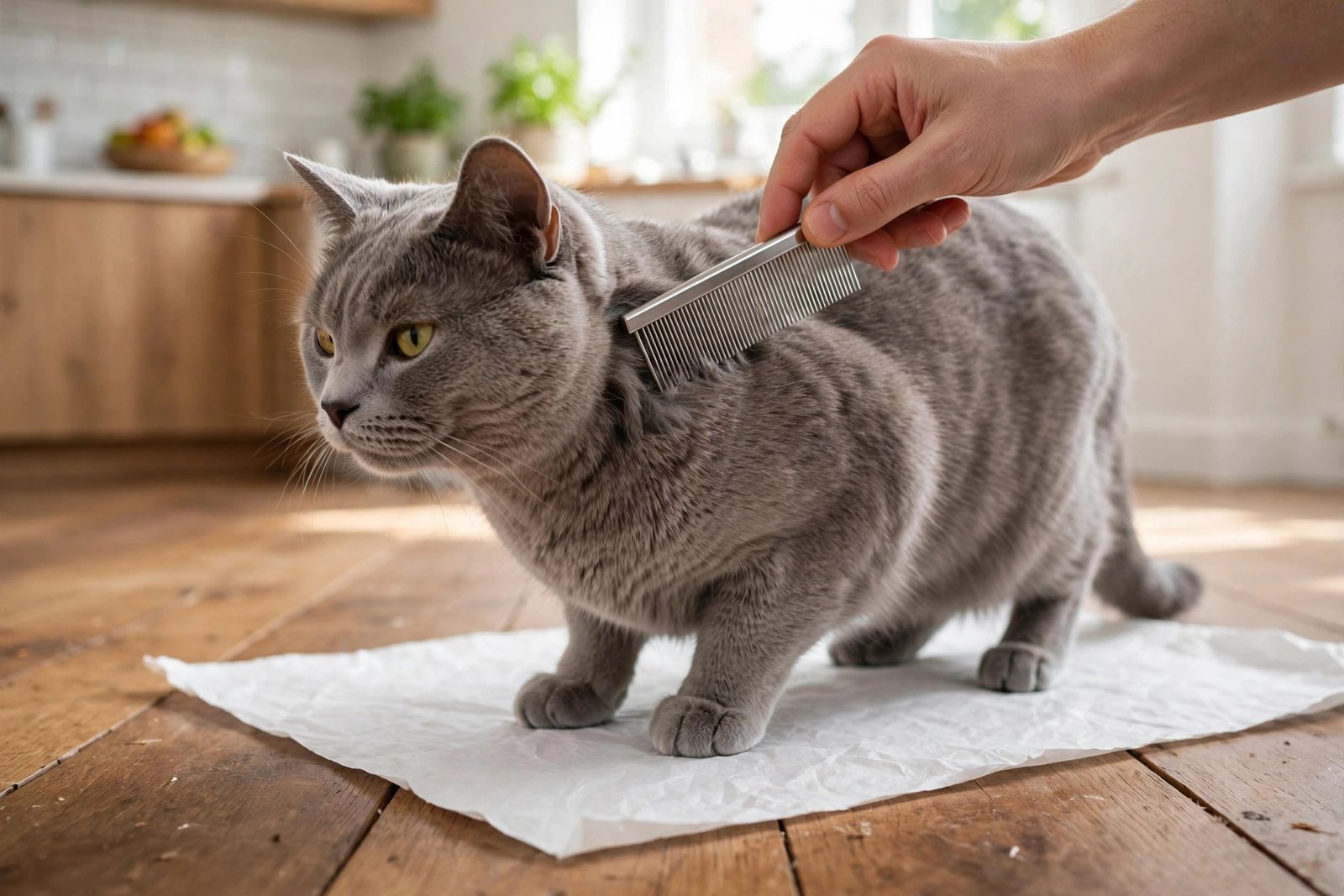
Run a fine toothed flea comb through the fur while the cat stands on white paper, and look for tiny black specks. Those specks are flea dirt, digested blood. Put one on damp cotton wool: flea dirt dissolves and leaves a red brown mark, while ordinary dirt stays dark.
Hair loss, scabs, and red skin around the neck and tail head point the same way. Small rice grain segments near the tail or in the bedding suggest tapeworm, which usually arrives through a swallowed flea, and that finding belongs to the vet.
Ticks need hands, not eyes. PetMD advises running your hands over the whole body, feeling for small bumps, then parting the fur to look for small, dark, oval shapes on the skin. Check the ears, neck, armpits, groin, and between the toes.
If you find a tick, pull it off promptly with fine tipped tweezers or a tick removal tool. Grasp it close to the skin and pull straight out with steady pressure, without twisting, then clean the area and wash your hands. Do not use petroleum jelly, heat, or essential oils. Those tricks do not work and may raise the risk of disease. If the area looks irritated, call your vet.
Flea and tick prevention for cats: the three types that work
A flea treatment for cats comes in three shapes, and the best one is the one you will actually use on schedule. It is the point PetMD makes when it says the most effective prevention is consistent use of a veterinarian recommended product.
Topical treatments, often called spot ons, are liquid applied to the skin between the shoulder blades. They spread across the skin and kill parasites on contact, often without the flea needing to bite first. Most are applied once a month, though some last up to three months. Keep the cat dry after applying one, and keep others from touching the spot until it dries.
Oral treatments are given by mouth and work through the bloodstream, so a flea or tick has to bite to be exposed, and then it dies. PetMD says oral treatments can start working in as fast as 30 minutes, while topicals tend to start in six to 12 hours. Oral products leave no residue on the coat and a bath will not wash them off, but they can be hard to give to a cat that refuses treats. Some cover fleas only, not ticks, so confirm coverage with your vet.
Collars release active ingredients over time and can protect for several months, up to eight months for some. They must fit properly, and not every collar covers both fleas and ticks.
Some products cover more than fleas and ticks. Broad spectrum products can also protect against ear mites, roundworms, hookworms, tapeworms, or heartworms, depending on the product. Know exactly what yours covers and what it does not. A flea only product will not stop a tick.
Over the counter products need no prescription and cost less. Prescription products cost more and need a vet visit, and PetMD says most vets recommend them as typically more effective and safer. Ask your vet first either way, because the label age and weight limits matter.
Most cats can start prevention as early as 8 weeks of age, depending on the product, and many products also set a minimum weight, often around 2 pounds. A kitten below those limits needs a different plan: a flea comb, a bath with mild kitten safe shampoo, and treating the mother cat and the home. Our new kitten checklist covers the first week supplies, and flea prevention belongs on that first vet visit list, not as a guess from a store shelf.
One caution: one class of preventives, called isoxazolines, has been linked to neurological side effects and needs care in cats with a history of seizures or neurologic disease. Tell your vet about any seizure, allergy, illness, pregnancy, or nursing before you pick a product.
The dog product mistake that can kill a cat
Never use a dog flea product on a cat. PetMD states it plainly: only use products made for cats, because dog products can lead to severe, often fatal, reactions.
The ingredient behind most of those reactions is permethrin. Dog spot on products can contain 45 to 65 percent permethrin, according to Petfinder. A cat’s liver cannot break permethrin down the way a dog’s can, so the chemical builds up and attacks the nervous system. That is why a product that is safe for a dog can poison a cat.
Even a small amount can cause serious illness. The ASPCA lists the signs: oversensitivity to touch and sound, tremors, muscle twitching, high temperature, and seizures. Signs can start within hours or take up to 72 hours to appear, and they generally last two to three days. A smaller dose is not safer.
The risk does not stop at the wrong bottle. A cat can be poisoned by rubbing against a dog recently treated with a permethrin product, or by sharing the same bed. ASPCA advises keeping cats away from a treated dog for 72 hours, and choosing a dog product without permethrin if cats share the house.
If you think your cat touched permethrin, do not wait for signs. Call your vet at once, or the ASPCA Animal Poison Control line at (888) 426-4435. Wash the cat only if your vet tells you to, and bring the product packaging. Treatment is time sensitive.
Your indoor cat is not safe by default
Indoor cats still get fleas. PetMD says fleas can ride in on clothing, shoes, or bags, arrive on another pet, or already live in carpets and bedding. A dog that hikes, a visitor’s cat, a shared hallway, or a mouse in the basement can all bring parasites inside.

That is why vets recommend year round prevention for all cats, indoor or not. Fleas can live and reproduce indoors no matter the weather outside, and ticks can stay active in temperatures above freezing. Skipping doses in winter leaves a gap, and a gap is all an infestation needs. The schedule depends on where you live and what other animals share the house, so ask your vet rather than guessing.
Treat the house or the fleas come back
How to prevent fleas on cats in real life has two halves, and most people only do one: the product kills the fleas on the cat, and the housework breaks the life cycle.
PetMD lists the steps: vacuum floors, rugs, and upholstery daily, wash the cat’s bedding in hot water, and throw the vacuum contents outside. Treat every pet in the house at the same time. A treated cat and an untreated dog will keep passing fleas back and forth.
Fleas can keep developing in the environment for weeks, so the cleaning has to continue after the cat stops scratching. Cornell adds that a heavy infestation may need a professional exterminator. That is what a month long life cycle looks like when it has had a head start.
When to call the vet first
Some situations skip the store shelf and go straight to the vet: a kitten under 8 weeks old, a cat that is pregnant or nursing, a cat that is sick or underweight, or a cat with a history of seizures. So does a cat that had a bad reaction to a preventive before.
Call the vet the same day if the cat has heavy flea dirt and pale gums, which can signal anemia, or if it stops eating, hides, or seems weak. Call too if the scratching keeps going after two weeks of correct treatment, or if you see tapeworm segments. And if the cat’s weight changes, check the amount again with your vet, because prevention is dosed by weight. Our guide on how much to feed a kitten covers weighing a young cat.
Questions owners ask about flea and tick prevention
Do indoor cats need flea and tick prevention?
Yes, year round in most cases. Fleas ride in on people and other pets, and they can live and reproduce indoors. Ask your vet to match the product to your home and your area.
When can kittens start flea treatment?
Most products start at 8 weeks of age with a minimum weight, often around 2 pounds, but the limits vary by product. Have your vet examine the kitten first and pick a cat specific product.
Can I use my dog’s flea treatment on my cat?
Never. Dog products can contain permethrin, which is toxic to cats and can be fatal even in small amounts. Use only products labeled for cats, and keep cats away from a dog treated with permethrin for 72 hours.
How long does flea treatment take to work?
It depends on the product. Oral treatments can start working in as fast as 30 minutes, while topicals tend to start in six to 12 hours. Clearing the house takes weeks, because eggs and pupae keep hatching.
Check your cat with a flea comb this week, over white paper, and look at the neck and tail base. If you find flea dirt or a tick, call your vet before you buy anything, and ask which cat specific product fits your cat’s age and weight. That one call costs less than a wrong bottle.
2 thoughts on “Flea and Tick Prevention for Cats: A Beginner Guide”