
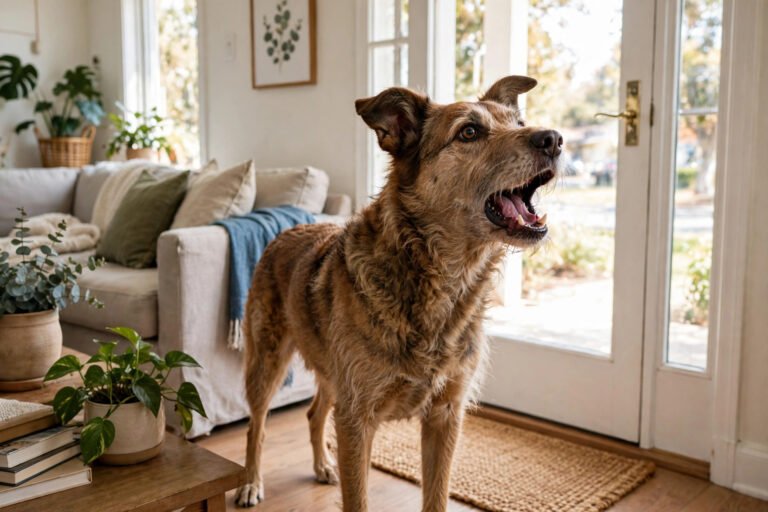
The ASPCA puts it in a way that stops most owners mid complaint. Expecting a dog to stop barking altogether is like expecting a person to suddenly stop talking. Barking is one of the ways dogs communicate, and the useful question is why do dogs bark at that moment, in that place, at that thing.
A bark is a message with a reason behind it. The ASPCA says you must identify the cause before you can treat the problem, because each type of barking serves a distinct function. Get the reason wrong and the fix makes it worse. Shout at a fearful dog and it barks more.
The nine reasons dogs bark
Territorial barking is the one most owners know best. A dog barks at people or animals approaching the area it considers its own, and that area grows with time. The ASPCA says a dog’s territory starts with the home and yard and eventually includes the car and the route you walk every day.
Alarm barking looks similar and works differently. A dog that alarm barks reacts to any noise or sight, in any place at all. The ASPCA notes these dogs usually have stiffer body language and often pounce forward an inch or two with each bark.
Attention seeking barking is the most honest kind. The dog barks at you to get food or a walk. And it works, which is the problem. The ASPCA says a dog that gets rewarded for barking learns to use barking to its benefit, so one rewarded bark becomes two tomorrow.
Greeting barking is the friendly one. The body stays relaxed, the tail wags, and the bark often comes with a whine.
Frustration barking happens when something stands between the dog and what it wants, a fence, a leash, or a playmate it cannot reach. The barking stops when the barrier goes away.
Boredom barking fills empty hours. A high energy dog left alone in a yard with nothing to do will bark at the wind and the fence, because barking is the most interesting thing available. Exercise and a good chew fix this type more often than training the bark itself does.
Fear barking tries to make a scary thing go away. The dog barks at a stranger, a loud truck, or a dog it does not trust, and if the scary thing leaves, the barking worked. A fearful dog remembers that lesson.
Separation barking only happens when the dog is alone. The ASPCA says it usually comes with at least one other sign of distress, like pacing or destruction. Short absences, a dull routine, and a food puzzle help more than punishment, and panic or self injury means a certified behaviorist, not more training alone.
Pain or illness can cause barking too. The ASPCA advises a vet exam to rule out medical causes first. A dog that starts barking at night, or barks when touched in one spot, may be hurting.
Compulsive barking is the rarest and the hardest. The dog barks in a repetitive way, like a broken record, and often paces the house as well. The ASPCA points owners toward a certified applied animal behaviorist or a board certified veterinary behaviorist for this one.
Socially facilitated barking is the neighborhood chorus. One dog starts, the rest join in. It is the only type where the trigger is simply hearing another dog bark.
A wagging tail does not mean a happy dog
This is the fact most new owners get wrong, and it matters more than any bark type. A wagging tail means the dog is emotionally aroused, by excitement, frustration, or anxiety. The American Kennel Club says to read the speed and position together, plus how stiff the wag looks, because each one changes the meaning.
A slow, sweeping wag that moves the whole body usually signals a relaxed and friendly dog, while a fast, stiff, twitch like wag often goes with tension. The higher the tail, the more assertive the dog. A tail carried high often reflects confidence, while a tail held low or tucked between the legs commonly signals fear, stress, or discomfort.
There is one wag with no ambiguity. The helicopter wag, where the tail circles around, is a happy wag, usually seen when a dog greets someone it loves.
Breed changes the baseline, so learn your own dog’s normal first. The AKC notes some breeds, like the Chow Chow, naturally carry the tail high, while others, like the Italian Greyhound, carry it much lower.
Raised hackles cause the same misread. The hair along the shoulders or back stands up, and most people take it as aggression. The AKC says it simply means arousal. The dog may be stressed, nervous, excited, or intensely focused. Like goosebumps in people, it is often involuntary, so read it alongside the rest of the body.
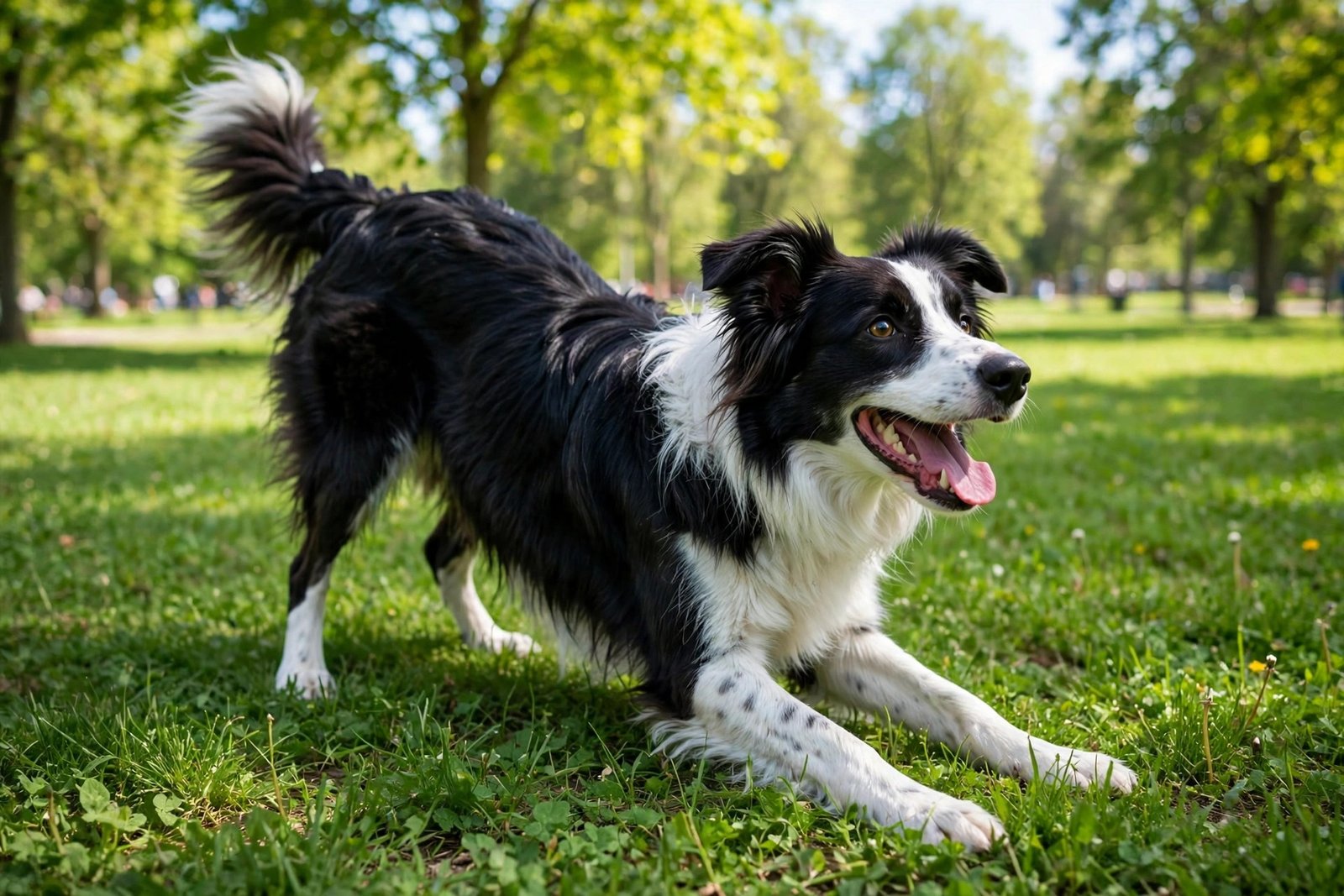
Posture fills in the rest. A dog that crouches low is usually showing fear or uncertainty, making itself smaller to say it means no harm. A dog that shifts its weight forward is showing increased interest, which can be harmless curiosity or something more assertive, especially with a high tail and a tense body, while the play bow, chest down and hindquarters up, is the clearest invitation in dog language.
The face tells the rest
The face carries the signals people miss because they watch the tail. Ears forward usually mean interest or confidence, while ears pinned flat back usually mean fear or submission. A dog with one ear forward and one back is still deciding, so give it a few seconds before you approach.
Eyes are just as plain once you know the words. Soft eyes, with relaxed eyelids and a gentle expression, usually mean calm and contentment. Hard eyes look intense, fixed, and unblinking, and they can signal tension, guarding, or aggressive intent.
A prolonged hard stare is a warning. Whale eye, where the whites of the eyes show, often means the dog feels anxious, worried, or pressured. It shows up when a dog fears losing a valued toy.
The mouth has its own traps. Yawning is the best example. People yawn when they are tired, and dogs often yawn when they feel stressed or uncomfortable. The AKC cites Turid Rugaas, who wrote about calming signals: dogs use yawning to calm themselves and others. A yawn at the vet usually means stress.
Lip licking works the same way. A quick tongue flick when there is no food around often means anxiety or discomfort. And the dog smile confuses everyone. A snarl shows teeth with tense facial muscles and threatening body language. A submissive grin shows the front teeth too, but the body stays loose, relaxed, and wiggly. One says back off. The other says hello, I come in peace.

The quiet signals people miss
Calming signals are small behaviors dogs use to say they are not a threat. Rover lists more than 30 of them, and the common ones are easy to learn once you look for them. A dog that turns its head away, sniffs the ground, yawns, licks its lips, or lifts a paw is often asking for space.
These signals show up in ordinary moments too. A dog that licks its lips during training may be uncomfortable with the position you asked for. A dog that turns away when you reach to pet it may want you to calm down first.
The mistake is treating one signal as a verdict. A yawn after a nap is a yawn. A yawn during a tense greeting, with a tucked tail and whale eye, is a plea. Context is the whole skill. The AKC puts it plainly: no single signal tells the whole story, so look at the whole dog and what is happening around it.
Learn your dog’s normal first. Watch how it stands and rests when nothing is happening, and the changes will stand out. A dog that usually greets you loose and wiggly and suddenly greets you stiff and still is telling you something changed.
Why do dogs bark when you leave the house
Separation barking deserves its own note because owners treat it like disobedience. The dog barks, paces, or destroys things only when left alone. Short absences and a dull routine help more than punishment. Practice leaving for a minute, then five, then longer, and return before the barking starts. If the barking comes with destruction or panic, get help from a certified applied animal behaviorist or a board certified veterinary behaviorist. Some dogs need medication alongside training, and that is a vet decision.
How to stop excessive barking without shouting
The first step is always the same. Name the type. The ASPCA says to ask when and where the barking happens and what triggers it. A dog that barks at the window needs a different fix from one that barks at you for dinner.
For territorial and alarm barking, reduce the trigger first. Block the view with window film or an opaque fence. Do not let the dog greet people at the front door or the yard gate.
Teach it to go to a spot. A mat works. Stay there until invited to greet. The ASPCA says to pick a spot at least eight feet from the front door but still within sight.
Teach a quiet cue the same way. Let the dog bark three or four times, then say quiet, calmly, and reward the silence with small treats. The ASPCA warns against shouting, because a raised voice sounds like joining in. If the quiet cue fails after 10 to 20 attempts, get professional help instead of escalating to punishment.
For attention barking, the rule is simple. Do not reward it. That includes scolding, because attention is attention. Teach an alternate behavior instead, like sitting, and reward that. Our guide to puppy training for beginners covers the first five cues, and sit is the one that replaces barking most often.
For boredom and frustration, add exercise and mental work before you add training. A tired dog barks less. A food puzzle and a sniffy walk use up energy that would otherwise come out as noise.
One warning the ASPCA states plainly: punishment can suppress the bark while the motivation stays strong, and the dog may then try to control its territory another way, such as biting without warning. A bark is information, and taking it away leaves the dog with the same feeling and one less way to express it.
Some breeds are known as barkers, and the ASPCA notes it can be harder to decrease barking in those dogs. If you are still choosing, our guide to best dog breeds for first-time owners lists the quieter picks alongside the vocal ones.
Questions owners ask about barking and body language
Is it normal for dogs to bark at strangers?
Barking at an unfamiliar person or sound is normal. It becomes a problem only when it is excessive, constant, or paired with fear or aggression.
Does a wagging tail always mean a dog is friendly?
A wagging tail means the dog is aroused, which can be excitement, frustration, or anxiety. Read the speed, height, and stiffness, plus the rest of the body, before you decide.
Why does my dog yawn when it is not tired?
Yawning is often a calming signal. Dogs yawn when they feel stressed, uncertain, or uncomfortable, and they use it to calm themselves and the dogs or people around them.
Should I punish my dog for barking?
Shouting and punishment can make barking worse, and the ASPCA warns that suppressing the bark without addressing the motivation can lead the dog to act in other ways. Find the reason, reduce the trigger, and reward quiet.
Watch your dog for one evening and write down what it barked at and what its tail and ears did. That note tells you the type, and the type tells you the fix. Start with the trigger.
3 thoughts on “Why Do Dogs Bark? What Each Bark Means”