
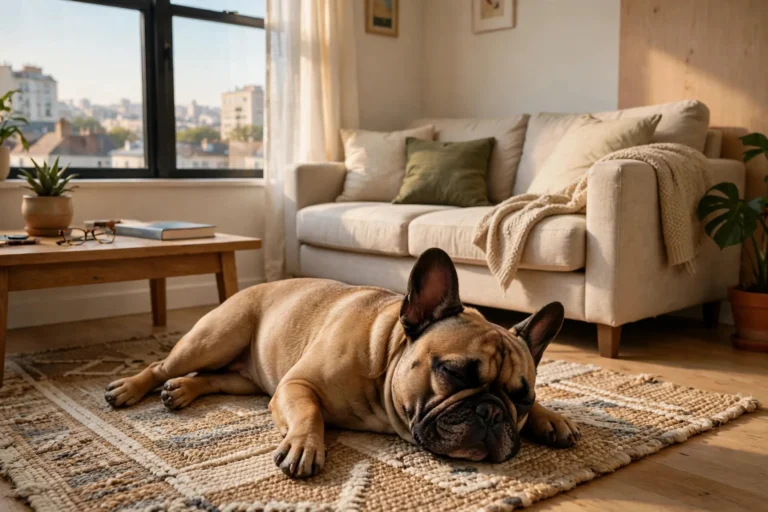
The best dog breeds for apartments are the quiet ones that settle indoors, need a reasonable amount of exercise, and cope with being alone for a few hours. Size helps, but weight is not the deciding factor. A calm 65 pound Greyhound often makes a better neighbor than a restless 10 pound terrier that barks at every sound in the hall. This guide picks nine breeds that fit small spaces for reasons beyond their weight, and it names the trade offs of each one.
Forget size. Ask three different questions instead
Most apartment breed lists sort by weight and stop there. That misses what actually gets a dog owner in trouble with neighbors. A lease rarely fails because a dog weighs 40 pounds instead of 20. It fails because the dog barks at 6 a.m., or a bored high energy dog destroys a door frame, or the owner cannot fit enough exercise into a workday.
Ask these three questions about any breed before you look at its size. First, how much does it bark, and what sets it off. Second, how much exercise does it need, and can you give it that on a workday. Third, how does it handle being alone.
A dog that panics when you leave will bark and scratch, and no amount of square footage fixes that. Our guide to why dogs bark explains what each type of bark means, which helps you tell normal alert barking from distress.
The American Kennel Club rates breeds from couch potato to high energy, and it lists energy level as one of the main traits to match to your life. A couch potato breed that gets two short walks a day will sleep through your work calls. A high energy breed on the same schedule will invent its own entertainment, usually at the expense of your furniture.
Nine of the best dog breeds for apartments
These nine are not ranked. The right one depends on how much noise you can tolerate, how much grooming you will do, and how many hours the dog spends alone.
French Bulldog
The French Bulldog is the most popular breed in the United States, according to American Kennel Club registration data, and apartment life is a big reason why. Frenchies weigh under 28 pounds, need only short walks and play sessions, and rarely bark without cause. They are happy to sleep on the sofa while you work.
The trade offs are health and heat. Frenchies are a flat faced breed, so they snort and snore, and they struggle in hot weather. A summer walk at noon can be risky for them. They also cost more at the vet than the average breed, and they can be stubborn about housetraining.
Cavalier King Charles Spaniel
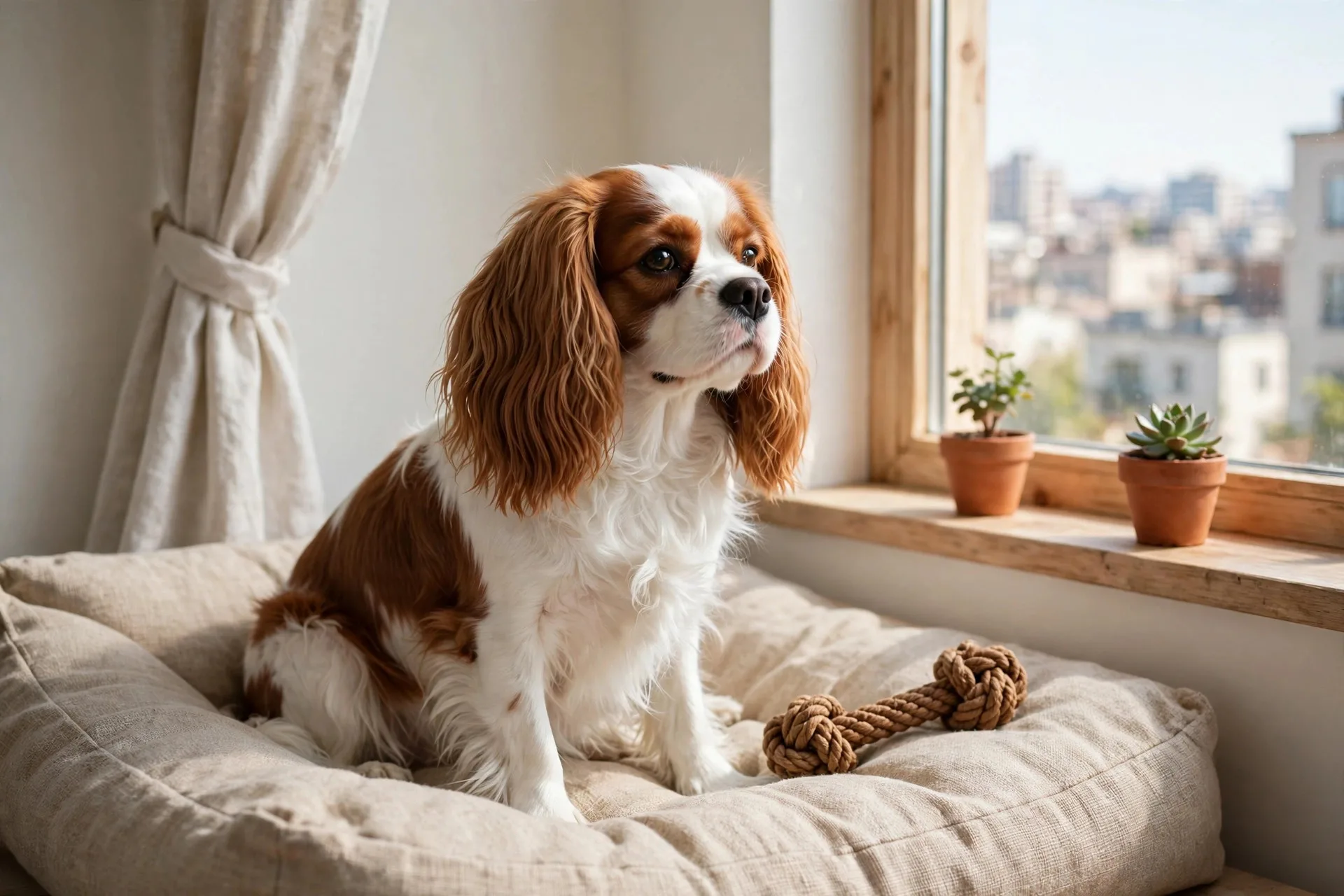
Cavaliers weigh 12 to 18 pounds and breeders developed them as companion dogs, so they fit apartment life by design. They are gentle, quiet for a small breed, and content with two moderate walks a day. They get along with visitors and children, and with other dogs, which matters when you share hallways and elevators.
The catch is alone time. A Cavalier that spends eight hours alone every day will often develop separation anxiety. If you work from home or can come back at lunch, this is one of the best apartment dogs you can choose. Cavaliers also carry a high risk of mitral valve heart disease, so ask the breeder about heart screening in the parents.
Pug
Pugs weigh 14 to 18 pounds and love people. They need less exercise than almost any breed on this list. A couple of short walks and a play session usually does it. They are comical, sturdy little dogs that settle well in small rooms.
Two warnings before you commit. Pugs shed a lot, far more than their short coat suggests, so expect hair on dark clothes and furniture. And like Frenchies, they are flat faced and heat sensitive. Keep walks short on warm days and watch their breathing.
A Pug will also follow you from room to room, including the bathroom, so personal space becomes a shared concept.
Boston Terrier
Boston Terriers weigh 12 to 25 pounds and the American Kennel Club calls them friendly and bright. They adapt well to apartments because they are moderate in every way: moderate energy, moderate size, moderate barking. A daily walk plus some play keeps them content.
They do have quirks. Boston Terriers can be gassy and they snore, and some bark at hallway noise. Early training helps a lot here, and our guide to crate training a puppy covers the routine that teaches a young Boston to settle alone.
Shih Tzu
Shih Tzus weigh 9 to 16 pounds and breeders developed them to live indoors as companion dogs. They need only short walks, they are usually quiet, and they are happy in a one bedroom flat. Their long coat looks high maintenance, and it is, but a short puppy cut brings grooming down to a weekly brush and a trip to the groomer every six to eight weeks.
Housetraining can take longer with this breed than with others. Small bladders and a stubborn streak mean you should plan for a patient few months and a strict routine. They also need their eyes kept clean, since the breed is prone to eye irritation.
Greyhound
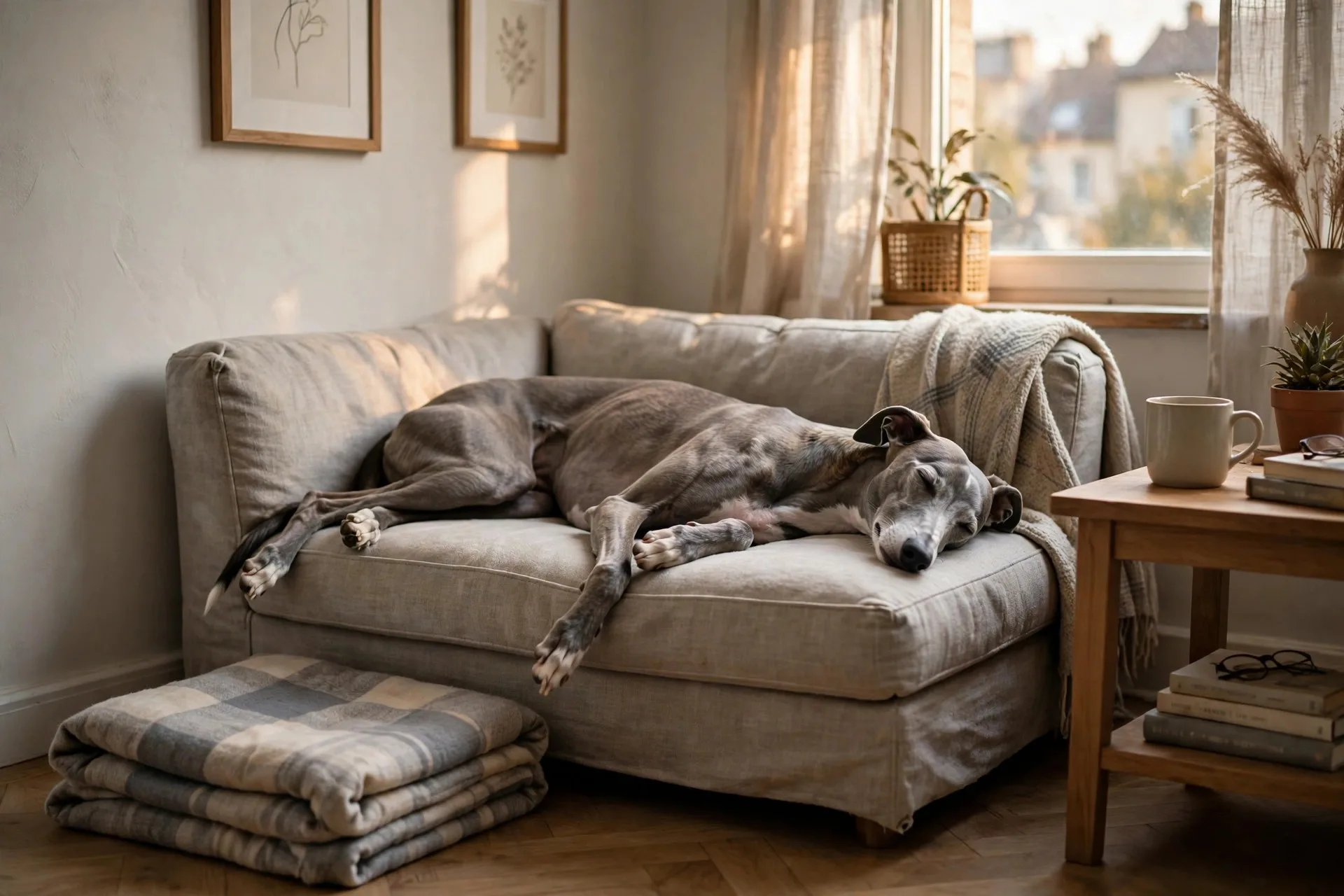
This is the surprise entry, and it is the one most apartment guides get wrong by leaving out. Greyhounds weigh 60 to 70 pounds, which breaks most weight limits, so check your lease first. But in behavior they are the opposite of what their size suggests. The American Kennel Club describes Greyhounds as gentle and quiet, and independent by nature. Retired racers famously sleep up to 18 hours a day.
A Greyhound needs one good walk and a chance to sprint a few times a week, then it sleeps. It rarely barks. The real costs are a thin coat that needs a sweater in cold weather, a strong prey drive that rules out off leash time near small animals, and a body that takes up most of a small sofa. If your building allows large dogs, this is one of the calmest apartment dogs there is.
Basset Hound
Basset Hounds weigh 40 to 65 pounds and move at a speed that suits apartment life: slow. They are low energy and good natured, happy with two unhurried walks a day. They rarely demand much, and they are famously tolerant of children and other dogs.
The trade off is noise. Bassets bark little, yet they bay, a deep howl that carries through walls. They also drool and shed, and their long ears need regular cleaning to prevent infection. A Basset on a ground floor flat with patient neighbors is a delight.
Chihuahua
Chihuahuas weigh 2 to 6 pounds, the smallest breed on this list, and they live a long time, often 14 to 16 years. They need little exercise, eat very little, and take up almost no space. For a studio flat, the practical case is strong.
But small does not mean quiet or easy. Chihuahuas can be quick to bark at strangers and sounds, and they bond hard to one person while snapping at others without good socialization. They are also fragile, so a home with small children or a clumsy large dog is a bad match. A well socialized Chihuahua with an owner who trains it like a big dog can be a fine apartment dog.
Maltese
Maltese weigh 4 to 7 pounds and shed very little, which is why they appear on so many lists of small dogs for apartments. They are affectionate, playful without being frantic, and content with short walks and indoor play. Their white coat needs daily brushing if kept long, or a short cut if you prefer low effort.
Maltese can bark at unfamiliar sounds, and they can struggle with housetraining, like many toy breeds. They also dislike being left alone for long stretches. If you want a low shedding apartment dog and you are home much of the day, the Maltese earns its place.
The part breed lists skip: noise, alone time, lease rules
Breed choice is half the job. The other half is what you do after the dog moves in. A quiet breed can still become a noisy dog if it is bored, under exercised, or anxious when left alone. Our guide to why dogs bark covers the common causes, and you can fix most of them with routine rather than with a different breed.
Separation anxiety deserves a blunt note. Dogs that panic alone will bark, chew door frames, and soil the floor. That is distress, and it needs gradual training and patience. If you work long hours away from home, budget for a dog walker or daycare, or choose one of the more independent breeds above, such as the Greyhound or the Boston Terrier. Puzzle toys and a calm leaving routine help, but they do not replace training.
Then there is the lease. Read it before you fall in love with a breed. Many US apartment buildings set weight limits, often 25 or 50 pounds, and some ban specific breeds or charge monthly pet rent.
A Greyhound or a Basset Hound can be a perfect apartment dog and your building may still ban it. Ask for the pet policy in writing, fees included, plus any breed list, before you pay a deposit on a dog.
A quick check before you commit
Run through this list before you commit. Does the breed bark at hallway noise. Can you give it the exercise it needs on your busiest workday. How many hours will it spend alone, and does that number match what the breed tolerates. Does your lease allow its weight. Who looks after it when you travel.
If any answer is no, the breed is wrong for you right now, however cute it is.
Also meet the dog first when you can. Breed guides describe averages. Individual dogs vary, and a calm adult rescue of a breed known for energy can suit a flat better than a puppy of a famously calm breed. Shelters often know how a dog behaves alone and how it reacts to noise, which is exactly the information a breed list cannot give you.
If you are choosing your first dog as well as your first apartment dog, our guide to the best dog breeds for first-time owners looks at the same question from the beginner angle, with different breeds and different detail.
Questions people ask before choosing
What is the quietest dog breed for an apartment?
Greyhounds, Cavalier King Charles Spaniels, and French Bulldogs are among the quietest choices. Training matters as much as breed, so ask how the dog behaves alone before you decide.
Can a large dog live happily in a small apartment?
Yes, if the breed is low energy indoors and you give it enough exercise outside. Greyhounds and Basset Hounds are the classic examples. Check your lease first, since weight limits are the usual obstacle.
How much exercise does an apartment dog need?
It depends on the breed. French Bulldogs, Pugs, or Shih Tzus are usually content with two short walks a day. Greyhounds need one good walk plus a sprint a few times a week. No breed on this list needs a yard, but every breed needs daily time outside.
Are small dogs always better for apartments?
No. Small dogs can be yappy and fragile, and hard to housetrain, while a calm large dog may sleep all day. Barking and energy matter more than size, and so does how a dog copes alone.
Sources
- American Kennel Club, French Bulldog breed page
- American Kennel Club, Cavalier King Charles Spaniel breed page
- American Kennel Club, Pug breed page
- American Kennel Club, Boston Terrier breed page
- American Kennel Club, Shih Tzu breed page
- American Kennel Club, Greyhound breed page
- American Kennel Club, Basset Hound breed page
- American Kennel Club, Chihuahua breed page
- American Kennel Club, Maltese breed page
- American Kennel Club, most popular dog breeds