
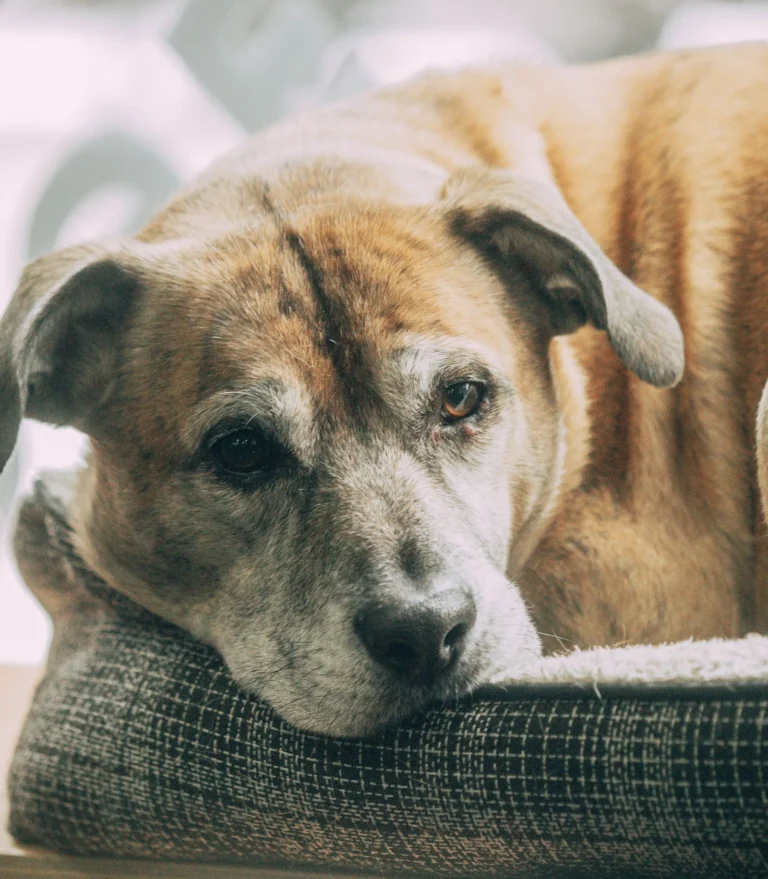
This guide tells you when your dog counts as senior, what the vet should check twice a year, what to feed, and how to change walks and the house, in that order. Start with the vet section if your dog is already slowing down, or with the size table below if you only want the age first. Your dog is not broken. Age has moved the goalposts, and the care that worked at age four needs a new version now.
When is a dog considered a senior
There is no single birthday when a dog becomes senior. The American Animal Hospital Association defines the senior stage as the last 25 percent of a dog’s estimated lifespan, and it adds that there is no specific age for senior status because dogs age at such different rates. That definition is the one most vet sources trace back to, and it explains why every chart online gives a slightly different number.
Size does most of the work in practice. A small dog lives longer, so it reaches that last quarter later. A giant breed lives a shorter life, so it gets there years sooner. The American Veterinary Medical Association uses these ranges as a guide, not a rule.
| Size | Weight | Senior from about |
|---|---|---|
| Small or toy | Under 20 pounds | 8 to 11 years |
| Medium | 20 to 50 pounds | 8 to 10 years |
| Large | 50 to 90 pounds | 8 to 9 years |
| Giant | Over 90 pounds | 6 to 7 years |
Read the table as a starting point. A Labrador often lives 11 to 13 years, so it reaches senior age closer to nine or ten, while a Great Dane with a 7 to 10 year lifespan can be senior at six. Breed, weight and health history all pull the number around.
If your dog is slowing down on walks, sleeping more, or struggling with stairs, treat that as the signal, not the calendar. The label itself is a planning tool. It tells you to start screening earlier and to stop assuming every change is just age.
One more point matters before the rest of the guide. Senior status is not a diagnosis. The AAHA guidelines put it plainly in their own words: old age is not a disease. The point of naming the stage is to catch the diseases that do arrive with age while they are still manageable.
Senior dog care starts at the vet
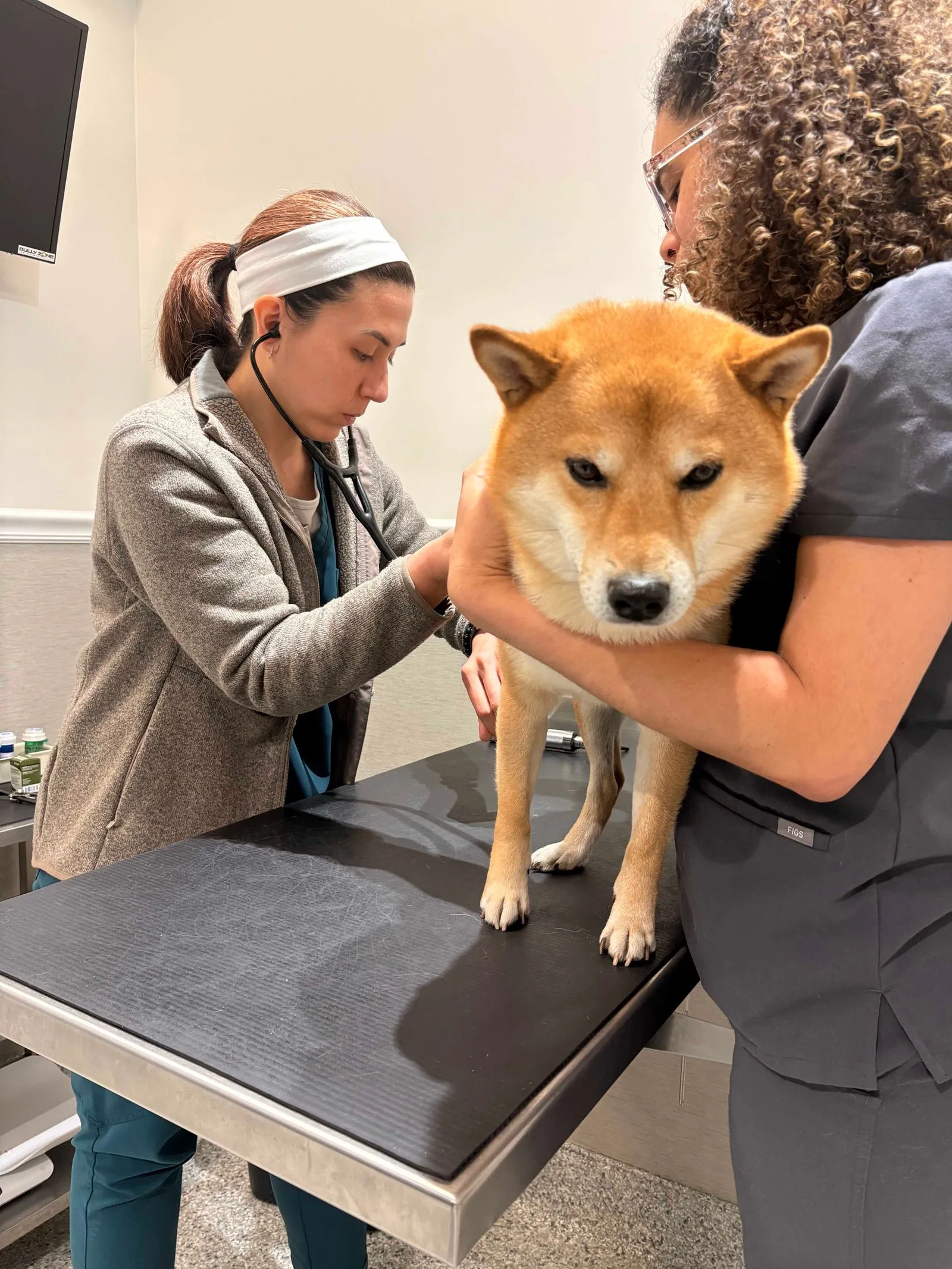
If senior dog care had one habit that mattered more than the rest, it would be the twice yearly vet exam. The American Animal Hospital Association recommends a senior exam every six months, with bloodwork every six to twelve months. The American Veterinary Medical Association gives the same twice a year advice. A healthy senior dog should see the vet at least twice a year, according to AAHA, and the exam is more in depth than the annual check your dog had at age three.
Six months is a long time in an older dog’s life. AAHA notes that senior dogs and cats make up 44 percent of the pet population, and slow conditions like kidney disease, dental disease and early arthritis can move a long way in half a year without showing much on the outside. The exam exists to find those changes before your dog has to live with them.
What a senior exam covers
A senior exam usually covers the full physical exam, weight and muscle condition, heart and lungs, joints, eyes, skin and any lumps. The bloodwork is a complete blood count, a chemistry panel and a urinalysis, repeated every six to twelve months.
A thyroid test, a blood pressure check, and heartworm and tick borne disease tests come once a year. Dental checks and a pain and mobility check happen at every visit. AAHA also encourages vets to treat pain assessment as a fourth vital sign, alongside temperature, pulse and respiration, because dogs hide pain well and older dogs hide it best of all.
What to bring to the visit
Bring two things to each visit. The first is a weight log, weighed at home every couple of months on the same scale. The second is a short written list of changes you have noticed, even the ones that feel too small to mention. Drinking more water, sleeping in a new spot, hesitating at the stairs, or eating more slowly are the kind of details a vet can use. Your memory of the last six months will not be as good as the list.
Vaccines, parasite prevention and dental care do not stop at senior age. Ask your vet which vaccines your dog still needs for its lifestyle, and keep parasite prevention going. Dental pain is one of the most common hidden problems in older dogs, and it shows up as dropped food, chewing on one side, or a dog that suddenly prefers soft food.
Food: fewer calories, better protein
This is the section where most owners get the wrong advice, and the correction is worth the space. A senior dog needs fewer calories and the same or better protein, not less protein. The two halves of that sentence pull in opposite directions, which is why the food bowl needs real attention instead of a smaller scoop of the same food.
Metabolism slows with age. Resting metabolic rate falls by about 20 percent after age seven, and activity usually falls with it. Senior dogs typically need 20 to 30 percent fewer calories than they needed at their adult peak. If you keep the portion the same, the dog gains weight on food that once kept it lean, and extra weight lands straight on aging joints and the heart.
Cutting calories by feeding less of the same food creates a second problem. It cuts protein, vitamins and minerals in the same proportion, and an older dog needs those nutrients more, not less. The fix is to reduce calories while keeping nutrient density up, which usually means a food with fewer calories per cup and a higher share of protein.
The old rule said to cut protein to protect the kidneys. Current evidence says the opposite for a healthy senior dog. Older muscles absorb amino acids less efficiently, so protein needs actually rise with age as digestive efficiency falls and muscle turnover speeds up. Senior dogs need a minimum of 25 to 30 percent protein on a dry matter basis to fight sarcopenia, the age related loss of lean muscle. The one exception is a dog with diagnosed chronic kidney disease, where protein restriction belongs under vet direction after bloodwork confirms the kidney status. Never cut protein on your own because a bag or a forum told you to.
How to pick a senior food
Start with the label, not the front of the bag. The word senior on a label is not defined by the Association of American Feed Control Officials, so it guarantees nothing. Some senior diets run lower in calories and higher in protein, and some are adult food in new packaging. Check the protein share and the calories per cup, and ask your vet to look at the numbers with your dog’s weight and bloodwork in hand.
A 14 year controlled trial of 48 Labrador Retrievers, the Purina Lifetime Study, gives the clearest reason to keep weight under control. Dogs kept lean throughout life lived a median 1.8 years longer than their overfed littermates. That gap is large. It is the difference between a dog that is still walking comfortably at twelve and one that is not.
Feed two measured meals a day at fixed times, and keep treats to a small share of daily calories. Fixed mealtimes make appetite changes easy to spot, and appetite loss is one of the earliest signs that something is wrong. Free feeding hides that signal.
If your dog has dental pain or a sore mouth, soft or wet food can help, and warming the food slightly can bring back interest for a dog whose sense of smell has faded. Any big diet change, especially for a dog with a diagnosed condition, goes through your vet first.
Our guide to dog food for allergies covers the allergy and sensitivity side of the same question, and our guide to what dogs can eat lists the safe and unsafe foods to keep in mind when you share from the kitchen.
Moving less, moving better
An older dog still needs to move, but the shape of the exercise changes. The goal shifts from tiring the dog out to keeping joints loose, muscles working and weight down. Shorter walks, taken more often, suit most senior dogs better than one long outing. Two or three gentle walks a day beat a single hard one, and a slow sniff walk counts. Sniffing is mental work, and mental work tires a dog without loading its joints.
Watch the dog, not the clock. A senior dog that lags behind, sits down mid walk, or pants heavily long after you are home has had enough. Cut the next walk shorter and build back up slowly. Heat is a bigger risk than it used to be, so walk in the cool parts of the day and carry water in summer. Cold and damp stiffen old joints, so a short warm up indoors before the walk helps, and a coat helps a thin coated senior in winter.
Swimming suits many arthritic dogs because the water carries the weight, but only where the dog can get in and out safely and only with supervision. Ramps beat stairs for getting into the car. A dog that used to jump into the back seat and now hesitates is telling you something, and a ramp answers it before a bad landing does the job for you.
Play that still fits
Play changes too. Fetch on a slippery floor is a bad idea for a stiff dog. Gentle tug, food puzzles, scent games and short training refreshers keep the brain busy without asking the body for speed. If your dog loved a game at age five, keep the game and shorten the rounds, so fun stops hurting.
Your house, rearranged a little
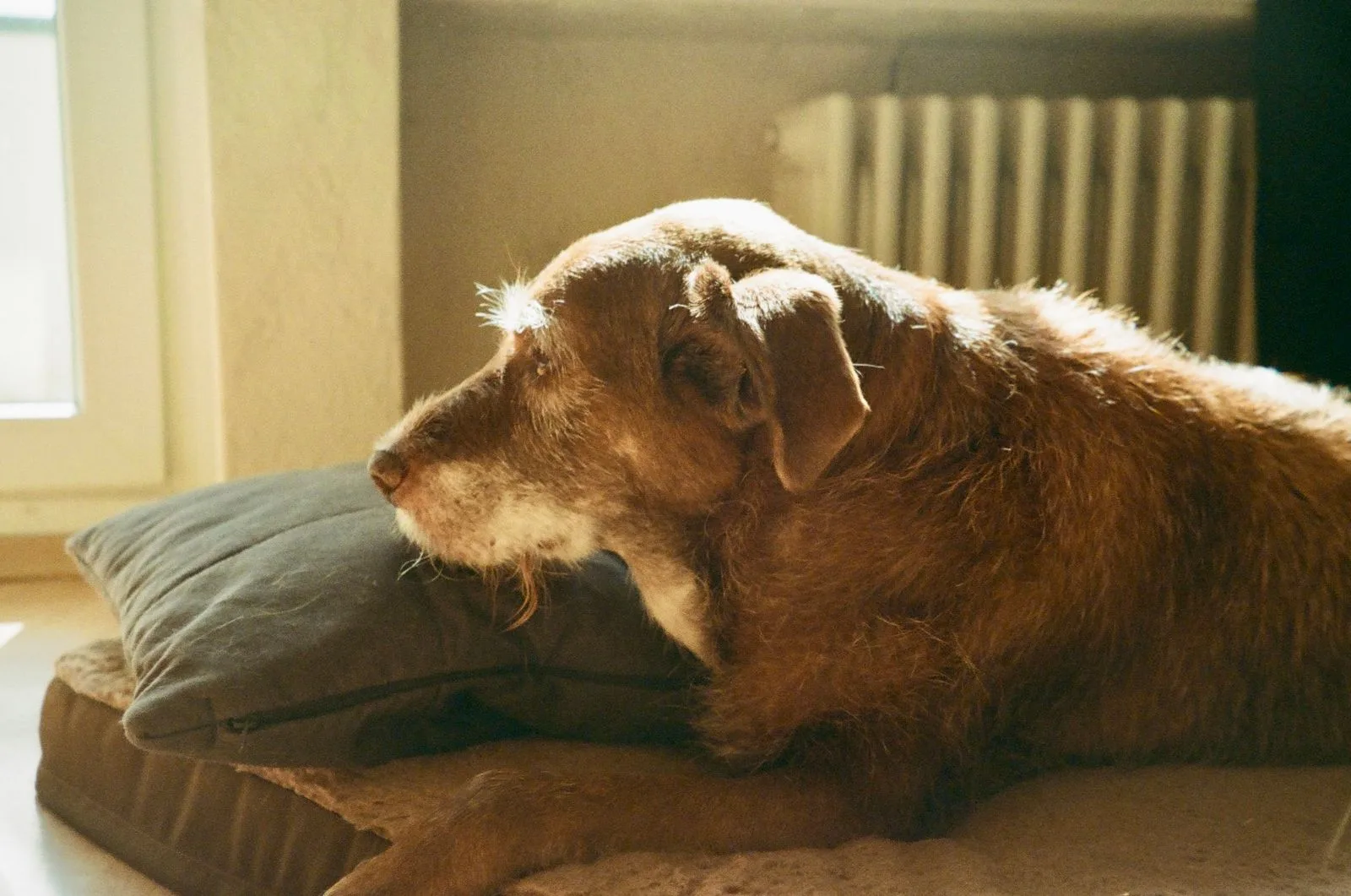
Home changes for a senior dog are small, cheap and easy to put off, which is why they are worth doing now. A non slip rug or a runner on a hard floor gives an older dog grip where it used to slide. A bed with real support, placed in a warm spot away from drafts, helps stiff joints more than a thin cushion in a cold corner. Put the bed where the family sits, not in a back room, because a senior dog that cannot climb the stairs to be near you will lie alone downstairs instead.
Food and water bowls at a comfortable height help a dog with a stiff neck or sore shoulders. A night light on the way to the garden helps a dog whose eyesight is fading. A baby gate at the top of steep stairs prevents a fall at night. None of this is a renovation. It is a house that admits the dog has changed.
Grooming needs a lighter touch as well. Brush more gently, check the skin as you go, and trim nails more often, because an older dog that walks less wears its nails down less. Our guide to grooming a dog at home walks through the routine step by step. If your dog flinches when you touch a spot, note it and mention it at the next vet visit instead of pushing through.
Changes worth a phone call, not a wait
Most senior changes arrive slowly, and slow changes are easy to explain away. A few are worth a call to the vet the same week you notice them, not at the next scheduled visit.
Drinking a lot more water or asking to go out far more often. Losing weight while eating the same amount, or gaining weight while eating less. A new lump, a sore that does not heal, or a leg that stays stiff after rest. Coughing more, tiring fast, or struggling to stand up after lying down. Confusion at night, staring at walls, or getting stuck in a corner.
Any of these can have a simple cause, and any of them can be the first sign of a condition that is easier to manage when it is caught early.
The same rule applies in reverse. A dog that is slower but steady, eating well, sleeping well and still glad to see you is aging, not failing. The vet visit exists to tell those two stories apart. Do not wait for a crisis to have the conversation, and do not let a single bad day rewrite the whole picture. Keep notes for a week, then call with the notes in front of you.
Senior dog care is mostly this: watch closely, weigh often, see the vet twice a year, feed for the body your dog has now, and change the house before the dog has to ask. The dogs that age best usually belong to owners who noticed the small changes early and acted on them while the fix was still small. If your dog is entering its senior years, start with the vet visit and the food label, and let the rest follow from what those two tell you. Our first-time dog owner guide covers the cost side of the same planning, including the vet bills that grow as a dog ages.
Our verdict: start with two things
If your dog is already in its senior years, do two things first and let the rest follow from them. Book the twice yearly vet visit, with bloodwork, and read the food label with your vet, checking protein and calories per cup against your dog’s weight. Those two steps catch most problems early and fix the most common feeding mistake. Ramps, rugs and shorter walks come next, and they cost little. If money is tight, spend it on the vet visit before a new bed or a new food, because the visit tells you what the bed and the food actually need to do.
Frequently asked questions
At what age is a dog considered a senior?
A dog is considered senior in the last 25 percent of its estimated lifespan, which works out to about 8 to 11 years for small breeds, 8 to 10 for medium breeds, 8 to 9 for large breeds, and 6 to 7 for giant breeds. Breed and health history move the number, so use the range as a guide and your dog’s condition as the real test.
How often should a senior dog see the vet?
At least twice a year, with bloodwork every six to twelve months. The American Animal Hospital Association recommends that schedule, and it adds a yearly thyroid test, blood pressure check, and heartworm and tick borne disease tests.
Do senior dogs need less protein?
No, a healthy senior dog needs the same or more high quality protein than an adult dog, at a minimum of 25 to 30 percent on a dry matter basis. The low protein rule is outdated, and it applies only to dogs with diagnosed kidney disease under vet direction.
Should I switch my dog to a senior food?
Only if the numbers on the label fit your dog. The word senior is not defined by feed regulators, so check the protein share and the calories per cup, and ask your vet to review them against your dog’s weight and bloodwork.
Sources
- American Animal Hospital Association: How Often Should My Dog Go to the Vet?
- American Animal Hospital Association Senior Care Guidelines, via BreedTools: Senior Dog Care, A Complete Guide to Aging Well
- PetMD: When Is a Dog Considered a Senior?
- PetSafe: Senior Pet Care, A Complete Guide for Older Dogs and Cats
- Seattle Humane: Senior Pet Care
- Norwalk Animal Hospital: Senior Pet Wellness, Why Twice Yearly Checkups Can Help
- Puppy Longevity: Senior Dog Nutrition, Feeding for Longevity After Age 7
- IAMS: Nutritional Needs of Senior Dogs
- Hawa Pets: Senior Dog Care, 9 Essential Tips for Older Dogs
- Care4Dog: Senior Dog Care, Adjusting Routine