
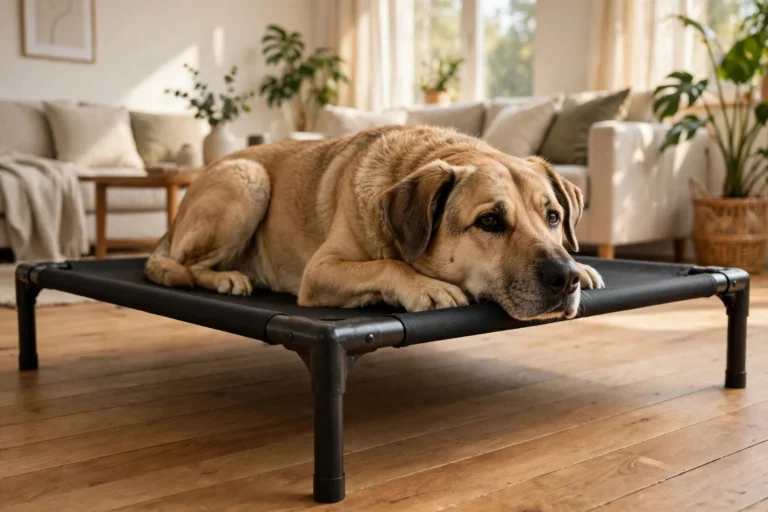
A chew proof dog bed is a bed that gives a determined dog nothing to grab. No loose corner, no exposed zipper, no soft edge to pick at, no stuffing to pull out in clumps. That is the whole test, and most beds sold under the label fail it within a week. The best chew proof dog bed is built like a piece of equipment, with the fabric tucked where teeth cannot reach it and the seams buried where claws cannot find them.
No bed survives every dog. A strong jaw with enough time and boredom behind it will beat any fabric. The real question is how long a bed lasts and whether the dog stays safe while it tries.
What a chew proof dog bed has to survive
Start with the dog, not the product page. A teething puppy chews differently from a bored adolescent Lab, and both chew differently from an anxious rescue.
VCA Animal Hospitals lists the usual motives behind destructive chewing. Play and investigation top the list, along with teething between three and six months. Scavenging for food drives some dogs.
Attention seeking and anxiety drive the rest. A bed has to survive whichever motive your dog brings to it.
Labels tell you almost nothing. The guarantee tells you more. Hepper’s roundup notes that K9 Ballistics replaces the fabric free if a dog destroys it within 180 days, and goDog offers a one-time replacement within 30 days.
Four bed types that last, and one that usually does not
Elevated platform beds survive the most dogs, and the reason is simple geometry. A raised cot has no soft edge lying on the floor for a dog to pick up in its teeth. The fabric stretches across a metal frame, and on the better designs the edges disappear inside the frame itself.
Hepper gives its top spot to the Veehoo chew-proof elevated bed for exactly this reason. The Textilene mesh edges wrap directly inside the aluminum frame, leaving no loose corner or seam for a determined chewer to get hold of. The same review names the Coolaroo steel-framed bed as the budget pick, and both hold up to 150 lb.
The trade is comfort. A mesh cot sleeps cool and firm, so lay a cheap blanket on top and let the dog destroy the cheap layer while the frame survives.
Armored crate pads suit one specific dog: the one that chews inside a crate. These flat pads use an aluminum frame with ripstop ballistic fabric encased in the edges, so the dog cannot find a starting point. K9 Ballistics builds its chew proof bed this way.
Ripstop bolster beds are the middle ground. They look like normal dog beds, with a raised edge to lean against and a soft center, but the cover uses ripstop fabric with double-stitched seams and reinforced corners. Hepper’s review of the goDog Bubble Bolster notes the reinforced seams and a one-time 30-day replacement, while also saying plainly that an aggressive dog will still chew through certain areas.
Orthopedic beds are where the roundup turns into a warning. A thick foam bed with egg-crate foam supports old joints, and Hepper praises the FurHaven Deluxe Oxford for exactly that. But the same review says the company does not market it as fully chew-proof, and a dog can reach every edge.
Foam is the worst filling for a chewer to reach, because it comes apart in chunks that a dog can swallow. If your senior dog chews, put the orthopedic pad on top of an elevated frame.
The type that usually does not last is the thin crate pad, the flat rectangle of polyester with a little stuffing that most pet stores sell for twenty dollars. Hepper calls crate pads the least durable bed type, even with extra stitching. They do not work as the main bed for a chewer.
The fabric and the seams tell you more than the label
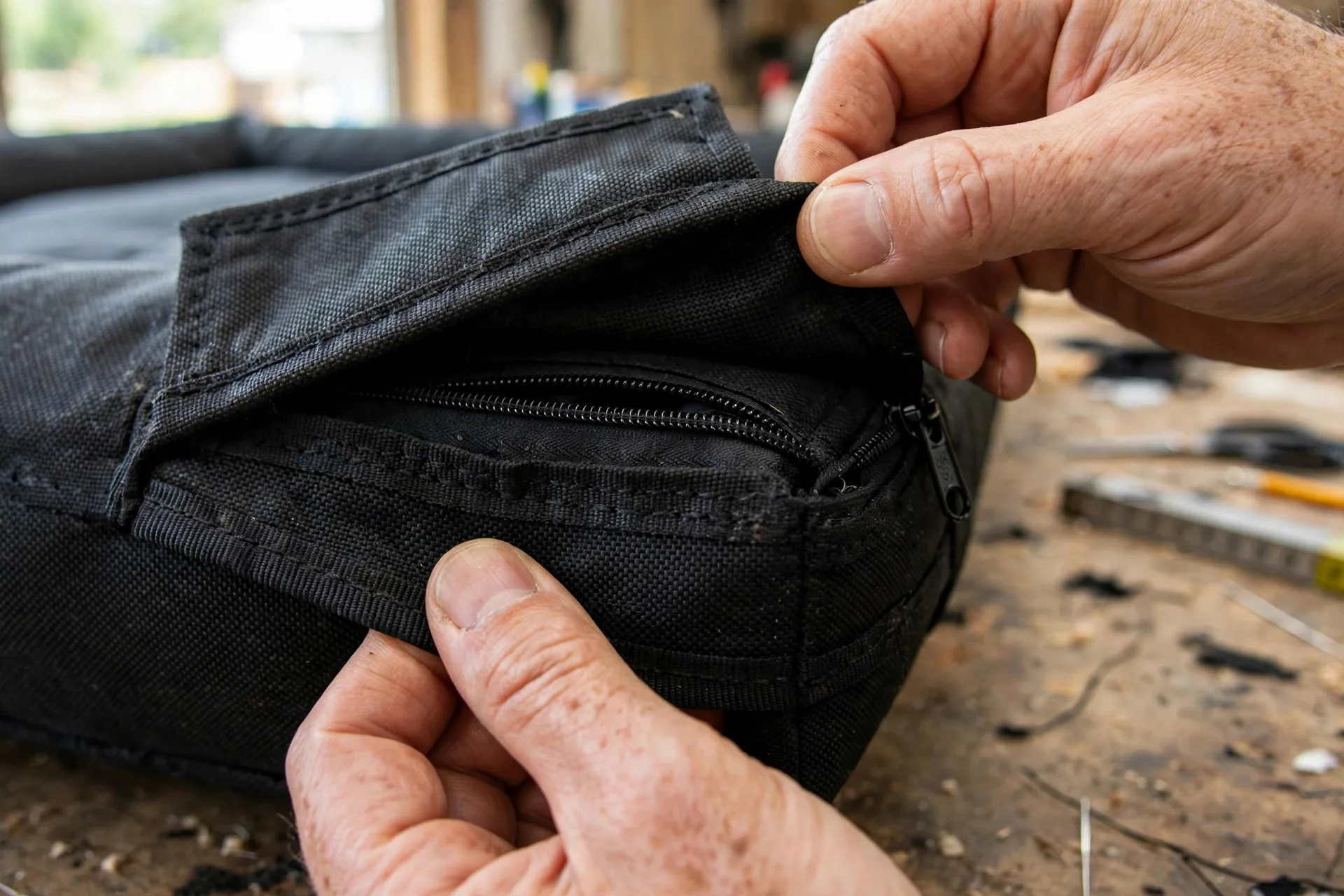
Ignore the marketing words and read the spec sheet. Ballistic nylon leads the list of fabrics that show up on beds that survive. Ripstop polyester follows.
Ballistic nylon resists puncture because the weave is dense and the fibers are thick. Ripstop resists tearing because a grid of stronger threads stops a small rip from running across the whole panel.
None of these makes a bed chew-proof on its own. A tough fabric with a weak seam fails at the seam, and a strong seam on thin fabric fails at the fabric. Seams decide more fights than fabric does.
Look for double stitching and reinforced corners, with zippers hidden under a fabric flap or tucked inside the frame. A zipper pull sitting on the outside of a bed is a handle, and a dog will find it within minutes.
Filling matters as much as the cover. Loose polyester stuffing is the worst option for a chewer, because one small hole empties the whole bed across the floor and gives the dog a mouthful of fibers to swallow. A solid slab of foam holds its shape after a tear and gives the dog far less to pull out.
If a bed lists “plush fill” or “fiber fill” and your dog shreds things, skip it. A waterproof liner under the cover is worth paying for, because foam that stays dry keeps its shape.
Why your dog eats the bed in the first place
A tougher bed treats the symptom. The cause sits somewhere else, and VCA’s advice is to find it before you buy anything, because the treatment changes with the motive. A puppy under six months is probably teething, and a dog that chews only when left alone may be anxious.
Keep a short diary for a week. Note when the chewing happens, what happened just before it, and what you did when you caught the dog. VCA suggests exactly this, because the pattern usually shows itself fast.
Boredom is the most fixable cause. A dog that gets a long walk and a training session chews less at night. Toys that keep a worried dog busy help here, especially food puzzles and lick mats that give the dog a job while you are out. A frozen stuffed toy can keep a dog occupied for half an hour, which covers the worst stretch after the door closes.
Anxiety needs more care. A dog that panics when left alone, drools, paces or tries to escape needs a vet first, then a behaviour plan. Crate training in small steps can help a puppy learn that the crate is a safe place, but only when the training moves at the dog’s pace. If your dog injures itself trying to escape, skip the shopping and call the vet.
One practical note for new owners: puppies chew most between three and six months, when adult teeth come in. A new puppy checklist with safe chew toys and a bed you can afford to replace twice beats one expensive armored bed bought in a panic. Buy the tough bed once the adult teeth are in and you know what kind of chewer you have.
When a chewed bed turns into a vet visit
This is the part of the buying guide that matters most, and it has nothing to do with price. A dog that shreds a bed can swallow the stuffing and foam chunks from a torn bed, and those things can block the gut. A blockage is an emergency, not a mess to clean up later.
VetWayfinder’s guide to foreign bodies lists the signs to watch for. Repeated vomiting leads the list, along with loss of appetite. The same guide says to contact a veterinarian immediately if a dog may have swallowed a foreign object, even if the dog seems normal, because some objects cause worse damage the longer they sit.
Thread from a ripped seam deserves its own warning. It can anchor inside the gut and cut through the wall. If you see string hanging from your dog’s mouth or under its tail, do not pull it. Call the vet.
If your dog swallows pieces of its bed, take the bed away. A dog that eats its bedding needs a bed with nothing to eat: a solid foam slab with no loose fill, or an elevated mesh cot with no stuffing at all. Retire a damaged bed the moment the filling shows.
Cleaning a bed that lives on the floor
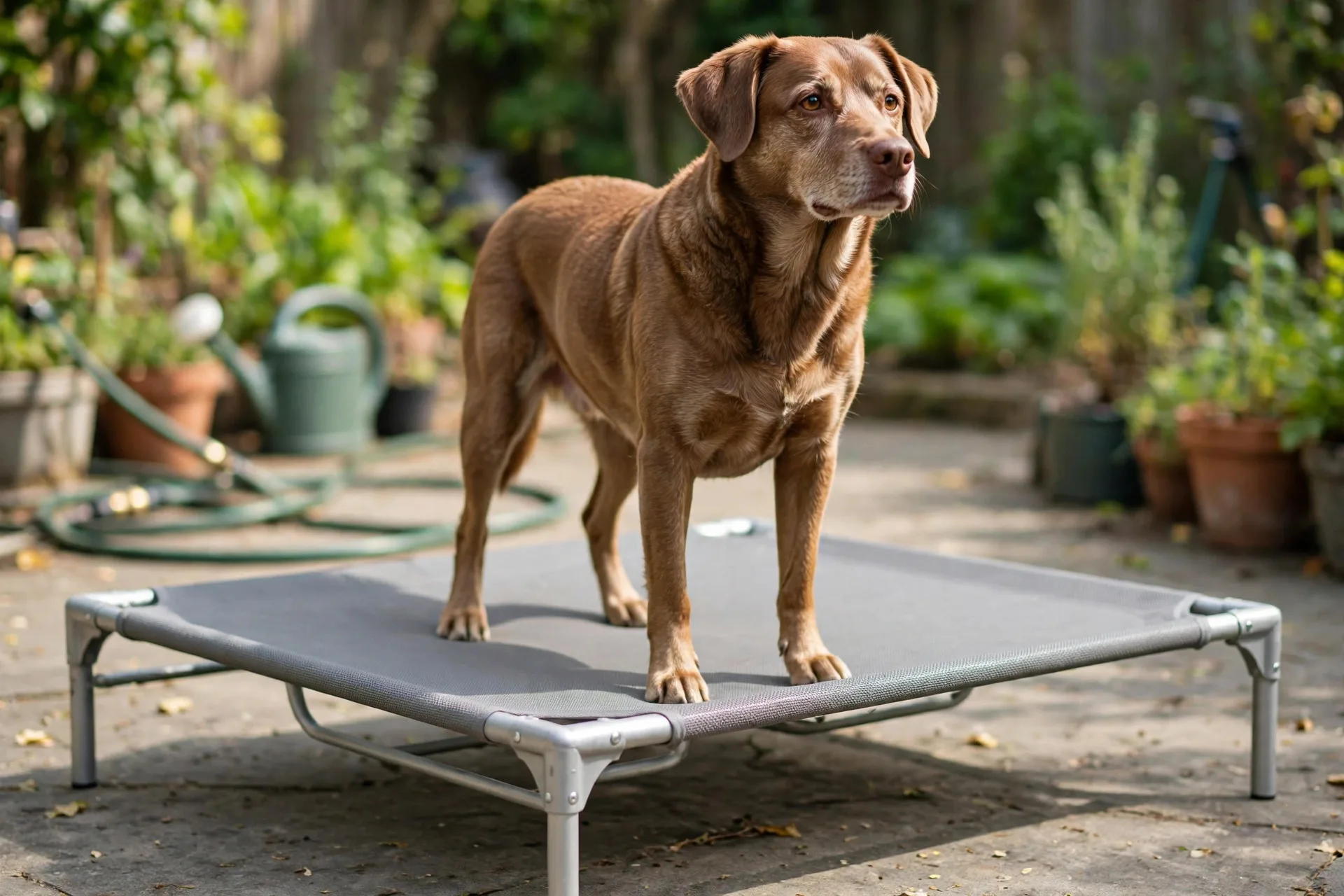
A chew-proof bed still gets dirty, and cleaning is where the designs split again. Elevated mesh beds are the easiest to live with. Hose them down outside or wipe them with a damp cloth, and the open weave dries fast. Hepper notes this for both the Veehoo and the Coolaroo.
Ripstop bolster beds usually have a removable cover that machine washes on a gentle cold cycle, then air dries flat. Check the care label before you buy. Some foam cores can spot clean only, which means an accident soaks in and stays.
Inspect the seams while the cover is off. A wash cycle is a good moment to find the loose thread before the dog does.
What to pay, and what cheap costs you
Price tracks durability more closely here than in most pet products, because the materials that resist teeth cost more to make. A budget elevated cot costs the least of the tough designs and lasts well. A mid-price ripstop bolster costs more and lasts less long under a serious chewer, because the design gives the dog more to attack.
A premium armored bed costs the most up front and earns it back if you ever use the 180-day replacement guarantee. One replacement turns the most expensive bed on the shelf into the cheapest one you own. The expensive mistake is buying the same cheap bed four times. A twenty dollar pillow bed that lasts a week costs more over a year than a single tough bed.
A calm senior that sleeps twelve hours a day, which Hepper notes is normal for dogs, needs a soft orthopedic pad and a quiet corner. Match the spend to the chewer. A light nibbler gets a ripstop bolster. A steady destroyer gets an elevated cot.
Questions people ask before buying
Is any dog bed indestructible?
No. Given enough time and determination, a dog can damage any bed. The best indestructible dog bed is a chew-resistant bed that lasts months or years instead of days.
What is the best dog bed for chewers that also sleeps well?
An elevated cot with a blanket on top. The frame and mesh survive the chewing, and the blanket gives the dog something soft to curl into.
How do I stop my dog from chewing the bed?
Find the cause first. More exercise and food puzzles fix boredom, along with a regular routine. Anxiety needs a vet and a behaviour plan, not a tougher bed.
Start with the cot. Buy an elevated bed with the fabric wrapped inside the frame, check the seams every week, and keep a cheap blanket on top for comfort.
Sources
- Hepper, 8 Best Indestructible and Chew-Proof Dog Beds in 2026: Best Indestructible Chew Proof Dog Beds
- VCA Animal Hospitals: Dogs and Destructive Chewing: Dogs And Destructive Chewing
- VetWayfinder, Signs a Dog Has Something Stuck in Its Stomach: Signs Dog Has Something Stuck In Stomach