
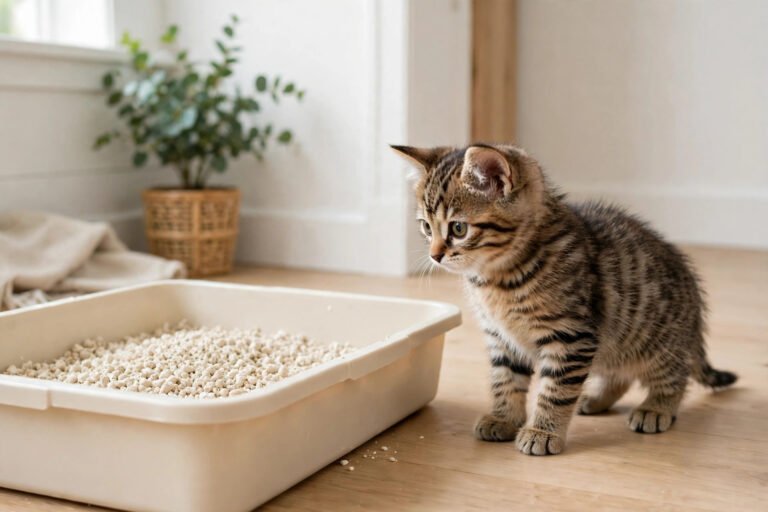
You can litter train a kitten by setting up one low box in a quiet room and placing the kitten in it after meals and after naps. That is the short version of how to litter train a kitten, and the rest of this guide covers the setup that makes it work.
Kittens bring an instinct for this job. Cats cover waste to avoid detection by predators, and most kittens only need a person to show them where the box sits, a point Rover backs with a quote from Dr Wendy Hauser.
Start at about 3 to 4 weeks, when weaning begins. PetMD puts the start at about 4 weeks. Rover and Elanco put it at about 3 weeks. Cats Protection recommends that kittens stay with their mother until at least 8 weeks.
How to litter train a kitten in one small room
Give the kitten one small room first. Put the box in that room, along with food and a bed, and keep the kitten there until it uses the box reliably. VCA says young kittens learn good litter habits quickly when they start confined to a room with a box.
Start small.
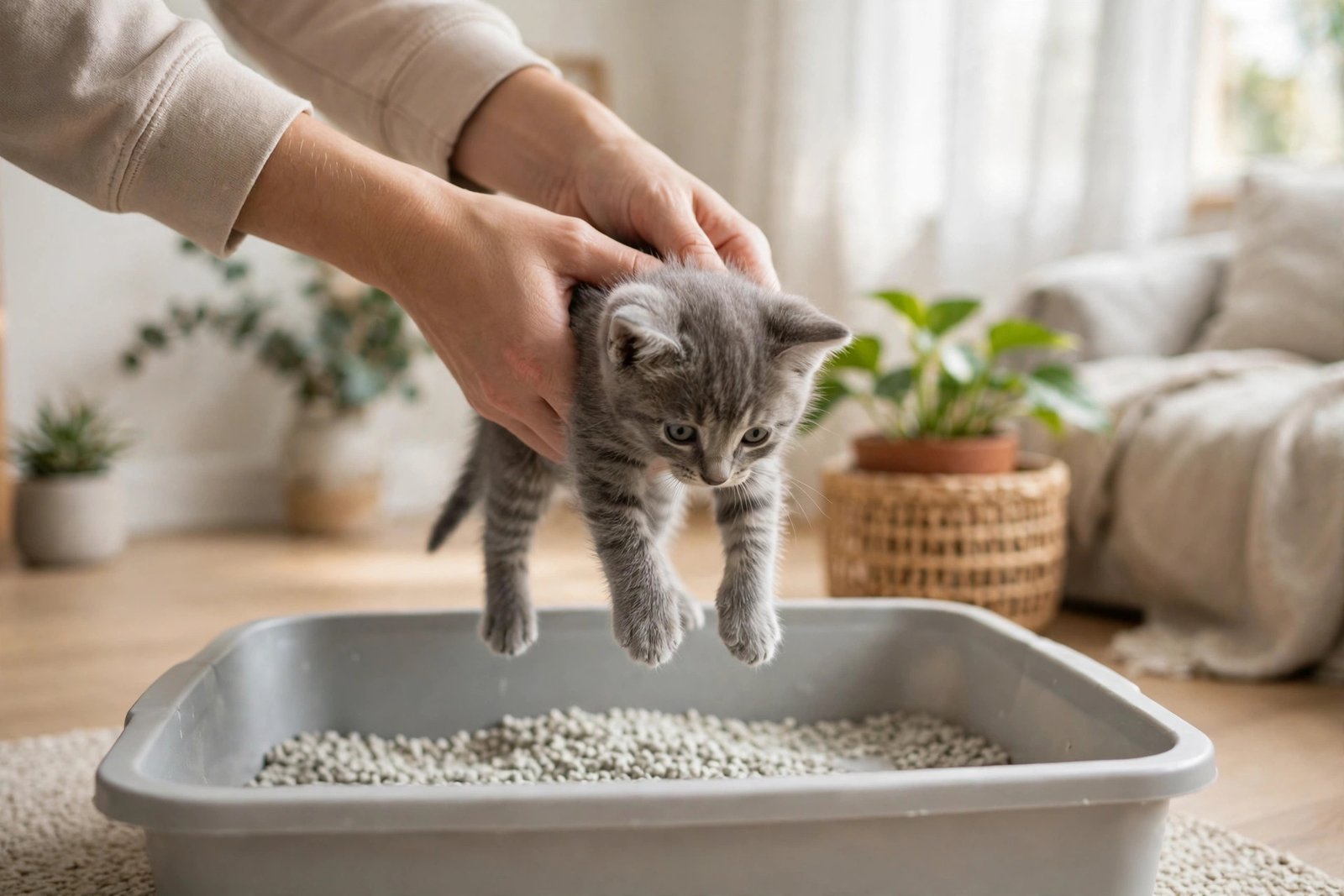
Place the kitten in the box after every meal, after a nap, and after play. Watch for sniffing or squatting, and carry the kitten to the box when you see those signs. Let it sniff the litter and scratch the surface gently with a finger.
Reward success right after the kitten leaves the box. Offer a favorite treat and a calm word, then let the kitten walk away. PetMD says to give the treat immediately after the kitten leaves the box. ASPCA adds that many cats dislike attention while they eliminate, so wait until the kitten steps out.
Gentle placement suits a new kitten meeting a box for the first time. Forcing a cat that already fears the box back into it will likely backfire. ASPCA says that advice covers retraining an aversive cat.
Let freedom grow in steps during kitten litter box training. Once the kitten has used the box, allow supervised exploring, then return it to its room when you leave it alone. VCA gives that exact pattern, supervised time out, room time when unsupervised, until the habit holds.
How long will it take? Sources give a wide range, from a few days to 2 to 4 weeks. Rover says many kittens master the box by 8 to 12 weeks, and Catster says some take to a box in just a couple of days. No controlled study sits behind any of those numbers.
Orphan and bottle-fed kittens
A kitten raised by its mother learns most of litter training by watching her. She shows it where to go, and she stimulates it to eliminate in the first weeks by licking its belly. An orphan or bottle-fed kitten has no teacher, so the job falls to you, and it takes more patience than the standard routine.
For a very young orphan, elimination needs help. After each feed, take a warm, damp cloth or cotton pad and gently rub the kitten’s belly and genital area in small circles, the way a mother would. The kitten will usually eliminate within a minute or two. Do this over the litter tray once the kitten can stand and move on its own, so the tray becomes the place where the feeling happens.
Expect the process to take longer than with a mother-raised kitten. There will be misses, and there will be days when it seems to go backwards. That is normal for an orphan. Keep the room small, keep the tray close, and keep the routine identical after every meal, every nap, and every play session. If the kitten is under eight weeks old, ask your vet about the feeding and stimulation schedule at the same visit where you discuss vaccines, because a very young kitten can go downhill fast when it is not eating or eliminating properly.
Pick a low box and litter your kitten can actually use
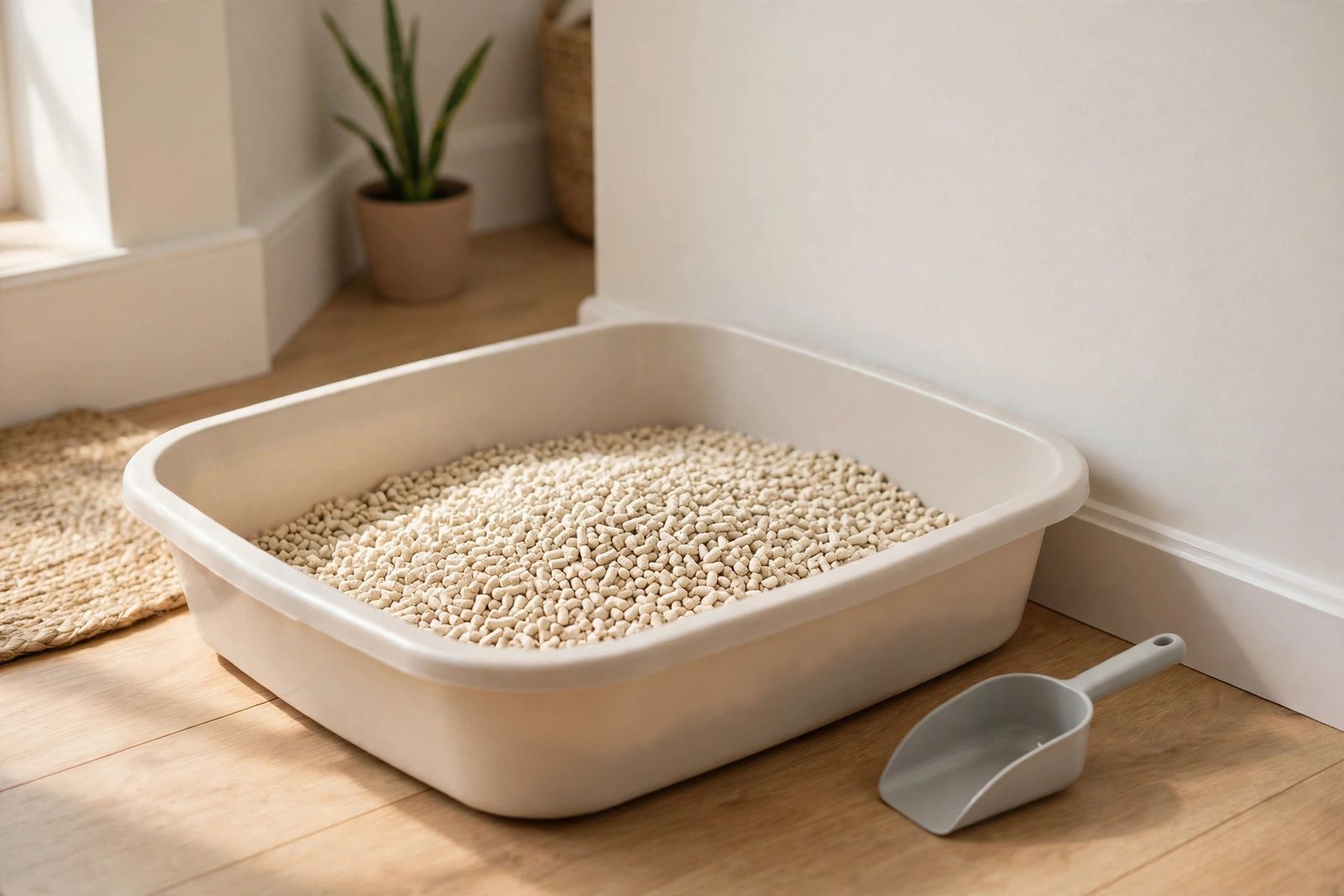
Size the box at about 1.5 times the length of the kitten, and size up as it grows. PetMD and VCA both give that 1.5 times rule. A starter tray of 13 by 9 inches works for most kittens.
Low sides matter more than length at this age. Cornell Feline Health Center says kittens need sides low enough to enter easily. Use one box per cat, plus one extra, with one on each floor in a multi level home.
A covered box can wait. Most cats prefer an uncovered box, Cornell Feline Health Center says, because a cat likes to scan the room and slip out fast. Skip automatic boxes as a starter. VCA warns that robotic boxes carry age and weight limits.
Start a young kitten on non-clumping litter, paper, wood, or plain non-clumping clay, while it still mouths and tastes new things. Most cats prefer fine grain, unscented, soft litter. Swallowed clumping litter can cause a serious blockage. Rover and the VCA Animal Hospitals both warn about that risk.
Sources disagree on when to switch, so give the range and let your vet settle it. PetMD says kittens younger than 8 to 10 weeks should use non-clumping litter. Rover and the VCA Animal Hospitals say wait until 4 months, and Litter-Robot puts the switch at 3 to 4 months.
Depth also splits the sources. ASPCA says cats usually prefer 1 to 2 inches of litter, a depth that suits a shallow kitten tray. VCA calls for at least 3 inches, but that depth fits a deep adult style box, not a low starter tray.
Where the box goes matters more than the box
Put the box in a quiet, low traffic, private spot that the kitten can reach without a climb or a long walk. Keep it away from food and the bed. VCA says boxes should sit away from beds and food dishes.
Spread the boxes out. PetMD says boxes clustered in one corner count as one big box, so put them in different spots and on different floors. Keep the box in the same place while training. Block dogs from the box, VCA advises.
Training with other cats or a dog in the house
A kitten in a single-pet home only has to learn the box. A kitten in a busy house has to learn the box while sharing the house with animals that may guard it. Cats guard resources, and a litter box is a resource. An older cat that sits in the hallway outside the litter room can block a kitten without ever touching it, and a kitten that gets ambushed once on the way out will stop going back.
Give the kitten its own box in its own safe room, with a door the other animals cannot push open. A baby gate the kitten can slip through and a larger animal cannot is a simple version of the same idea. The kitten needs a route to the box that no other animal can block, and an escape route out of the box that does not run past the other pet’s favorite sleeping spot.
Dogs need a different fix. Some dogs eat litter, some chase kittens into corners, and some just stand in the doorway out of curiosity. Keep the dog out of the kitten’s room for the first weeks, and put the box where the dog cannot reach it but the kitten can. If the dog is the problem, the box is not the problem. Our guide to the best litter for kittens covers the litter choice itself, so the box setup here is about access, not about the product.
Keep the box clean or your kitten will find another spot
Scoop at least once a day during kitten litter box training, and scoop after every elimination while training if you can. PetMD gives that exact advice. A dirty box ranks near the top of reasons kittens avoid the box.
Set a weekly wash for the box. PetMD and ASPCA both point to once a week, RSPCA agrees, and VCA notes that a monthly deep scrub suits some cats.
Use a gentle cleaner without scent, or an enzymatic cleaner made for pets. Leave ammonia, bleach and strong scents out of it. Ammonia can smell like urine to a cat, ASPCA says, and that can draw the kitten back to the same spot.
What to do when your kitten misses the box
Accidents form part of training, and a calm response works better than a loud one. Elanco calls accidents a normal part of the process. Never punish an accident. VCA says punishment can permanently damage trust.
Clean the spot with an enzymatic cleaner, the one cleaner every vet source in this guide names. ASPCA says to avoid ammonia or bleach cleaners because they can encourage a cat to urinate in that area again.
If you catch the kitten mid accident, interrupt it with a brief novel sound, like a whistle, then lure it to the box, VCA says. Rover adds a trick from Dr Sara Ochoa, put the soiled paper towel in the litter box so the smell points the kitten to the right place.
If the misses keep coming, change one thing at a time. PetMD lists that as the first fix, along with scooping more often and a vet check. VCA suggests a litter box cafeteria, several boxes side by side with different litter and size, so the kitten can pick the one it likes.
Nights and workdays: keeping the habit when you are away
Training happens when you are watching. The habit is kept when you are not. A kitten that is perfect while you are home and messy while you are out has not failed. It has shown you the gap in the routine, and the gap is unsupervised time.
When you leave the house, and at night, confine the kitten to its safe room with the box, water, a bed, and a toy. The room should be small enough that the box is never far away, and familiar enough that the kitten relaxes in it. A kitten given the run of the house while you sleep will find a quiet corner far from the box, and by morning the habit has slipped a step.
Before you leave, scoop the box and check the water. When you come back, check the box first, before you open the rest of the house. If the kitten used it, praise and a short play session. If it missed, clean it with enzymatic cleaner, say nothing, and keep the room routine for another few days. Freedom grows in steps, one room at a time, and the last step is the whole house, not the first one. If the misses keep happening even in the small room, our guide to kitten wont use the litter box works through the fixes in order.
When a vet visit beats another week of waiting
Call the vet promptly if the kitten strains to urinate or defecate, cries while eliminating, enters the box often but passes only small amounts, or shows blood in urine or stool, diarrhoea, or a sudden loss of appetite. A sudden switch from reliable to avoiding the box also belongs on that list.
ASPCA describes feline interstitial cystitis as frequent attempts with straining and little success, with licking and blood present, and calls it very serious. PetMD says a vet should check for intestinal parasites, urinary tract infections, or other medical issues when a kitten will not use the box.
Questions new kitten owners keep asking
How long does it take to litter train a kitten?
It takes a few days to 2 to 4 weeks for most kittens, with some taking to the box in a couple of days and others needing a few weeks. No controlled study backs a single number.
When can kittens use clumping litter?
Sources give a range from 8 to 10 weeks to 4 months. Start with non-clumping litter, switch only after the kitten stops mouthing litter, and ask your vet to settle the timing for your kitten.
How many litter boxes do I need?
Use one box per cat, plus one extra, with one on each floor. One kitten means two boxes ideally, placed in different spots so they count as two boxes, not one big box.
Should I use a covered litter box?
Most cats prefer an uncovered box, Cornell Feline Health Center says, because they like to see the room and leave fast. PetMD suggests offering a choice if you can, and young kittens should avoid top entry boxes.
Set up the room tonight, put the low box in its quiet corner, and place the kitten in it after the next meal. That first placement, plus a clean box tomorrow, does more than any perfect shopping list.
Sources
- PetMD litter training guide
- VCA Housetraining for Kittens and Cats
- VCA How to Litter Train Your Kitten
- ASPCA Litter Box Problems
- ASPCA Addressing Litter Box Problems
- ASPCA General Cat Care
- Cornell Feline Health Center new cat care guide
- Cats Protection kitten care guide
- RSPCA litter tray training guide
- Catster potty training guide
- Rover litter training guide
- Elanco litter training guide
- VCA Animal Hospitals litter guide
- Litter-Robot kitten-safe litter guide
- VCA Animal Hospitals, Kitten Behavior and Training: Litter Box Training
- PetMD, How to Litter Train a Kitten
1 thought on “How to Litter Train a Kitten: A Calm First Week Guide”