
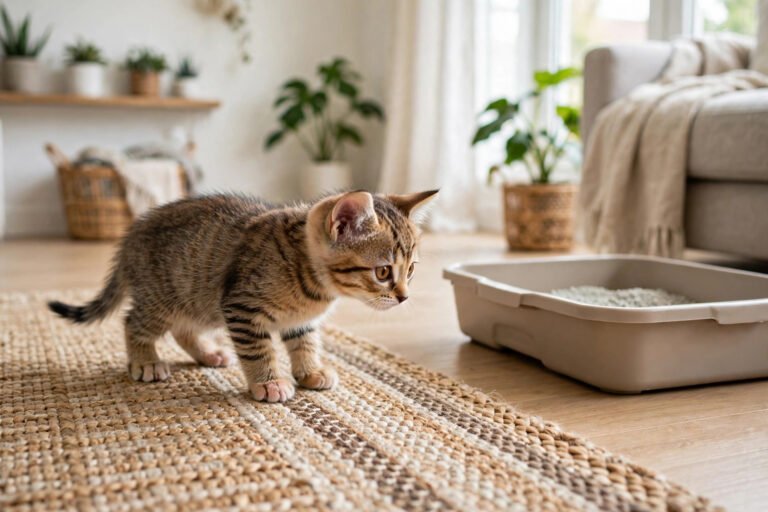
You cleaned the rug, you scooped the box, and your kitten peed on the rug again. A kitten won’t use litter box setups that hurt, smell wrong, or sit in the wrong spot. That is good news, because the fix is usually in the setup.
Most kittens want to use a box. Cats cover waste to avoid detection by predators, and most kittens only need a person to show them where the box sits, a point Rover backs with a quote from Dr Wendy Hauser.
Check the setup in this order, starting with the spot and the box. Change one thing at a time so you know what worked.
If your kitten has never used a box at all, start with our guide on how to litter train a kitten. This article is for the kitten that knows a box exists and still says no.
Start with the spot, not the kitten
Before you change anything, keep a log for two days. Write down where it happened and what surface the kitten picked. ASPCA recommends a log like this because the pattern points at the cause.
Pee on the rug by the front door at night is a different problem from poop in the bathtub every morning.
Location tells you a lot. A kitten that goes right next to the box probably wants to use it and finds something wrong with it. A kitten that goes in one far corner may have formed a location preference, or the box may sit too far away.
Rover quotes cat behaviour consultant Jessica Char on this point. She says the most common issue is that the kitten ends up too far away from a litter box and cannot find the box in time, which is a long way of saying the box needs to be closer than you think.
Surface tells you the rest. A kitten that picks soft piles or laundry may like that texture more than the litter. A kitten that picks tile or the bathtub may dislike the litter texture or depth.
VCA puts it plainly. If the kitten voids outside the box, work out what substrate it prefers and fill the box with a similar substrate.
Moving the box inch by inch
A kitten that uses the wrong spot is often telling you about location, not about litter. The spot it chose is quiet, it smells like itself, and nobody walks past it. Moving the box to where you want it in one jump throws all of that away, and the kitten goes back to the old spot because the old spot still feels right.
Move the box instead by inches. If the kitten uses a corner of the spare room, put the box in that corner first, even if it looks odd. Once it uses the box there for a few days, shift it a foot toward the place you want it. Wait until the kitten follows it reliably, then shift it another foot. A move of a foot every few days gets the box across a room in a couple of weeks without a single accident, because the kitten never has to choose between the box and the spot. It just follows the box.
Clean the old spot properly as you go, with enzymatic cleaner, so the smell does not keep calling the kitten back. If the old spot is on carpet, clean it twice and let it dry fully before you decide the smell has cleared. Your nose is not the judge here. The kitten’s nose is, and it can smell what you cannot.
The box itself is usually the problem
Start with size and sides. A box should measure about 1.5 times the length of the kitten, and you size it up as the kitten grows, a rule PetMD and VCA both give. A starter tray of 13 by 9 inches works for most kittens.
Low sides matter more than length at this age. Cornell Feline Health Center says kittens need sides low enough to enter easily.
Then count the boxes. Use one box per cat, plus one extra, with one on each floor. That rule comes from PetMD, VCA, and Cornell Feline Health Center.
One kitten means two boxes, in different spots. PetMD warns that boxes clustered in one corner count as one big box, so spread them out. Most litter box problems in kittens trace back to the box, the litter, or the spot, not to a kitten being difficult.
Litter your kitten hates
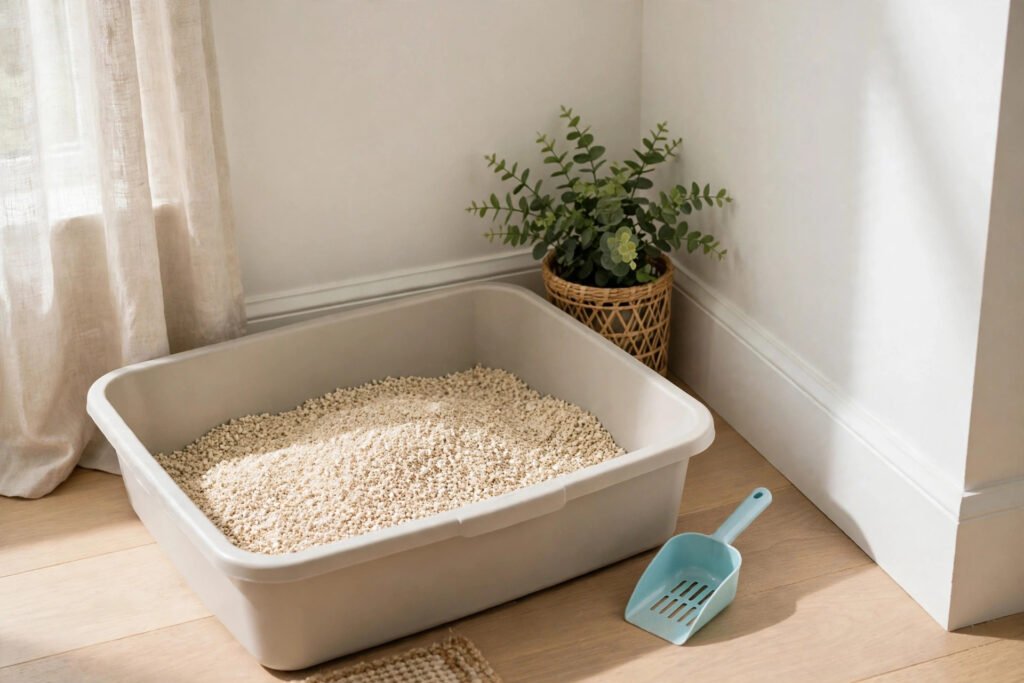
Litter is the most personal part of the setup. Most cats prefer fine grain unscented litter that feels soft under small paws, and ASPCA describes the favourite as unscented litter with a soft, sandy texture. Scented litter is the common mistake here. RSPCA says strong scented products may put a cat off, and a kitten nose sits a lot closer to the litter than yours does.
Clumping litter needs a note of its own, because sources disagree on when it is safe. PetMD says kittens younger than 8 to 10 weeks should use non-clumping litter. Rover and the VCA Animal Hospitals say wait until 4 months, because swallowed clumping litter can cause a serious blockage.
Litter-Robot puts the switch at 3 to 4 months. Start with non-clumping litter, paper, wood, pine, or plain non-clumping clay, and switch only after the kitten stops mouthing litter. Ask your vet to settle the timing for your kitten.
The litter-box cafeteria test
Guessing which litter a kitten likes wastes bags and weeks. Testing takes two days and tells you the answer directly. Set out two or three boxes side by side, each with a different litter: one fine and unscented, one paper based, one plant based, for example. Keep everything else identical, same room, same depth, same cleaning schedule, and watch which box the kitten uses.
Most kittens pick fast. The kitten uses one box and ignores the others, or uses them only when the favorite is dirty. That is your answer. Buy the litter the kitten chose, and stop buying the ones it walked past. If the kitten uses two equally, pick the one that is easier to buy and easier on your budget, and keep the other as a backup.
Run the test again if anything changes. A kitten that loved a litter at ten weeks can go off it at four months, and a new bag from a different batch can smell different enough to matter. The cafeteria test costs three small bags and one afternoon of watching, and it beats a month of accidents. Our guide to the best litter for kittens covers the litter types themselves, so this test is about choosing between them, not about learning them from scratch.
A dirty box sends kittens elsewhere
Scoop at least once a day, and scoop after every elimination while training if you can. PetMD gives that exact advice. Rover puts it in plain words too. Most cats do not like using a dirty litter box, so clean it at least once per day.
Empty the box and wash it weekly. PetMD and ASPCA give weekly as the common advice, and RSPCA agrees. VCA says a monthly scrub works for some cats.
Wash with mild, unscented soap or a pet friendly enzymatic cleaner. Skip ammonia and bleach and strongly scented products. Ammonia smells like urine to a cat and can pull it back to the spot, ASPCA says.
When stress and other pets get in the way
A new home is a big change for a kitten, and stress shows up in the litter box first. New people, new pets, a moved sofa, and a loud week of visitors can all push a kitten off its routine.
ASPCA lists stress from a new home, new pets or people, and routine change among the causes of elimination outside the box. The fix is a smaller world for a few days.
Keep the kitten in one small, cosy room with the box. Put food and water in there, with a bed nearby. Do not let it roam unsupervised until it uses the box reliably.
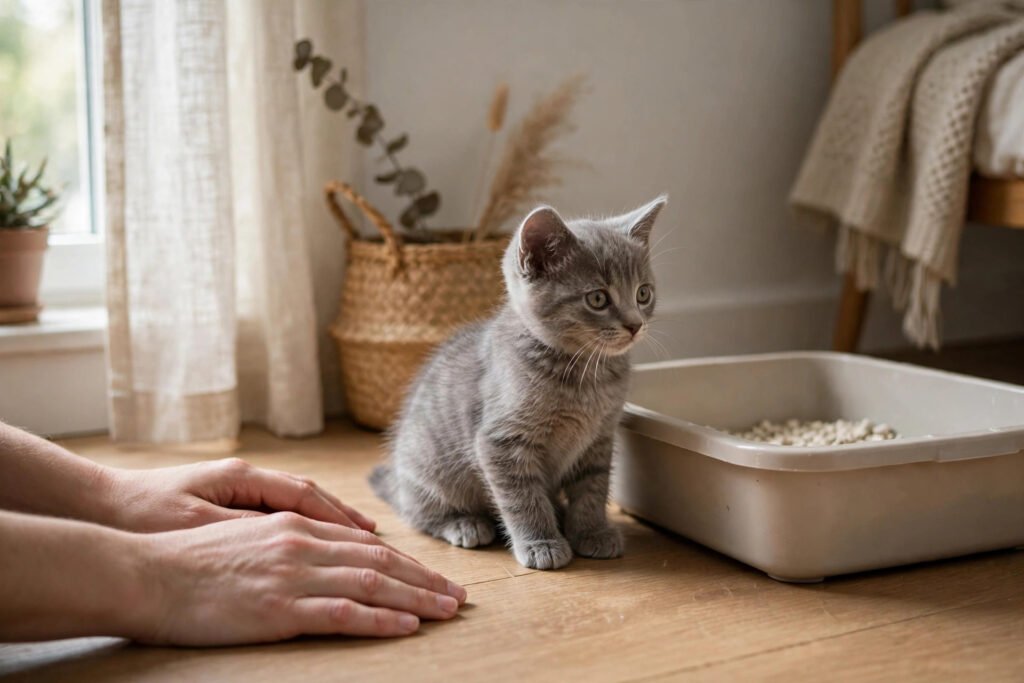
VCA says young kittens learn good litter habits quickly when they start confined to a room with a box. ASPCA gives the same confinement remedy for aversion, one small room for several days to a week, then expand gradually.
Spraying is not peeing
A kitten that squats and empties its bladder on the floor is peeing outside the box, and the fixes in this guide apply. A kitten that stands, lifts its tail, quivers it, and sprays a small amount on a wall or a piece of furniture is doing something else. That is spraying, which is marking behavior, not a toilet problem, and a bigger box will not fix it.
Spraying usually starts as a kitten reaches maturity, and kittens that have not been neutered spray more often than those that have. Stress often triggers it, or another cat, inside the house or visible through a window. The fix starts with the cause: reduce the stress, block the view of the outside cat if there is one, and talk to your vet about the timing of neutering or spaying.
Do not punish spraying. Punishment adds stress, and stress often started it in the first place. Clean the sprayed spot with enzymatic cleaner, note when it happens and what was going on just before, and take that note to the vet. A vet can tell you whether the timing and the pattern point to marking, to a medical cause, or to both, and can help you decide the next step. The ASPCA guide to litter box problems covers spraying alongside the box problems in this guide.
Clean the accident so it does not happen twice
Accidents are a normal part of training, Elanco says, and a calm response works better than a loud one. Never punish an accident. VCA says punishment can permanently damage trust, and ASPCA says punishment may only make the problem worse, especially if stress caused it. Do not shout, do not rub the nose in it, and do not drag the kitten to the box.
Clean the spot with an enzymatic cleaner, the one cleaner every vet source in this guide names. RSPCA says to wash the area with a biological or enzymatic washing liquid or powder. Do not use ammonia based cleaners.
ASPCA says to avoid cleaners with ammonia or bleach because they can encourage a cat to urinate in that area again. VCA adds the reason. Cats will be more likely to use the same area in the future if any odor of urine or feces remains.
If you catch the kitten mid accident, interrupt it with a brief novel sound, like a whistle, then lure it to the box, VCA says. Do not scold or frighten it.
Elanco says to scoop the kitten up, place it gently in the box, and give it some privacy. Rover adds a trick from Dr Sara Ochoa. Put the soiled paper towel in the litter box so the smell points the kitten to the right place.
When the vet comes before another fix
Some refusals are medical, and no new box will fix them. PetMD says a vet should check for intestinal parasites, urinary tract infections, or other medical issues when a kitten will not use the box. VCA says to discuss repeated elimination outside the box with the vet promptly, because over time house soiling can become persistent and harder to resolve.
Rover gives a useful time limit. If the kitten is consistently having accidents after a month, visit the vet. That line matters because owners often wait too long, trying one more litter brand while a medical problem grows.
Call the vet promptly if the kitten strains, cries while eliminating, or shows blood in urine or stool. ASPCA describes feline interstitial cystitis as frequent attempts with straining and little success, and calls it very serious. Cornell Feline Health Center says straining or painful urination with bloody urine means contact your veterinarian.
Questions owners ask when the box gets ignored
Why is my kitten peeing outside the litter box?
Kitten peeing outside litter box setups usually traces to a dirty box, litter the kitten dislikes, a bad location, or a medical issue. Change one variable at a time and keep a log of where and when it happens, as ASPCA recommends.
My kitten uses the box sometimes. Is that progress?
Yes, and it narrows the cause. A kitten that uses the box in the morning and misses it at night may find the box dirty by evening, or too far away in the dark. Scoop after every use for a few days and add a second box on the floor where the misses happen.
Should I punish my kitten for accidents?
No. Every vet source in this guide says the same thing. VCA says punishment can permanently damage trust, and ASPCA says it may only make the problem worse. Clean with an enzymatic cleaner and fix the setup instead.
How long should I try fixes before calling the vet?
Try one fix at a time for a few days each, and call the vet promptly if you see straining, crying, or blood. If accidents continue after a month of correct setup, Rover says to visit the vet.
Change one thing tonight. Put a second low box where the accidents happen, fill it with fine unscented non-clumping litter, and scoop it before bed. If the kitten uses it once, you have your answer, and the rest of the fixes get a lot easier.
Sources
- PetMD litter training guide
- VCA Housetraining for Kittens and Cats
- VCA How to Litter Train Your Kitten
- ASPCA Litter Box Problems
- ASPCA Addressing Litter Box Problems
- ASPCA General Cat Care
- Cornell Feline Health Center new cat care guide
- Cats Protection kitten care guide
- RSPCA litter tray training guide
- Catster potty training guide
- Rover litter training guide
- Elanco litter training guide
- VCA Animal Hospitals litter guide
- Litter-Robot kitten-safe litter guide
- VCA Animal Hospitals, Kitten Behavior and Training: Litter Box Training
- ASPCA, Litter Box Problems
2 thoughts on “Kitten Won’t Use Litter Box? How to Find the Cause and Fix It”