
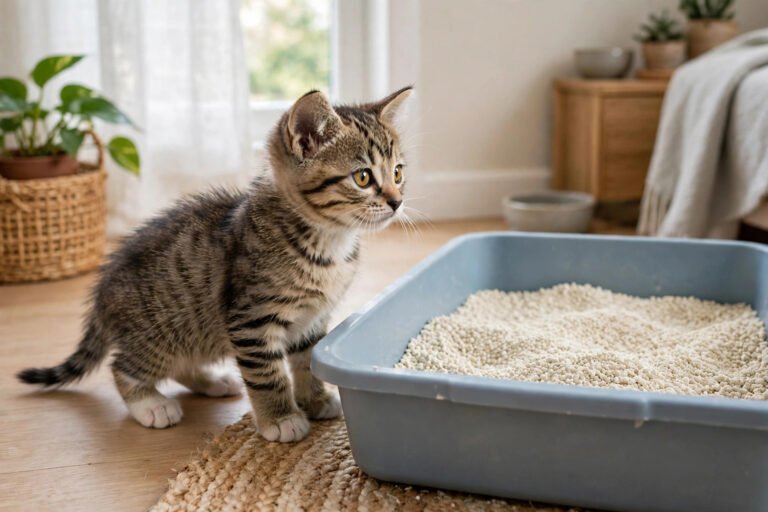
The best litter for kittens is fine, unscented, non-clumping litter in a low tray, filled 1 to 2 inches deep. That is the safe starting point, and it stays right until the kitten stops tasting litter and gets older.
Most cats prefer fine grain litter, PetMD says. Cornell Feline Health Center says most cats prefer unscented, fine textured litter, with a few exceptions. One brand name on the bag matters less than those three words. Fine, unscented, non-clumping.
Start here if the kitten has not used a box yet. Our guide on how to litter train a kitten covers the box, the room, and the routine. If the kitten already refuses the box, read kitten won’t use the litter box first, because litter is only one of the causes there.
Start with fine, unscented, non-clumping litter
Buy non-clumping litter for a young kitten. Paper, wood, pine, or plain non-clumping clay all fit that description. Non-clumping litter passes through a small stomach. Clumping litter can form a hard lump.
PetMD says kittens younger than 8 to 10 weeks should use non-clumping litter, and once the cat is older, you can switch to a clumping litter. Rover takes a stricter line. It says until kittens reach four months, the best litter will be clay free and non-clumping, because swallowed clay litter can cause serious blockages.
The VCA Animal Hospitals gives the same four month cutoff, for the same reason. Litter-Robot sits between them at 3 to 4 months.
No source in this guide settles it with a study, so treat the age as a range. If the kitten still mouths litter, it is too young to switch.
ASPCA adds a rule that works at any age. For cats younger than six months, use a litter specifically marked as safe for kittens. Read the bag. If it lacks a kitten safe label, put it back.
Kitten-safe litter is a litter that a young kitten can taste, step in, and dig through with the lowest risk. Coarse chunks feel wrong under small paws, and a kitten that dislikes the feel will go somewhere softer, like laundry.
Scent is the other half of the same test. ASPCA describes the favourite as unscented litter with a soft, sandy texture. RSPCA says strong scented products may put a cat off.
What each litter type actually does
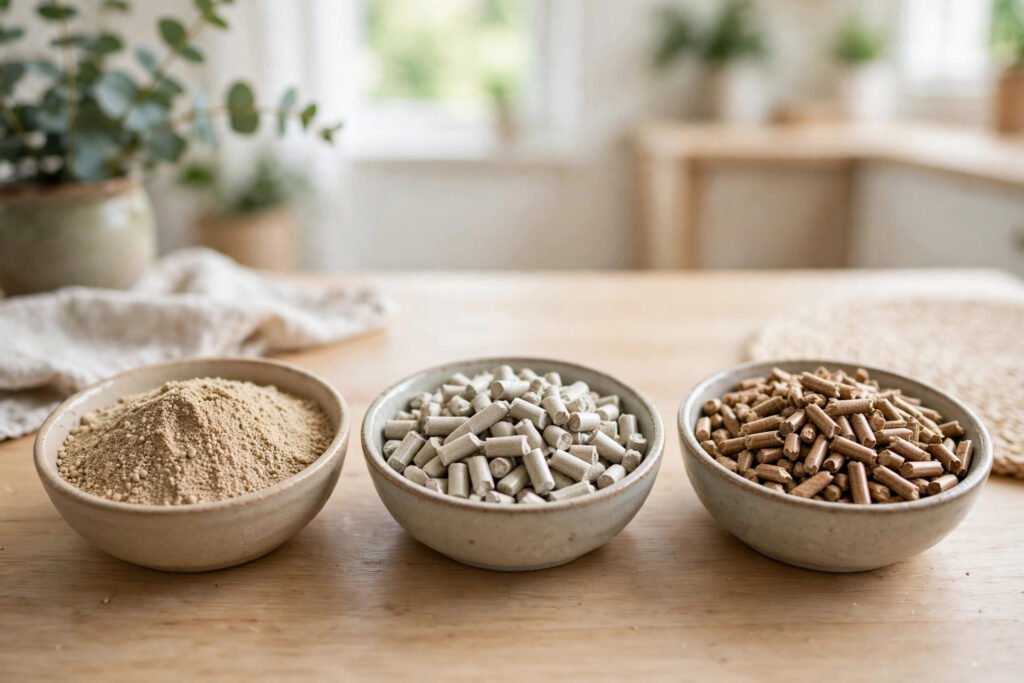
Paper litter is the gentlest starting point. It is soft and stays loose, which suits a mouthing kitten. It soaks up urine and needs changing often,
because moisture stays loose instead of forming a scoopable lump.
Wood and pine litter sits in the same safe group. Pellets break down into sawdust as they get wet. Some kittens step on pellets and walk straight back out, because pellets feel hard under small paws.
RSPCA notes that wood pellets performed best in its trials, while some cats preferred fine sandy litter. No single type wins for every kitten.
Plain non-clumping clay is the closest thing to what most adult cats use, minus the clumping agent. It feels sandy and digs well. It forms no lumps, so you scoop solids and change the whole tray on a schedule.
Plant based litter covers corn, grass, and tofu types. Litter-Robot says plant based clumping litter is sometimes considered safe earlier than clay clumping litter, which can typically be introduced at 3 to 4 months old. Read that as a maybe. Plant based litter still clumps.
Clumping clay is the litter most adult cats prefer, according to VCA. VCA gives no kitten age cutoff for that preference. Adult preference is separate from kitten advice, because a grown cat rarely eats litter and a young kitten might.
One guide disagrees with all of this. Elanco says to start with unscented clumping litter. That advice stands alone against the majority above, and this guide does not follow it.
Texture and scent beat the brand on the bag
A bag can say premium, natural, and vet recommended, and still be wrong for your kitten. The kitten ignores the bag. It steps in, sniffs, digs, and decides in about ten seconds.
Fine grain wins because it matches what cats bury in outside. PetMD says most cats prefer fine grain litter, and Cornell Feline Health Center agrees, with a few exceptions.
Unscented wins because scent is a variable you control, and the kitten cannot. A scented litter tries to solve an odor problem that scooping solves better. Scoop daily and the box smells like very little.
Dust is the third thing to check. Pour a cup of litter into the tray and watch the air above it. If a cloud rises, pick a different bag.
Litter dust and breathing
Dust is the part of litter shopping most owners notice last, and it is the part their lungs notice first. Pour a scoop from waist height and watch the cloud. A dusty litter fills the air every time you pour, scoop, and change the box, and a kitten breathes that air from a few inches away while it digs.
Low dust litter is worth seeking out for two reasons. The first is the kitten. Young lungs are small, and a kitten that digs hard can breathe in a puff of fine particles with every visit. The second is you. If anyone in the house has asthma or allergies, a dusty box can set off coughing and sneezing that gets blamed on the cat instead of the litter.
Testing a bag takes one pour. Open it outside or in a ventilated room, pour a cup slowly into the tray, and look for the cloud. A good low dust litter pours almost clean. A dusty one fogs the air and leaves a grey film on the tray edge within a day. If the bag says low dust on the front and still clouds on the pour, trust the pour.
Dust also tracks. Fine particles stick to paws and ride through the house on fur, so a dusty litter means dusty floors and a dusty bed. A heavier, larger grain litter usually tracks less, which is one more reason to feel the texture with your own hand before you commit to a big bag.
When can kittens use clumping litter
Ask when can kittens use clumping litter and you will get four answers. PetMD says after 8 to 10 weeks. Litter-Robot says 3 to 4 months. Rover and the VCA Animal Hospitals say 4 months. ASPCA gives no clumping age at all, and says to use a litter marked safe for kittens under six months.
Here is how to use that range instead of picking a number and hoping. Wait for two things at once. The kitten is past the youngest age in the range, and it has stopped mouthing litter. The second test matters more than the first, because the risk is swallowing.
A 12 week old kitten that still tastes everything is too young to switch. A 4 month old kitten that digs and buries without tasting is ready.
Watch for a week before you switch. If the kitten picks up litter in its mouth, wait.
When you do switch, switch the type only. Keep the same box, the same spot, and the same depth. Change one variable, as our guide on kitten won’t use the litter box recommends for any fix, so you know what caused a refusal if one follows.
How deep, and how often to change it
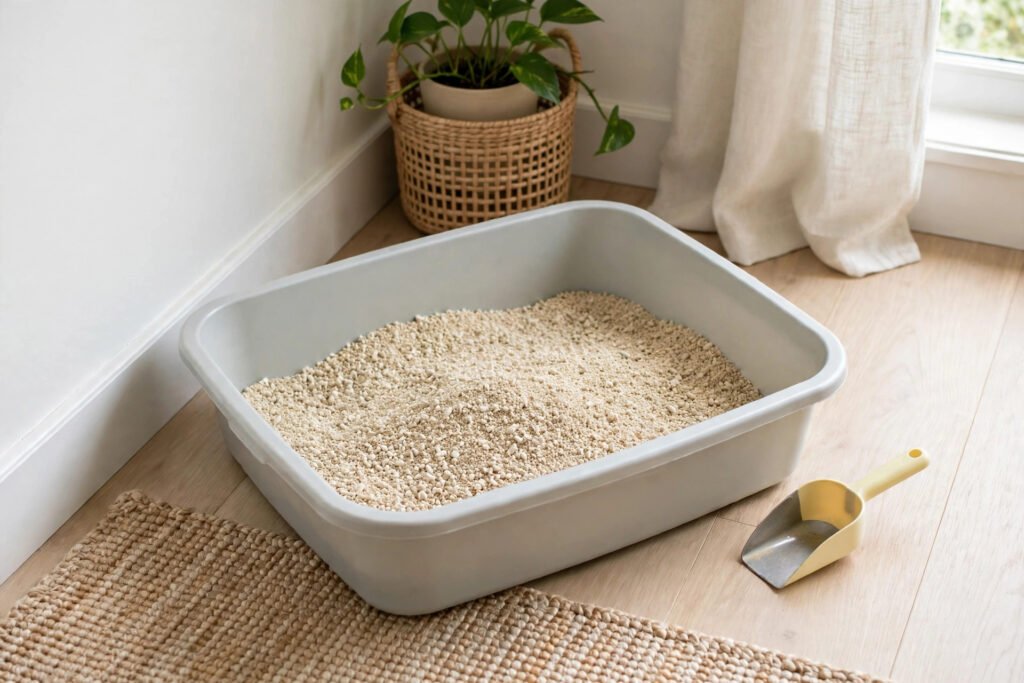
Depth splits the sources the same way age does. ASPCA says cats usually prefer 1 to 2 inches of litter. PetMD says to maintain 2 to 3 inches while training. VCA calls for at least 3 inches of digging material.
Those numbers describe different boxes. ASPCA’s 1 to 2 inches fits a shallow kitten tray, which is what a young kitten climbs into. VCA’s 3 inches fits a deep adult style box, which is what a grown cat digs in. Use 1 to 2 inches in the starter tray, enough to dig and cover, and go deeper only when the box gets deeper and the kitten gets bigger.
Scoop at least once a day, and scoop after every elimination while training if you can. PetMD gives that exact advice. A dirty box is one of the fastest ways to lose a kitten that was using the box fine yesterday.
Keep the box clean on a weekly routine. Our guide to a kitten that will not use the litter box explains the full cleaning routine, including what to wash with and what to skip.
What litter costs, and how to throw it away
Litter is a running cost, not a one off purchase, and it helps to think of it that way before you pick a type. A kitten uses less than an adult cat, but the box still needs a full change on a regular schedule, and the bag runs out faster than most first time owners expect. Buy the size you can carry and store dry, not the biggest bag on the shelf, and keep a spare bag sealed so a damp bag never turns into a clumped brick.
Storage is simple. Keep the bag closed, off a damp floor, and away from the kitten, who will chew the corner if it can reach it. A lidded bin beside the box holds the working supply and keeps the dust down.
Disposal matters more than most guides admit. Bag used litter in a tied bag and put it in the household bin. Never flush litter, even if the bag says flushable. Flushing can block household pipes, and cat waste can carry organisms that water treatment is not built to handle. The ASPCA guide to litter box problems is a useful check for any box problem that survives a litter change.
Switch litter without a protest
Cats form litter preferences as kittens, ASPCA says, and they may prefer the litter they used as a kitten. Ask the shelter or breeder what was in the box, and buy that exact litter for the first week.
Change gradually. Mix the new litter into the old over a week, or offer the two side by side so the kitten can choose. RSPCA, ASPCA, and Cats Protection all describe that gradual change, and it is the only switching method every source in this guide agrees on.
Do not change litter on the same day you move the box, change the box, or bring home a second cat. One change at a time shows you what the kitten objected to. If the kitten refuses the new litter outright, go back to the old litter for a week and try again more slowly.
Litter in a multi-cat home
One kitten, one box is a start. Two cats need more than two boxes. The rule most behaviorists use is one box per cat, plus one extra, and the extra matters because cats guard resources. A kitten that has to queue for the box will find somewhere quieter, and that somewhere is usually a corner you care about.
Place the boxes in different rooms, not side by side. Two boxes next to each other count as one box in a cat’s mind, because a cat standing guard can watch both at once. Spread them out, keep at least one on each floor if the house has stairs, and keep one in the room where the kitten sleeps.
Two kittens can also prefer different litters. If one digs happily in fine litter and the other walks away from it, run the cafeteria test from our guide to how to litter train a kitten: two boxes, two litters, side by side, and let each kitten choose. Buy the litter each cat actually uses, even if that means two bags in the cupboard. Our new kitten checklist covers the rest of the first month supplies, so the box is one decision among several, not the whole setup.
Questions owners ask about kitten litter
Can kittens use clumping litter at 8 weeks?
PetMD says kittens younger than 8 to 10 weeks should use non-clumping litter, while Rover and the VCA Animal Hospitals say wait until 4 months. Use the range, and ask your vet to settle the timing.
What is the safest litter for a very young kitten?
Fine, unscented, non-clumping litter, paper, wood, pine, or plain non-clumping clay, in a low tray. ASPCA says to use a litter specifically marked as safe for kittens for cats younger than six months.
How much litter should I put in the box?
Use 1 to 2 inches in a shallow kitten tray, which is the ASPCA figure. PetMD says 2 to 3 inches while training, and VCA calls for at least 3 inches in a deep adult style box, so go deeper only when the box gets deeper.
My kitten eats litter. Is that dangerous?
It can be, with clumping litter. Rover and the VCA Animal Hospitals warn that swallowed clumping litter can cause a serious blockage. Switch back to non-clumping litter, and call your vet promptly if the kitten strains, cries while eliminating, or shows blood in urine or stool.
Buy one small bag of fine, unscented, non-clumping litter tonight, fill a low tray 1 to 2 inches deep, and watch the kitten use it after its next meal. If it digs and buries without tasting, you picked right.
Sources
- PetMD litter training guide
- VCA Housetraining for Kittens and Cats
- VCA How to Litter Train Your Kitten
- ASPCA Litter Box Problems
- ASPCA Addressing Litter Box Problems
- Cornell Feline Health Center new cat care guide
- Cats Protection kitten care guide
- RSPCA litter tray training guide
- Catster potty training guide
- Rover litter training guide
- Elanco litter training guide
- VCA Animal Hospitals litter guide
- Litter-Robot kitten-safe litter guide
- Cornell Feline Health Center, Choosing and Caring for Your New Cat
- ASPCA, Litter Box Problems
2 thoughts on “Best Litter for Kittens: What to Buy First and When to Switch”